






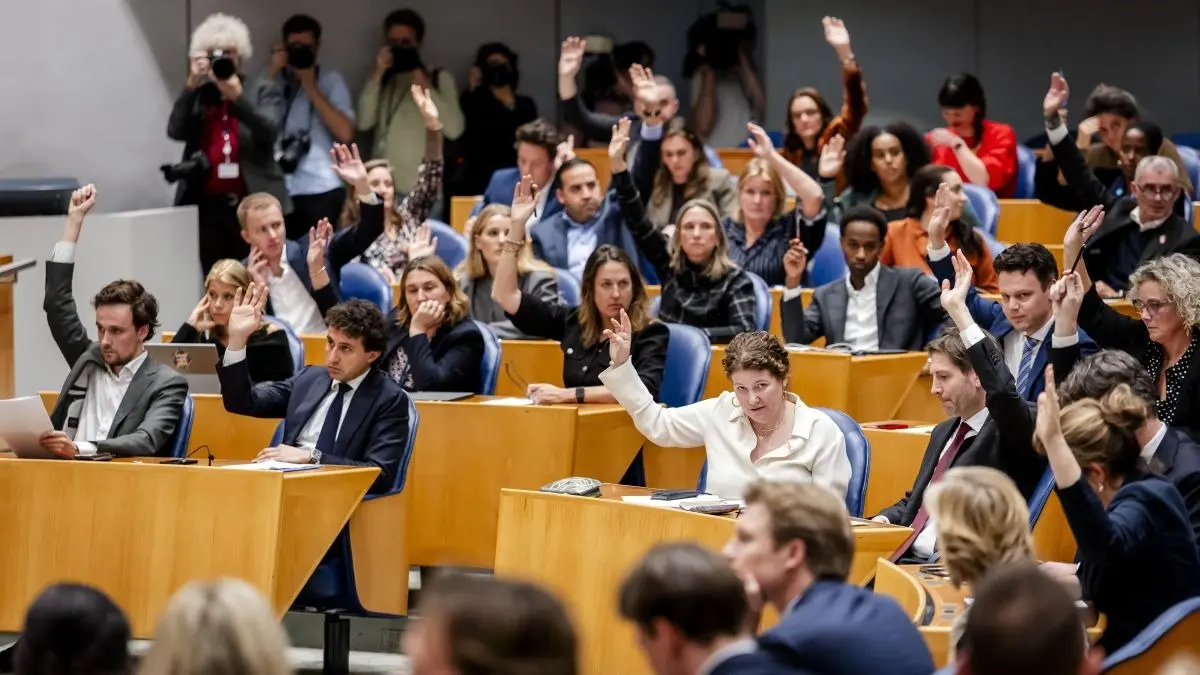
The political stability of the Netherlands hung in the balance on Thursday evening after the cabinet’s contentious 2027 tax plan narrowly scraped through parliament. The legislation passed by a razor-thin margin of 76 votes to 74, driven over the line by an ad-hoc coalition of centre-left and opposition parties. The vote immediately plunged the ruling coalition into crisis, with the right-wing liberal VVD voting firmly against the package after its governing partners broke ranks to back a wealth tax amendment introduced by the political left.
The dramatic showdown in the Tweede Kamer leaves the future of the cabinet hanging by a thread. The VVD had repeatedly warned in the days leading up to the vote that adopting the left-wing tax amendment would represent a fundamental breach of the existing coalition agreement. True to their word, VVD lawmakers rejected the overall tax plan, arguing that the amendments fundamentally alter the fiscal balance negotiated when the current government was formed. However, as the dust settled on Thursday night, senior party figures stopped short of immediately pulling the plug on the administration, leaving the country waiting to see whether the coalition can survive the ideological fracture.
Speaking to reporters as he left the parliamentary chamber, VVD parliamentary leader Ruben Brekelmans declined to give an immediate verdict on whether his party would withdraw from the government. "I’m not going to make a decision two minutes after the votes," Brekelmans told broadcaster NOS, describing the day’s parliamentary events as "appalling."
The fallout from the vote was swift. According to news agency ANP, Prime Minister Rob Jetten quickly arranged crisis talks for Friday morning, where he is due to meet with his deputy prime ministers: VVD leader Dilan Yeşilgöz and Bart van den Brink of the Christian Democratic Appeal (CDA). The outcome of that high-level meeting is expected to determine whether the cabinet can patch up its internal divisions or whether the Netherlands is headed toward a messy government collapse and snap elections.
The Millionaires’ Tax and Fiscal Adjustments
At the heart of the political storm is an amendment that critics and proponents alike have dubbed the "millionaires’ tax." Originally tabled by the progressive green-left party GroenLinks-PvdA (Pro) and the pan-European progressive party Volt, the measure adopted by parliament is actually a scaled-down version of their initial proposal. While the parties’ original blueprint aimed to generate roughly €1.5 billion in additional revenue from high-wealth individuals, the compromise version that ultimately passed brings in approximately €1 billion.
The mechanics of the adopted tax amendment involve a significant redistribution of the fiscal burden. Nearly €900 million of the newly raised revenue will be used directly to soften a planned increase in the lowest income tax rate, providing relief to lower- and middle-income households. To offset this reduction, the tax system governing wealth from savings and investments—commonly known in the Dutch system as Box 3—has been split into two distinct tiers. Under the new rules, returns will be taxed at 35.5 percent on earnings up to €60,000 a year, while earnings exceeding that threshold will face a higher rate of 38.5 percent.
In addition to restructuring the wealth tax brackets, the amendment takes direct aim at tax avoidance strategies involving estate planning. Specifically, it clamps down on what is known as "paper gifts"—an arrangement where parents legally promise money to their children on paper to circumvent or reduce upcoming gift and inheritance taxes. Despite these sweeping changes, fiscal planners note that approximately €400 million in additional wealth tax revenue still needs to be identified and secured for the fiscal year 2028 to maintain budgetary balance.
A New Majority on the Left and Centre
The razor-thin victory in parliament exposed a deep realignment of political power. The final vote succeeded because the governing parties D66 and the CDA crossed traditional ideological lines, joining forces with Pro, Volt, the pensioners’ party 50PLUS, the Christian-social ChristenUnie, the left-wing multicultural party Denk, and the Party for the Animals (PvdD).
The inclusion of the PvdD proved crucial to securing the majority, though their support came down to the wire. The animal rights party had stated as recently as Wednesday that it intended to vote against the tax package. However, last-minute negotiations altered the landscape. The PvdD reversed its position shortly before the vote after D66 and the CDA agreed to two key environmental and economic concessions: raising the excise duties and taxes on private jets, and dropping a previously planned, highly unpopular increase in national train fares.
While the tax plan survived its primary legislative hurdle, the government faced challenges from multiple flanks. An opposing motion of no confidence against the cabinet, hastily tabled by the anti-immigration Freedom Party (PVV), was soundly defeated by 116 votes to 34, demonstrating that while the governing coalition is internally fractured, opposition parties are not currently aligned to form an alternative administration.
With the lower house vote concluded, the 2027 tax plan now advances to the Senate, known as the Eerste Kamer. There, the governing coalition already lacks a functional majority, meaning the legislation’s ultimate implementation will continue to depend on fragile compromises and shifting alliances among opposition parties.
Pro leader Jesse Klaver defended the unusual political maneuvering, framing the vote as an act of institutional responsibility rather than a partisan power grab. By passing the plan, Klaver argued, "a centre-left majority in parliament is taking responsibility for governing the country. That way we prevent chaos." Whether that parliamentary majority is enough to keep the actual government from unraveling remains to be seen as coalition leaders prepare for their high-stakes crisis discussions on Friday morning.