





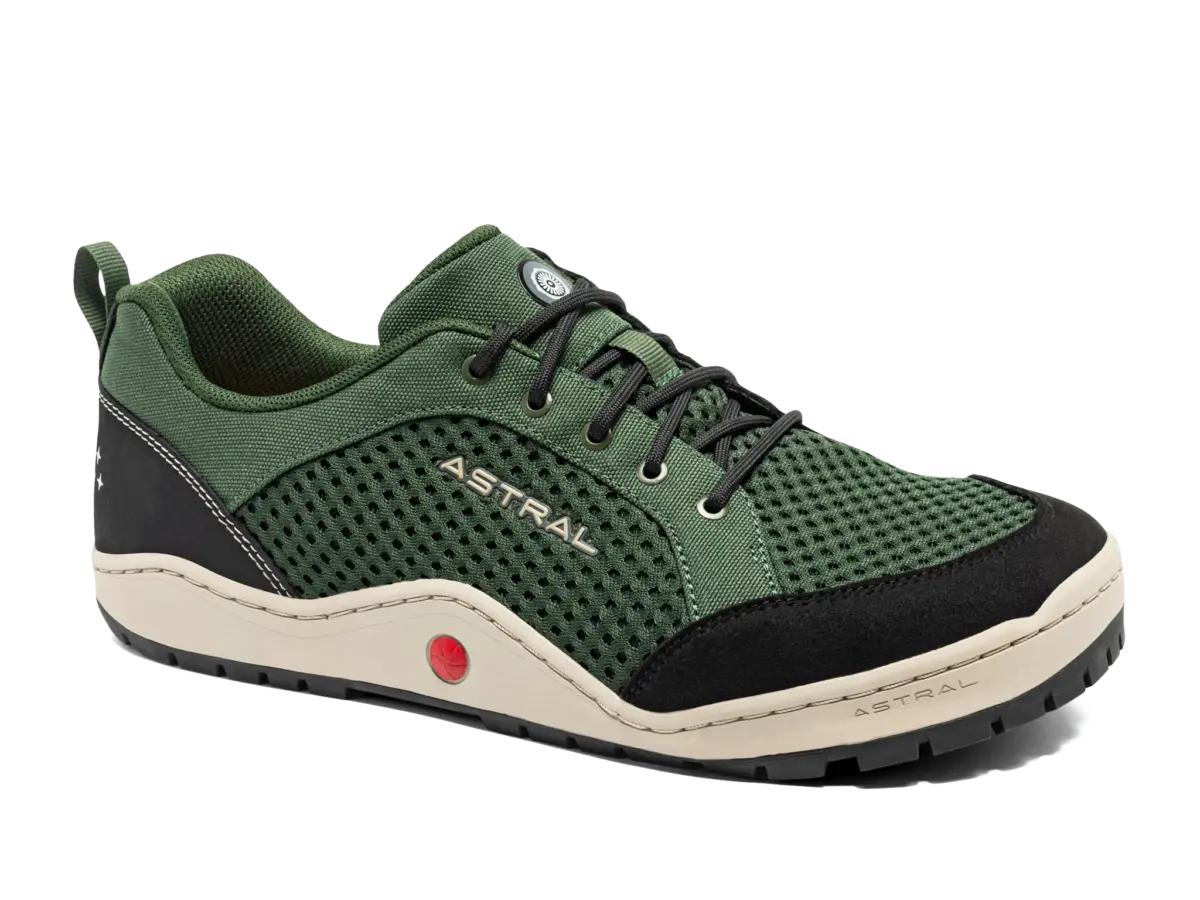
To anyone outside the tight-knit world of paddle sports, the brand Astral Designs might fly somewhat under the radar. While the company has spent the last two decades building a stellar reputation among river guides and kayakers, it has only relatively recently ventured into the broader consumer markets of technical trail shoes and lifestyle apparel. Yet, the story of Astral is rooted in a radical, uncompromising vision that dates back to its founding: to manufacture high-performance outdoor gear completely free of polyvinyl chloride (PVC) and phthalates.
Over the years, that initial commitment to environmental stewardship evolved. By 2008, the company had systematically eliminated neoprene from its manufacturing lines. By 2021, Astral had fully integrated the rigorous bluesign system across its entire global supply chain, ensuring that every step of its production process minimized ecological impact and carbon footprints. For founder Philip Curry, moving into footwear was a natural, albeit challenging, extension of this philosophy. Existing water shoes—and eventually, standard trail running shoes—seemed fundamentally antithetical to the very idea of enjoying the great outdoors. It struck Curry as paradoxical that people would venture into pristine natural environments while wearing footwear constructed entirely from heavy petrochemicals that could ultimately harm those ecosystems.
This cognitive dissonance sparked the creation of Astral’s first high-friction paddle shoes, which required an exhaustive materials rethink similar to the one Curry had previously applied to life jackets. The momentum eventually led to the development of the Nosobo, a pioneering outdoor-specific performance shoe featuring a replaceable midsole—the structural component that typically degrades and wears out long before the outsole gives way. While the concept of a replaceable midsole was not entirely unprecedented in the broader sneaker universe—notably appearing in the Nike Kobe 8 back in 2012—Astral’s Nosobo marked a significant industry milestone as the very first shoe in the outdoor market to incorporate the innovation.
That lineage directly informs Astral’s latest footwear evolution: the Techyak. Designed to push the boundaries of low-carbon performance, the Techyak features a knit upper crafted entirely from 100 percent recycled polyethylene terephthalate (PET). Crucially, the shoe is constructed without the use of traditional glues. Curry notes that standard bonding agents are not only environmentally problematic, but they also fail under rigorous field conditions. As Curry explains, water is exceptionally brutal on commercial adhesives, making chemical glues a persistent point of structural failure in outdoor footwear.

To solve these complex engineering and design challenges, Curry partnered with a true legend in the global footwear industry: Tuan Le. A Vietnamese refugee whose early life was defined by displacement, Le rose through the ranks of sneaker design to achieve legendary status. His breakthrough came early with the creation of the Reebok Stomper, an iconic aerobics shoe immortalized by actress Sigourney Weaver in the science fiction classic film Aliens. From there, Le’s portfolio expanded dramatically. He invented the revolutionary Mizuno Wave Rider running shoe, designed footwear for NBA superstars Stephon Marbury and Vince Carter under the short-lived but culturally influential brand And1, and has spent the decades since the early 2000s consulting and designing for a massive roster of global brands, ranging from UGG and Bogs to Jack & Jones.
Le’s lifelong obsession with footwear began in childhood, an era when his passion ran so deep that he reportedly slept with a pair of Nike Cortez sneakers in his bed instead of a traditional stuffed animal. He even named his pet gerbil Nike. Decades later, that devotion translated into real-world industry disruption, such as when NBA legend Kevin Garnett famously walked away from a lucrative Nike endorsement contract specifically to wear the And1 sneakers designed by Le.
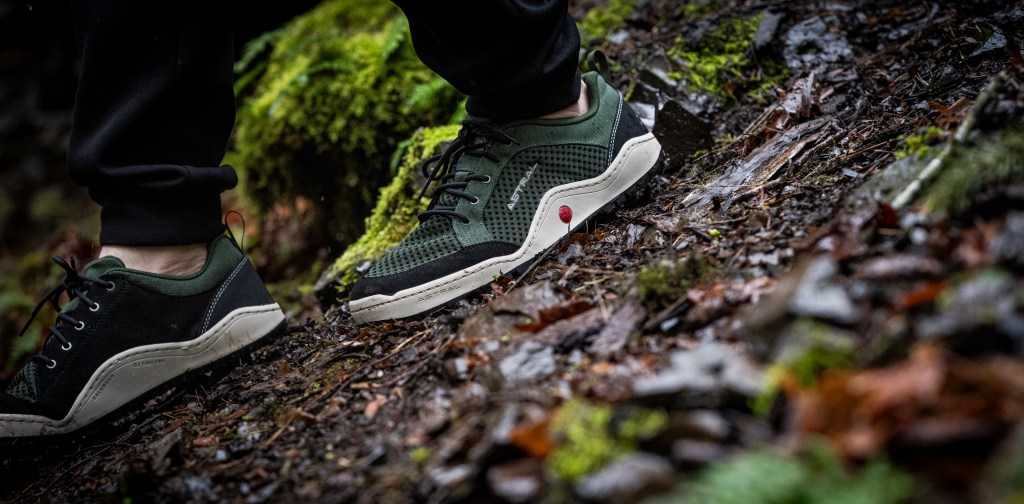
When tasked with conceptualizing the Techyak for Astral, Le drew inspiration from classic skate shoe silhouettes, but deliberately pushed his creative boundaries into uncharted territory. As Astral doubled down on its commitment to balanced geometry and zero-drop designs—which position the foot in a flatter, more natural athletic posture—Le focused heavily on anatomical integrity. The Techyak features a broader, more rounded toe box, addressing a common industry flaw where conventional footwear restricts natural, anatomical foot movement during extended periods of walking or scrambling over rugged terrain.
As an avid runner himself, Le holds strong opinions about the structural inadequacies of mainstream footwear. He points out that a typical running shoe built around a standard EVA midsole is structurally "breaking down from the very first day," even though that foam is expected to serve as the foundational backbone of the entire shoe. For the Techyak, Le and Curry wanted to engineer a much stronger structural spine—one that provided exceptional support without adding unnecessary weight or clunkiness. The final product had to remain remarkably thin to keep the Techyak svelte, agile, and lightweight.
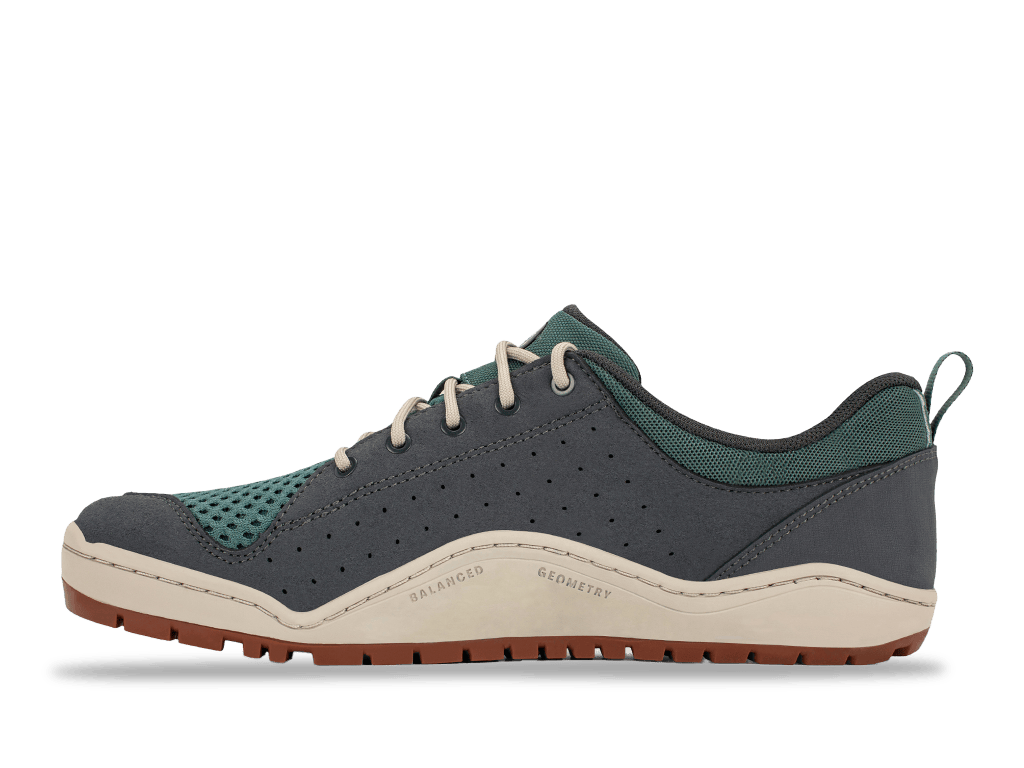
Designing a shoe for serious athletes requires a precise understanding of biomechanics and anatomical terminology. Le explains that any high-performance athletic shoe must incorporate a clear visual flex point—the precise zone where the wearer’s toes naturally hinge with every stride, whether they consciously notice it or not. Beyond that flex point, a shoe requires structural components that signal exactly where arch support is concentrated, communicating its functional purpose clearly to the wearer.
Reflecting on his decades-long career designing footwear for global markets, Le compares the process to musical composition. Having translated his designs and technical instructions into languages ranging from Danish to Japanese, he views the fundamentals of shoe design as a universal language. The core vocabulary—traction, cushioning, flex—remains constant because human anatomy and biomechanics are universal. According to Le, human beings ultimately need the exact same physical functions from their footwear; the design process is simply the tune he gets to play with.
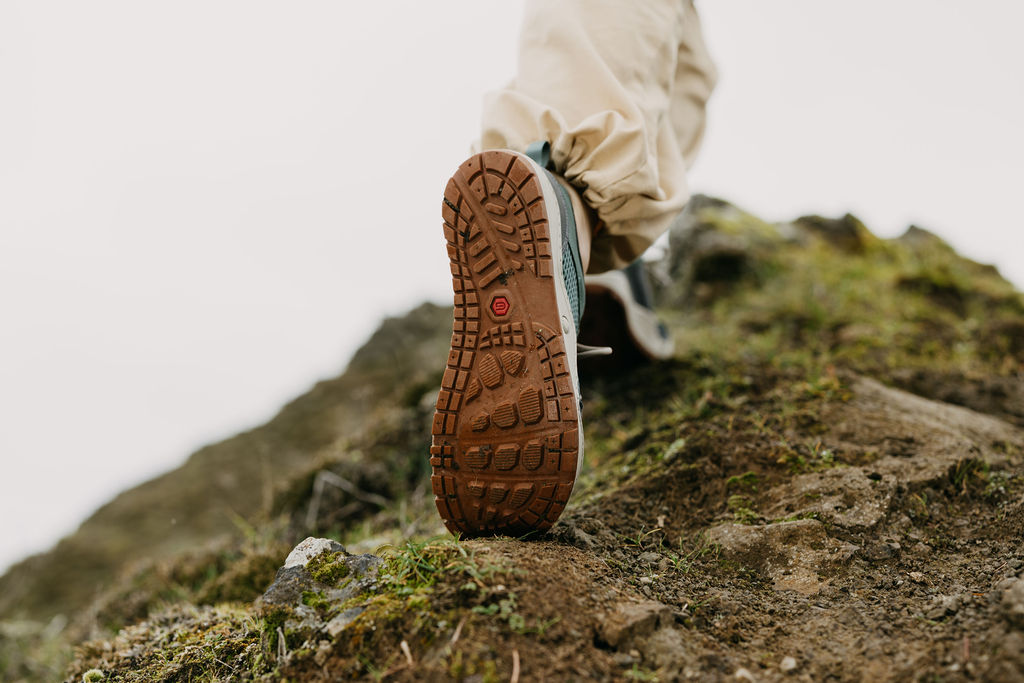
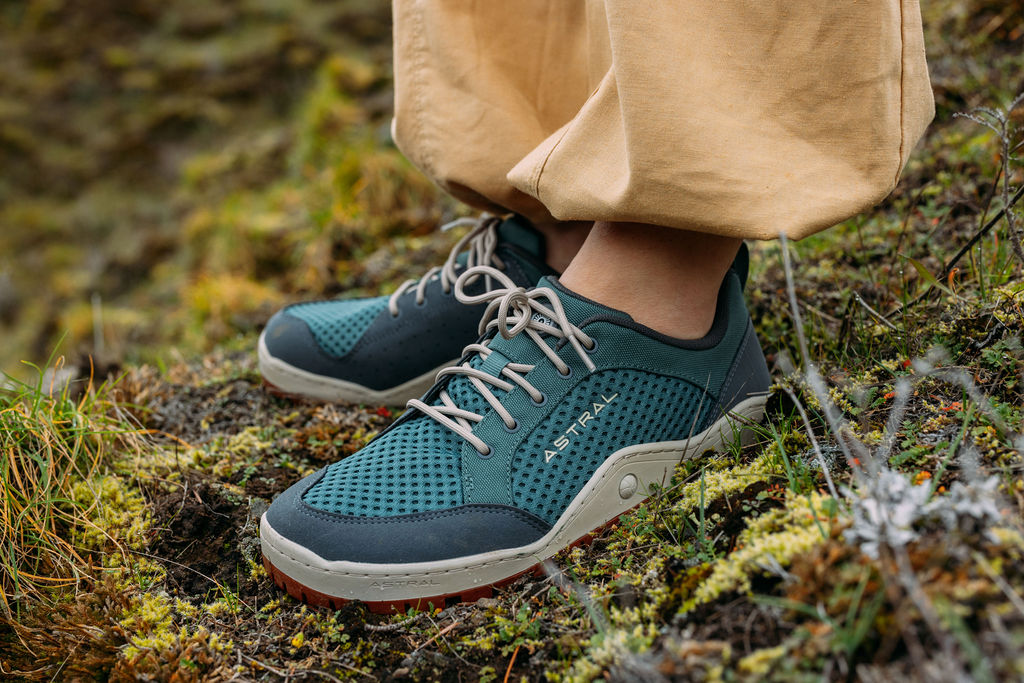
Curry approaches the development from another critical visual angle: color theory and environmental harmony. The creative process at Astral often begins with the visual perspective of someone standing right in the middle of a flowing river, ensuring that a signature water tone is always represented in the product line. From that aquatic starting point, the philosophy expands outward into soil, stone, and plant life. The colorways are deliberately organic, drawing direct visual inspiration from surrounding flora rather than synthetic trends.
Even the subtle branding details carry a deliberate narrative. The original red dot featured on Astral’s footwear was initially inspired by company iconography and the elemental relationship connecting a rock, the sea, and the moon. However, as the brand expanded into diverse international markets, the striking red accent proved occasionally unusual for some mainstream buyers, prompting Le to refine the visual language. The tiny icon is evolving into a lotus flower, a shift that Le embraces with characteristic philosophical ease. Reflecting on his role in the creative process, Le expresses a deep sense of gratitude for his craft, noting that he simply draws concepts, watches factories bring them to reality, and enjoys the ongoing process of determining what a design needs next.