



For 50 years, the global luxury landscape has not merely reacted to changing times—it has boldly shown the world what comes next. From groundbreaking automotive engineering and supersonic flight to revolutionary silhouettes, high jewelry, and oceanographic exploration, high-end culture has continuously redefined the boundaries of human achievement. Over the past five decades, a distinct curation of objects, people, places, and experiences has fundamentally changed how society lives, travels, dresses, and indulges.

The Dawn of Modern Refinement and the 1970s Shift
The foundation of modern luxury began taking shape amidst shifting industrial norms in the mid-20th century. After World War II, the delicate craft of traditional coachbuilding was largely pushed aside as growing manufacturing demands forced automakers to adopt more efficient measures. Instead of relying on rolling chassis dressed in custom, labor-intensive bodywork, manufacturers increasingly embraced monocoque construction, integrating body and chassis into a single all-in-one structure.

Breaking nearly six decades of tradition, Rolls-Royce followed suit with the introduction of the Silver Shadow in 1965. Designed by John Blatchley and powered by a 6.2-liter V-8, the model had a shorter wheelbase of 119.5 inches than its predecessor, the Silver Cloud, yet offered expanded cabin space and an even more cosseting ride. An improved suspension and additional sound dampening made possible by its unified construction cemented its legendary status. The Silver Shadow’s enduring relevance was underscored when it graced Robb Report’s inaugural cover in 1976.

The mid-1970s also witnessed seismic cultural and culinary shifts. On May 24, 1976, British wine merchant Steven Spurrier assembled leading California wines—almost all from Napa—alongside French benchmark bottles from Bordeaux and Burgundy for a blind tasting at the InterContinental Paris. The resulting upset, meticulously documented by Time correspondent George M. Taber, shattered the notion that serious fine wine belonged exclusively to Europe. The Judgment of Paris put Napa Valley on the global map and helped transform a promising California region into one of the world’s great wine capitals.

In the world of horology, the quartz crisis plunged the Swiss watchmaking industry into severe turmoil. Patek Philippe answered this existential threat by launching the Nautilus 3700/1A in 1976. Conceived by designer Gérald Genta, the serially produced all-steel mechanical watch cost roughly $3,100—a bold gamble that challenged traditional perceptions of luxury. Time proved the Swiss watchmaker right, establishing a blueprint for the modern luxury sports watch.

Simultaneously, the skies witnessed the commercial pinnacle of supersonic travel. In 1976, Concorde became the first supersonic airliner to enter passenger service, flying at twice the speed of sound. Cruising at Mach 2.04—about 1,354 mph—the Anglo-French aircraft cut flight times between London and Washington, D.C., by more than half. Despite economic headwinds, high operating costs, and the 1970s oil crisis, the allure of crossing the Atlantic in just over three hours captivated executives and celebrities alike until its final flight in October 2003.

On the ground in New York City, the opening of Studio 54 in April 1977 redefined nightlife. Co-founded by Steve Rubell and Ian Schrager, the legendary venue at 254 West 54th Street became the defining stage of the disco era, fusing celebrity culture, theatrical spectacle, and an exclusive door policy that made access itself the ultimate luxury.

The 1980s: Excess, Architecture, and High-Performance Icons
The 1980s heralded an era of bold ambition, corporate power, and aesthetic disruption across fashion, hospitality, and automotive design.

In menswear, Giorgio Armani quietly dismantled a century of tailoring convention by stripping shoulder pads and linings from his jackets. Paired with billowing trousers, his softly constructed designs made tailoring feel relaxed without sacrificing elegance. The look reached global consciousness in 1980, when Armani draped Richard Gere in American Gigolo.

The decade also birthed the modern boutique hotel. Disrupting the traditional hospitality metric of square footage, Bill Kimpton opened San Francisco’s Bedford Hotel in 1981, while Ian Schrager and Steve Rubell followed with Morgans in New York in 1984. These visionaries proved compact rooms could command a premium when paired with sharp design, personal service, and see-and-be-seen public spaces.

In the art world, 1982 marked the global breakout of Jean-Michel Basquiat. At just 21 years old, he became the youngest artist to exhibit at Documenta in Kassel, Germany, initiating a legendary career and a fateful friendship with Andy Warhol.

Communication technology similarly underwent a dramatic evolution with the release of the Motorola DynaTAC 8000X in 1984. Priced at $3,995 and weighing nearly two pounds, "the Brick" offered 30 minutes of talk time after a 10-hour charge. Its bulky, conspicuous profile made it an instant emblem of 1980s executive clout, famously wielded by Michael Douglas’s Gordon Gekko in the 1987 classic Wall Street.

Automotive and marine performance reached new theatrical heights in 1984 with the debut of the Ferrari Testarossa. Styled by Pininfarina, the 380 hp flat-12 supercar became a poster child of the decade, immortalized by Miami Vice. That same year, an airborne encounter between actress Jane Birkin and Hermès executive chairman Jean-Louis Dumas on a flight from Paris to London resulted in the sketch of the Birkin bag, instantly creating one of fashion’s most elusive status symbols.

Retail architecture experienced a paradigm shift in 1986 when Ralph Lauren transformed a Gilded Age Manhattan mansion into the Rhinelander flagship, establishing a new standard for immersive brand storytelling. Concurrently, Riedel introduced Vinum, the world’s first varietal-specific, machine-made crystal wine glassware, forever changing how restaurants and connoisseurs approached wine service.

The culinary scene in the United Kingdom experienced a similar jolt in 1987 when 24-year-old Marco Pierre White opened Harveys in London. Pairing punk-rock rebellion with formidable French technique, White earned three Michelin stars and inspired a generation of chefs, heavily influencing figures like Anthony Bourdain.

Luxury travel evolved again in 1988 when Adrian Zecha opened Amanpuri in Phuket, Thailand. Translating to "place of peace," the resort’s minimalist pavilions and exceptional staff-to-guest ratio birthed the ultra-private boutique resort model and created a devoted following known as "Amanjunkies." In watchmaking, Rolex turned to rival Zenith and its celebrated El Primero caliber in 1988 to power a redesigned Daytona, creating an iconic chronograph with historic waiting lists.

The 1990s: Redefining Superyachts, Supercars, and Fine Dining
The 1990s pushed luxury into increasingly avant-garde and monumental territories. In 1990, the 344-foot superyacht Lady Moura, built by Blohm+Voss for Saudi businessman Nasser Al-Rashid, revolutionized maritime design. Featuring a beach club with a fold-down hydraulic swim platform, a dedicated owner’s deck, a cinema, and a nightclub, it recast the superyacht as a floating family residence.

The art world shifted its center of gravity toward London in 1991 when Damien Hirst exhibited The Physical Impossibility of Death in the Mind of Someone Living—a tiger shark suspended in formaldehyde—at the Saatchi Gallery. Automotive engineering reached a legendary milestone in 1992 with the debut of the 627 hp McLaren F1, Gordon Murray’s masterwork featuring a central driver’s seat and a record-shattering top speed of 240 mph.

In hospitality, the early 1990s saw the Hotel du Cap-Eden-Roc transform its saltwater pool into the world’s signature infinity pool, making the water’s edge appear to dissolve seamlessly into the Mediterranean. Watchmaking saw similar bold strokes, including the 1993 debut of Panerai’s commercial Luminor Ref. 5218/201A, propelled to global fame when Sylvester Stallone wore it in the action film Daylight.

In 1994, Thomas Keller purchased the French Laundry in Yountville, California, expanding tasting menus and elevating American fine dining to an art form. The following year, Tom Ford’s sensual Spring-Summer 1995 Gucci collection reintroduced unbuttoned glamour to high fashion, propelled to global fame when Madonna wore it to the MTV Video Music Awards.

Architectural boundaries expanded dramatically in 1997 with the opening of Frank Gehry’s Guggenheim Bilbao, which gave rise to the "Bilbao effect"—the proven phenomenon that a single cultural landmark could entirely revitalize a city’s economic and cultural fortunes. That same year, Napa Valley cult cabs, led by a 100-point vintage of Screaming Eagle, sparked an unprecedented global buying frenzy and thriving secondary market.

Las Vegas underwent a massive luxury transformation in 1998 with the opening of Steve Wynn’s Bellagio, an Italianate fantasy featuring a multi-billion-dollar price tag, a private fine-art gallery, and room rates far exceeding historical Strip averages. Simultaneously, Boeing introduced its first Business Jet (BBJ), offering corporate leaders and heads of state an airline-sized cabin configured as a flying residence. Independent horology also achieved historic heights in 1999 when François-Paul Journe launched his namesake brand with the revolutionary Tourbillon Souverain.

The 2000s and 2010s: Molecular Gastronomy, Hypercars, and Streetwear Integration
Entering the new millennium, the luxury paradigm fractured into experiential, artisanal, and hyper-technological categories. In 2000, Anthony Bourdain published Kitchen Confidential, transforming culinary literature and laying the groundwork for a career in television that would celebrate global food culture.

The cocktail renaissance began on New Year’s Eve 1999 when Sasha Petraske opened Milk & Honey on Manhattan’s Lower East Side, reviving classic mixology and establishing strict rules of sophistication. Simultaneously, Hedi Slimane revolutionized menswear at Dior Homme with knife-slim suits and narrow lapels, while El Bulli, under Ferran Adrià, spearheaded the global molecular gastronomy movement, applying scientific precision to subvert culinary expectations.

In 2003, Noma opened in Copenhagen under René Redzepi, establishing the New Nordic cuisine movement centered on foraging, locavorism, and fermentation. That same year, Paul Allen took delivery of Octopus, a 414-foot Lürssen expedition yacht equipped with submarines and research laboratories that redefined the purpose of private yachting. Rolls-Royce also inaugurated a new era of ultra-luxury manufacturing in 2003 with the launch of the Phantom VII at its new Goodwood headquarters under BMW stewardship.

Automotive performance achieved astronomical figures in 2005 with the release of the Bugatti Veyron 16.4, whose 8.0-liter quad-turbocharged W16 engine delivered 987 hp and a top speed of 253 mph. The private aviation sector saw a parallel democratization in 2006 with the Eclipse 500, the pioneering very light jet that sought to make private flight accessible to a broader audience.

The fusion of high fashion and street culture reached a watershed moment in 2017 when Supreme collaborated with Louis Vuitton. Marking a permanent shift in luxury menswear vocabulary, the collection cast a high-end halo over streetwear and blurred the boundaries between accessible youth culture and haute couture.

The Modern Era: Architectural Superyachts and Enduring Motifs
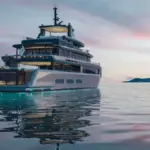
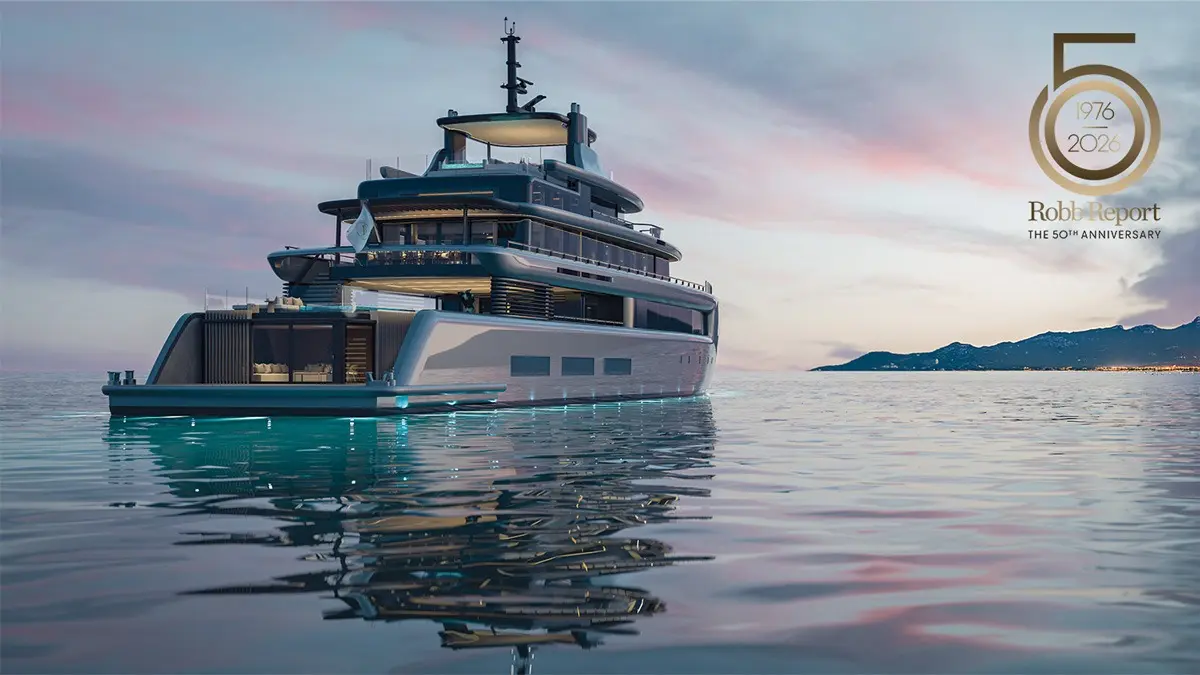
In recent years, the intersection of luxury, architecture, and personal expression has continued to evolve. In 2024, Benetti introduced the B.Loft 65M, a 213-foot superyacht that traded compartmentalized traditional interiors for soaring, multilevel glass walls inspired by contemporary urban lofts and waterfront villas.

Simultaneously, heritage motifs like Van Cleef & Arpels’ Alhambra collection have transitioned from classic jet-set jewelry to ubiquitous, cross-gender status symbols worn by athletes and artists alike. As high-end culture continues to look forward, the past five decades have proven that true luxury lies not merely in material cost, but in visionary innovation, uncompromising craftsmanship, and the relentless pursuit of new horizons.