






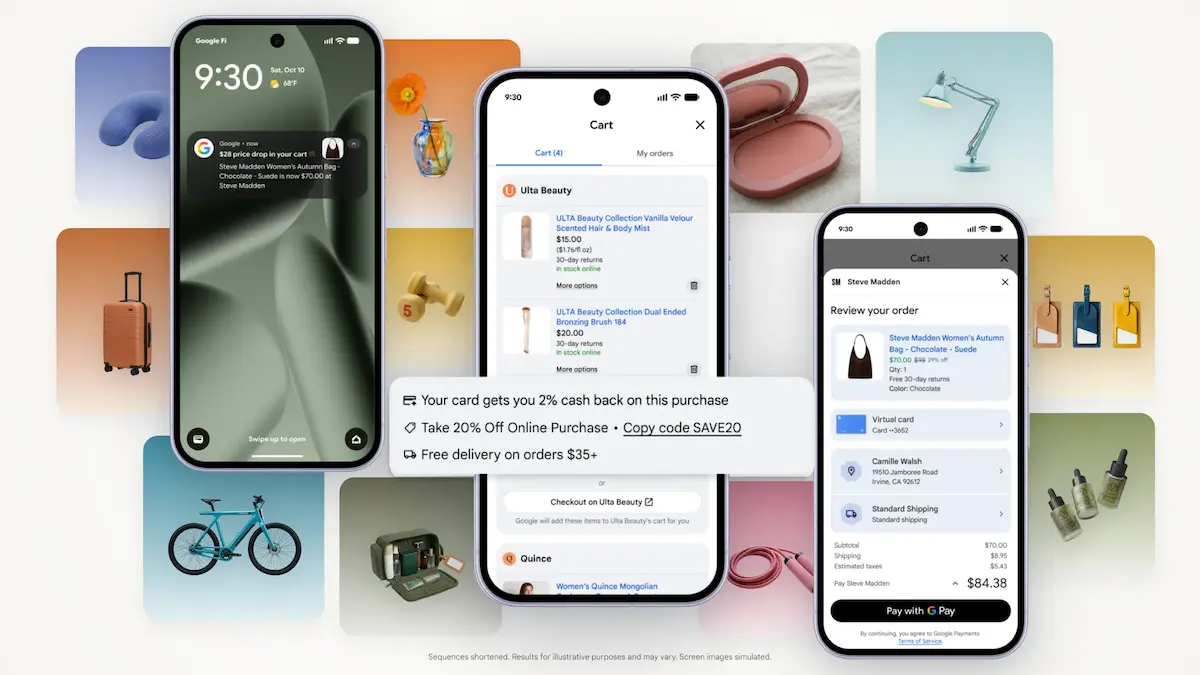
Google has officially launched "Universal Cart," a centralized shopping tool designed to help users collect, monitor, and manage products found across Google Search and the Gemini application. The feature, which is now rolling out to users across the United States, marks a major step forward in the tech giant’s ongoing efforts to reshape the digital commerce landscape through artificial intelligence.
The capability was initially previewed earlier this year during Google I/O in May, where executives outlined a vision for a more cohesive and connected online shopping journey. With the official U.S. rollout, that vision is becoming a reality for everyday consumers looking to simplify how they discover and purchase goods online.
The core concept behind Universal Cart is to alleviate the friction typically associated with browsing multiple e-commerce websites. Modern online shopping often involves jumping across dozens of tabs, losing track of potential purchases, and having to restart product searches from scratch when returning to a site later. Universal Cart addresses this pain point by allowing users to save items they discover during their browsing sessions directly into a single, persistent hub.
Whether a user is conducting a broad product query in Google Search or interacting with the Gemini app, they can seamlessly add items to their cart and move on. When they return at a later date, their saved items and overall shopping progress remain intact. By aggregating items from multiple retailers into one central location, the tool effectively functions as a unified dashboard for browsing and tracking potential purchases.
Beyond simply storing items, Google has engineered the cart to actively assist shoppers in tracking deals and product availability. The system is equipped to dispatch automated notifications to users whenever a saved product experiences a price drop. Additionally, it can alert shoppers when an item that was previously out of stock returns to shelves, ensuring they never miss an opportunity to complete a purchase.
The intelligence baked into Universal Cart extends further into the transaction process itself. The tool is designed to provide tailored, context-aware recommendations during the final stages of shopping. For instance, Google states that the cart can factor in specific credit card perks and rewards programs when helping users determine the most advantageous payment method. Furthermore, the system can automatically surface relevant promotional codes and discounts, helping consumers maximize their savings without having to hunt for coupons across the web.
Underpinning the checkout functionality is Google’s Universal Commerce Protocol, commonly referred to as UCP. Introduced by the company earlier this year as an open standard, UCP is built to facilitate seamless communication between AI agents and various retailers. The protocol spans multiple facets of the shopping journey, ensuring that automated agents and consumer-facing tools can interact reliably with merchant platforms, particularly during the checkout phase.
Universal Cart arrives as the latest addition to Google’s rapidly expanding portfolio of AI-powered shopping features. The company has invested heavily in artificial intelligence to make digital retail more conversational and efficient. The new cart seamlessly integrates with existing capabilities, such as conversational product discovery within Search’s AI Mode, which allows users to refine their shopping queries through natural dialogue. It also complements Google’s innovative "Let Google Call" tool, an agentic feature that empowers an AI assistant to place phone calls to nearby brick-and-mortar stores on behalf of the user to check real-time item availability.
Google is far from alone in pursuing the integration of artificial intelligence into the e-commerce sector. Over the past year, major technology companies and e-commerce giants have aggressively introduced agentic commerce features. Rivals including Amazon and OpenAI have rolled out sophisticated AI shopping systems designed to browse third-party stores, compare options, and complete tasks on behalf of the user. These industry-wide moves reflect a broader strategic push to transform conversational chatbots and search engines from simple information-retrieval tools into proactive assistants capable of executing complex real-world transactions.
As agentic commerce continues to mature, tools like Google’s Universal Cart signal a shift toward an interconnected web where boundaries between individual merchant sites are increasingly bridged by artificial intelligence. For U.S. consumers, the immediate benefit is a more organized and responsive shopping experience that reduces administrative clutter and brings disparate retail threads together into a single, cohesive interface.