






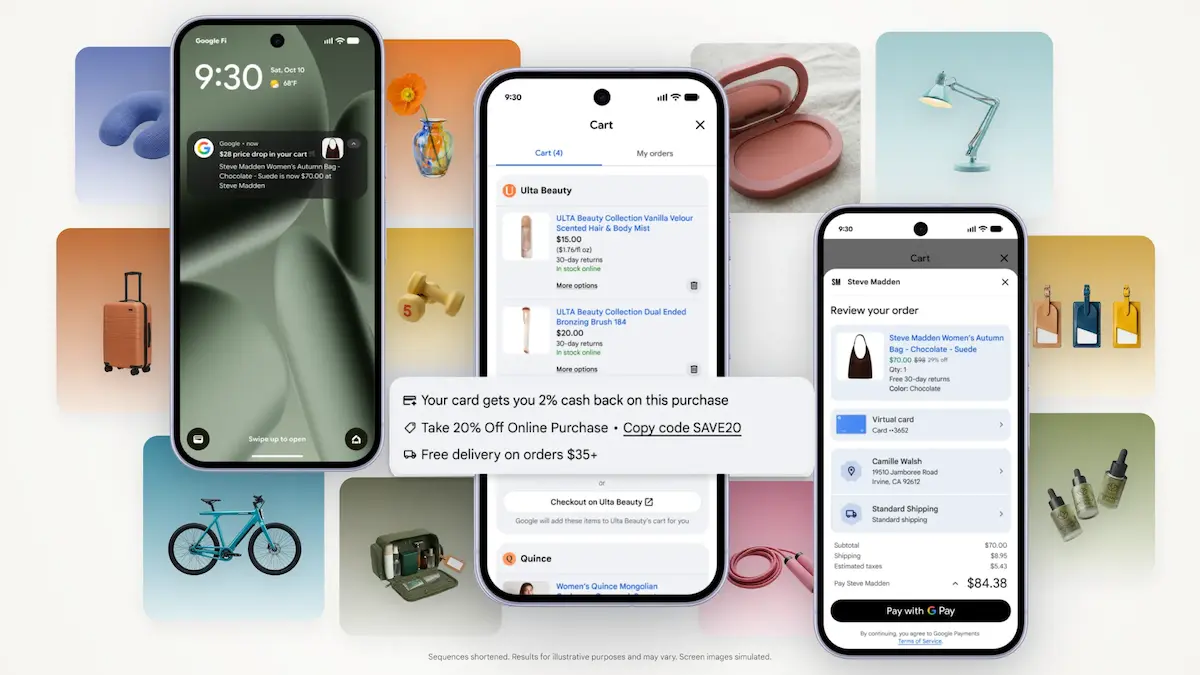
Google announced on Thursday that "Universal Cart," an innovative tool designed to let users seamlessly collect and monitor products they discover across Google Search and within the Gemini app, is now officially available to users in the United States. The tech giant first previewed the ambitious tool earlier this year in May at its annual Google I/O developer conference, where it captured the attention of retail and technology analysts alike as a sign of where e-commerce is heading.
The core concept behind Universal Cart is to make the increasingly fragmented online shopping experience far easier to manage for everyday consumers. Under the traditional digital shopping model, prospective buyers often find themselves jumping across dozens of different browser tabs, losing track of items, or forgetting where they originally spotted a specific product. Universal Cart changes this dynamic by allowing a shopper to find something they like, save it directly to their unified cart, and simply move on with their browsing. When the user returns later, their items and overall shopping progress are still securely saved, eliminating the tedious need to hunt down the same products or start the search process all over again. By aggregating items from multiple different retailers into a single interface, Universal Cart effectively functions as a centralized digital hub for browsing, planning, and keeping track of potential online purchases.
Beyond merely holding items in one place, Google says the cart is engineered to actively help shoppers stay on top of changing deals and product availability. The tool possesses the capability to dispatch automated notifications when a saved product undergoes a price drop, or when an item that was previously out of stock becomes available for purchase once more. This proactive alert system is intended to save consumers both time and money, ensuring they never miss out on a favorable price or a restocked item while managing their shopping lists.
The tool is also designed to offer a much higher level of tailored assistance throughout the entire shopping process. According to Google, Universal Cart can intelligently take a user’s specific credit card perks and rewards into account when helping them choose the most advantageous way to pay for their items. Furthermore, the system can automatically surface relevant promotional codes, helping shoppers secure additional discounts without having to manually scour the internet for coupon codes right before checkout.
When it comes time to finalize a purchase, the checkout mechanism is deeply tied to Google’s Universal Commerce Protocol, commonly referred to as UCP. This open standard was introduced by the company earlier this year to establish a common framework for digital commerce. UCP is explicitly designed to help autonomous AI agents and various retail merchants work together seamlessly across different phases of the shopping journey, extending all the way through to the final checkout transaction.
Google is already heavily invested in the broader ecosystem of AI-powered shopping, and the rollout of Universal Cart represents its latest strategic effort to make the consumer experience significantly more convenient. This new feature joins a growing suite of advanced commerce capabilities, such as conversational product discovery embedded directly within Search’s AI Mode. It also aligns with Google’s "Let Google Call" tool, a feature that leverages an advanced AI agent to make actual phone calls to nearby brick-and-mortar stores on behalf of the user, quickly checking whether a specific item is physically in stock before the customer makes a trip.
However, Google is far from alone in bringing sophisticated artificial intelligence capabilities into the e-commerce sector. Major technology competitors are rapidly moving into the same territory. Companies like Amazon, OpenAI, and other corporate rivals have all introduced their own agentic commerce features and systems over the past year. These competitive moves underscore a broader industry-wide push by tech companies to find innovative ways to make conversational chatbots and AI assistants useful for complex transactional tasks, pushing far beyond simple question-and-answering interactions. As the race to dominate agentic shopping heats up, tools like Universal Cart signal a fundamental shift in how consumers interact with the digital marketplace, turning passive web browsing into an active, centralized, and AI-assisted journey.