






When Seiko introduced its first dedicated sports watch, the Laurel Alpinist, in 1959, it was designed to provide reliable, legible timekeeping for outdoor enthusiasts amid Japan’s postwar boom in recreational activities such as hiking and skiing. The name “Laurel” paid direct homage to Seiko’s very first wristwatch, which had been successfully produced in Japan back in 1913. Built specifically to withstand harsh outdoor conditions and unpredictable weather, the original watch featured an airtight screw-down case back engineered to keep out fine dust and sand. It also incorporated distinctive wedge-shaped indices positioned at the 12, 3, 6, and 9 o’clock positions to ensure maximum legibility in low-light environments, a 17-jewel hand-wound mechanical movement, and a practical leather strap pad designed to protect the watch case from persistent sweat during strenuous physical activity.
Decades later, in 1995, Seiko significantly expanded the Alpinist’s functional capabilities by introducing an innovative inner rotating compass ring, which was skillfully controlled by a second crown positioned at the four o’clock mark on the case. This clever addition allowed adventurous wearers to use the traditional hour hand in conjunction with the sun to accurately determine cardinal directions out in the field, simply by aligning the “S” marker halfway between the hour hand and the 12 o’clock position. Furthermore, this heavily updated model offered an impressive 20-bar water resistance rating, firmly reinforcing its role as a robust, utilitarian field watch built explicitly for demanding outdoor use. Several key design details that were first introduced with this pivotal 1995 model have remained central to the Alpinist’s enduring identity today. Although that generation of the watch was offered in several different dial colors, a striking and distinctive green version quickly became an absolute favorite among collectors. Green was considered an unconventional choice for a watch dial at the time, and Seiko’s management initially expected the unique colorway to struggle commercially before it ultimately captured the hearts of enthusiasts worldwide.

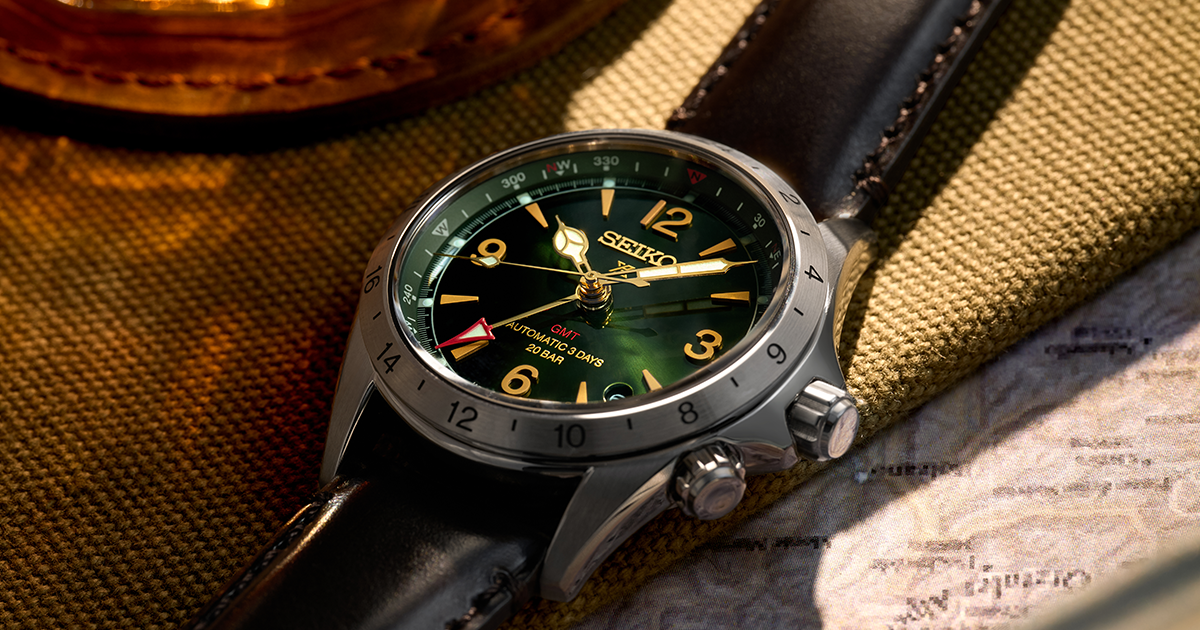
Building on this rich history, Seiko introduced modern mechanical GMT models to the line in 2023. While the sleek blue and black versions—cataloged as the SPB377 and SPB379—were launched as global releases right from the start, the heavily coveted sunray green dial version was initially restricted and reserved exclusively for the domestic Japanese market. Now, with the official global release of the green Alpinist GMT, designated as reference HBC007, Seiko is finally bringing this widely sought-after colorway to watch enthusiasts across the globe. In an era when international travel, global business trips, and digital interactions across multiple time zones have become completely commonplace for modern professionals, the integration of a GMT function feels like a remarkably natural addition to the Alpinist collection. It successfully transforms a timepiece originally rooted firmly in rugged land navigation into a versatile dual-time travel companion, all while carefully retaining its core mountaineering aesthetic and adventurous identity.

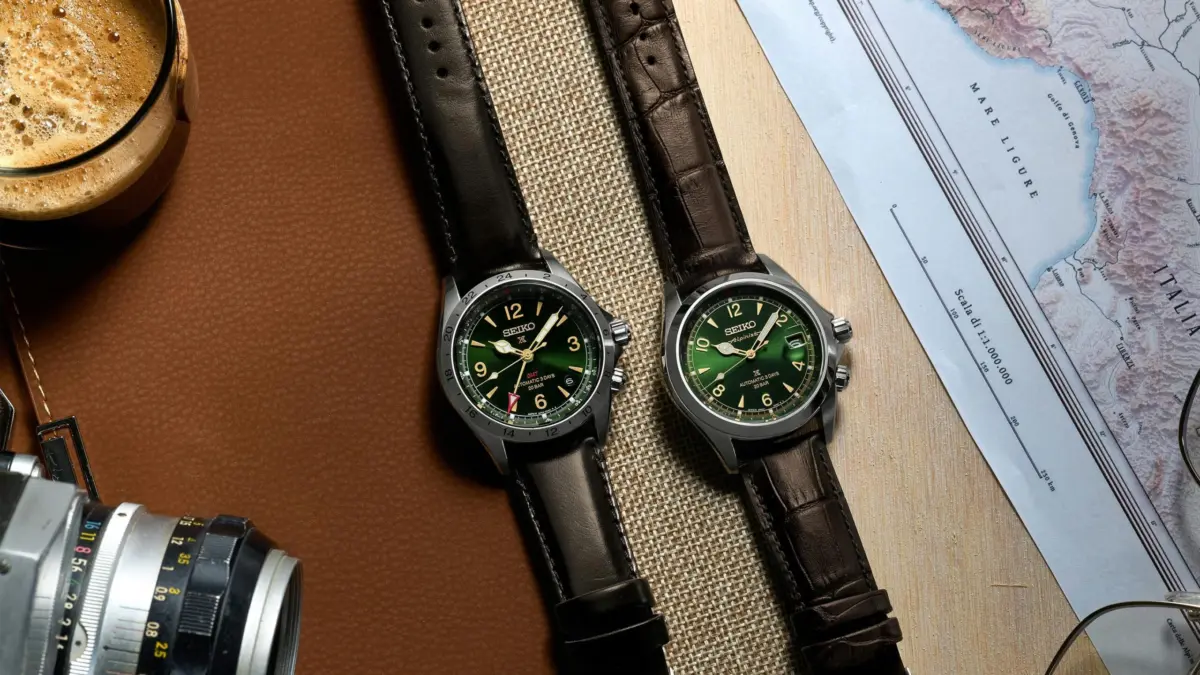
Comparing the newly global green Alpinist GMT (HBC007) with the classic three-hand Alpinist Mechanical, known as reference SPB507, clearly highlights how Seiko has thoughtfully adapted the collection’s evolving design language over the years. The GMT model features bold Arabic numerals at the 12, 3, 6, and 9 o’clock locations, accompanied by a discreet date window positioned neatly between the 4 and 5 o’clock positions. By sharp contrast, the standard three-hand SPB507 utilizes traditional even-numbered markers around the dial. In another notable design choice, Seiko has intentionally removed the date magnifier, often referred to as a cyclops lens, from the crystal of the GMT model. This omission allows for an entirely unobstructed, pristine view of the rich sunray dial beneath its gently curved sapphire crystal. Additionally, a fixed stainless-steel outer bezel carries a clean 24-hour scale, while the inner rotating compass ring displays crisp, highly legible white lettering that complements the overall aesthetic.
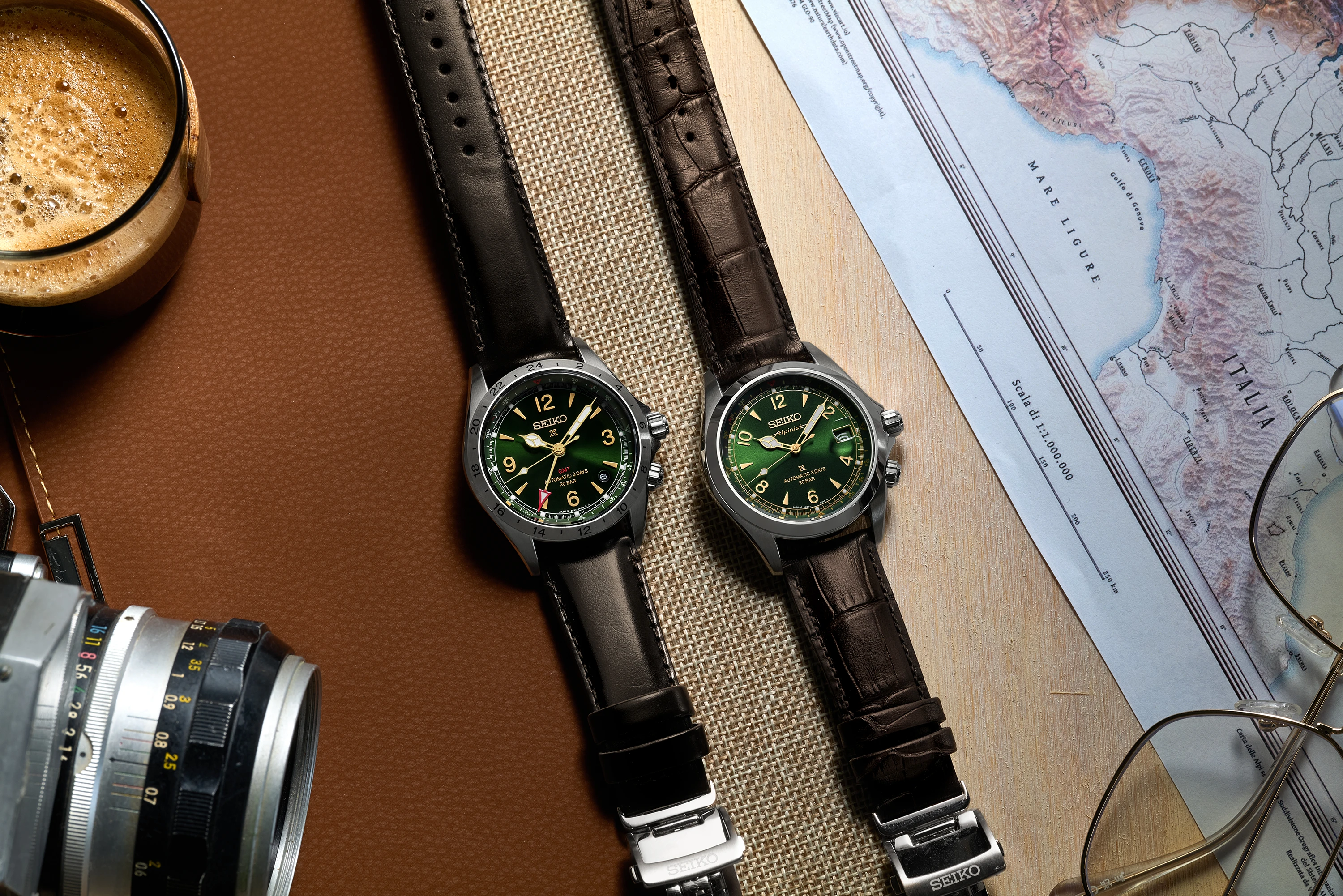
The captivating green dial gives the Alpinist GMT a contemporary, fresh take on its deeply ingrained outdoors-inspired heritage, whereas the standard three-hand Alpinist maintains a slightly more traditional and classic character overall. Subtle gold-colored details are integrated to add a touch of warmth and vintage appeal, with their relative prominence influencing how dressy each individual watch feels on the wrist. Furthermore, the accompanying leather straps distinctly emphasize their differing personalities: a darker leather tone lends a classic, refined appearance suitable for formal or professional settings, while a lighter brown leather strap feels decidedly more relaxed and casual for everyday wear. To accommodate the advanced automatic Caliber 6R54 movement along with its independent 24-hour GMT hand, the HBC007 case measures 13.6mm in thickness, making it marginally thicker than the 12.7mm profile found on the Caliber 6R55-powered SPB507. Despite this slight variance in depth, both watches share the exact same versatile 39.5mm case diameter and a comfortable 46.4mm lug-to-lug measurement, ensuring they wear exceptionally well across a wide variety of wrist sizes.
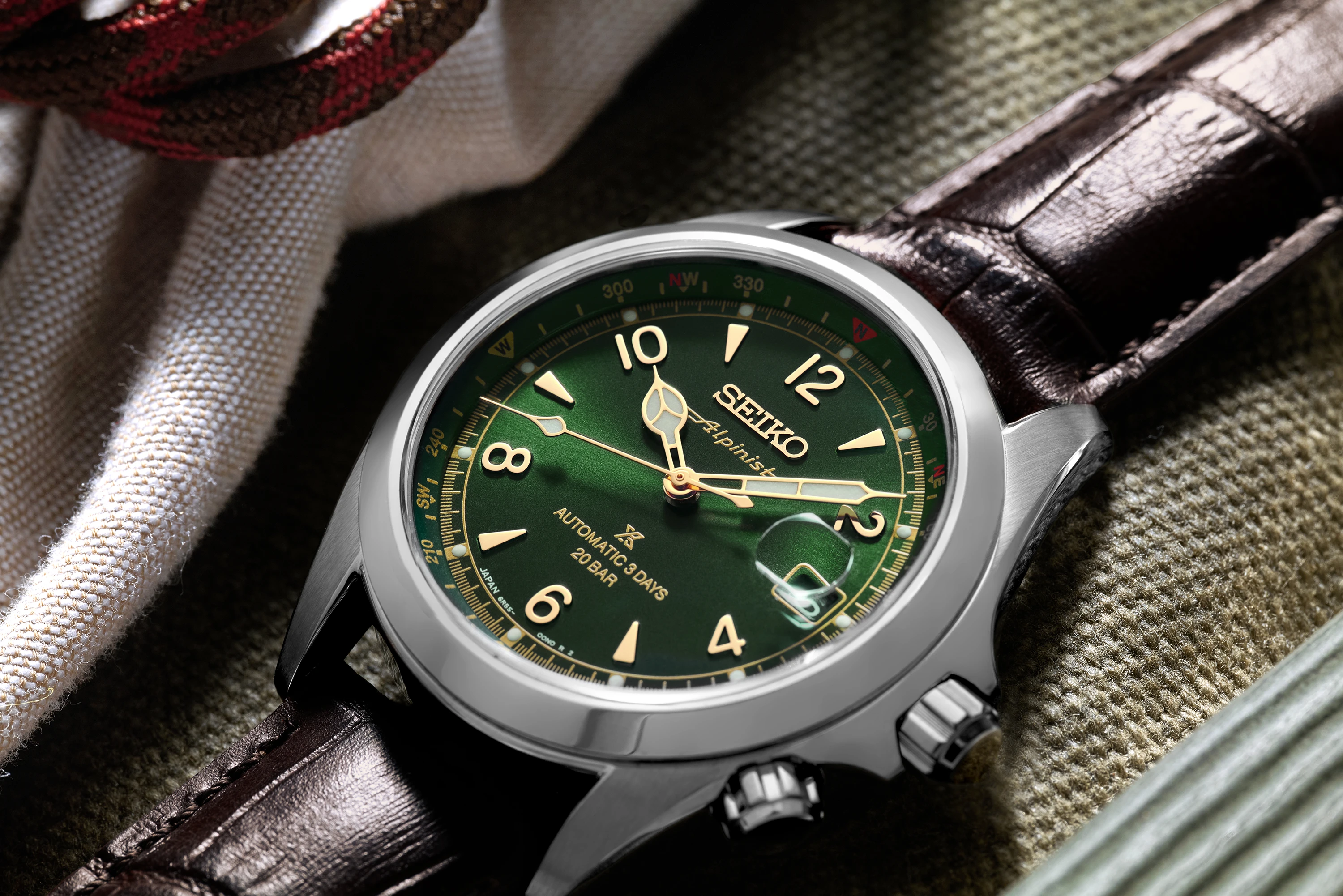
Despite these notable functional differences and movement updates, both references faithfully retain the signature design details that are responsible for the Alpinist’s legendary and enduring appeal among collectors. These cherished elements include the distinctive cobra-shaped or cathedral-style hands, the sharp wedge-shaped hour markers directly inherited from the 1959 original piece, and the secondary crown that operates the inner compass ring. Furthermore, both watches offer robust specifications including 20-bar water resistance, a scratch-resistant super-hard case coating designed to keep the metal looking pristine over years of heavy use, a supple brown calf leather strap, and a dependable 72-hour power reserve that ensures the watch keeps ticking accurately even if left unworn over a long weekend.

The unique combination of vintage-inspired aesthetic charm and practical, heavy-duty outdoor capability has consistently helped the Alpinist find a passionate audience among both urban watch collectors and serious outdoor adventurers alike. With the long-awaited global release of the green Alpinist GMT, Seiko successfully builds upon that rich and storied legacy, pairing modern dual-time functionality with classic compass navigation in a refined timepiece that effortlessly bridges its rugged mountaineering origins with contemporary international travel.