




"Is fashion art?" It is the perennial question that haunts the industry, sparking endless debates in lecture halls, design studios, and front-row circles alike. Designers are inherently creative people who, both out of natural habit and in a perpetual, restless search for inspiration, constantly engage with different mediums and the vibrant, subcultural communities that surround them. Yet what is truly changing in the modern era is the public prominence of these high-concept conversations. This shift is brilliantly exemplified by the creators with whom major fashion houses now partner—figures like Amelia, a 32-year-old TikTok art historian and Columbia University student better known online as Meelz on Art, whose rigorous aesthetic analysis has earned her coveted front-row seats at major runway shows hosted by luxury powerhouses like Loewe and Dior.
"I think art is probably the largest, most influential cultural movement on fashion designers, on designers of all kinds," Dr. Elizabeth Way, curator of the Art X Fashion exhibition at the Museum at FIT, tells Vogue. For undeniable proof of this enduring synergy, one need look no further than legendary heritage brands like Louis Vuitton and Dior. Earlier this year, these iconic houses flexed their immense cultural prowess by staging their high-profile cruise shows at world-renowned art institutions—Louis Vuitton taking over The Frick Collection, while Dior showcased its latest resort collection against the dramatic backdrop of LACMA.

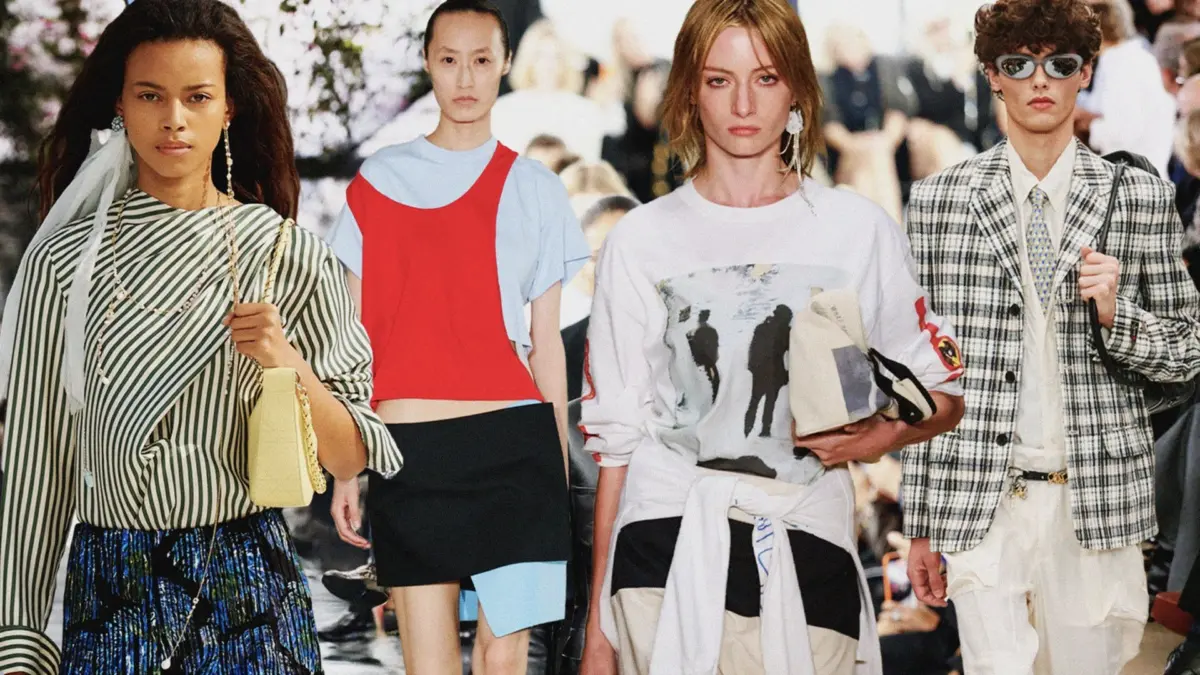
However, one certainly does not need to step inside a traditional museum to witness or make this connection. Vogue’s Laird Borrelli-Persson recently combed through more than 400 reviews from the spring 2027 collections, searching specifically for explicit art callouts and historical references. Naturally wide-ranging—encompassing everything from the disruptive absurdity of Dadaism to 18th-century-inspired contemporary art—the resulting list provides a fascinating, multifaceted window directly into the brilliant, often complex brains of today’s top creative directors.
Historical Painters and Modern Paradoxes
Some polar-opposite artistic sources can somehow produce strikingly complementary results on the runway. Take, for instance, the emerging label Lii, whose profound love for Alex Katz’s distinct graphic flair exists miles away from Loewe’s deep, reverent references to 17th-century Spanish master painters Francisco de Zurbarán and Diego Velázquez—the former of whom has works currently on view at the Louvre. Despite their wildly different origins, both spring 2027 collections were filled with exceptionally unique visions of futuristic sportswear that captured the imagination of critics and audiences alike.

"Loewe was especially intriguing because it was so paradoxical," says Amelia, reflecting on the collection’s complex visual vocabulary. "It was at once extremely contemporary and simultaneously steeped in tradition. Many of the pieces were bright and saturated and exhibited severe, geometric purity. This showed up in dramatic drapery a la Zurbarán and courtly embellishment, like the clothes in a Velázquez portrait."
Across the fashion landscape at Dior, things followed a distinctly more traditional, yet equally elevated, artistic vein. "The most explicit art historical connection in his recent show came in the form of Jonathan Anderson’s replication of an 18th-century wooden chair from his personal collection, which served as seats for some of the guests," Amelia notes.

That said, the airy, weightless refinement of the clothing itself took on the precise, ethereal motion blur characteristic of Gerhard Richter’s celebrated abstract paintings. Channeling further classical traditions, designer Bora Aksu drew deeply from the captivating legacy of 17th-century portrait artist Mary Beale, while Zimmermann creative director Nicky Zimmermann looked far back into the natural world, drawing inspiration from the intricate 19th-century illustrations of natural historians Harriet and Helena Scott.
Whimsical Sculptures and Abstract Expressions
In stark contrast to the painterly portraits, the whimsical, kinetic spirit of artist Alexander Calder popped up as a major source of inspiration on multiple occasions during the season. At Givenchy, creative director Sarah Burton drew direct references from Calder’s famous Cirque Calder, translating the playful, wire-formed characters into wearable art. Meanwhile, over at Michael Kors, the designer zeroed in tightly on the sharper, more mod aspects of the sculptor’s iconic shapes, resulting in structured silhouettes that balanced mid-century modernism with metropolitan utility.

The intersection of literature, visual art, and fashion was equally apparent elsewhere. Rachel Comey’s landmark 25th-anniversary show served as a heartfelt, sprawling ode to the multifaceted visual artist and novelist Rosalyn Drexler. Simultaneously, Kiko Kostadinov took the menswear category into a thoroughly experimental edge, building garments that mirrored the textural, optical relief works of Italian artists Agostino Bonalumi and Nanda Vigo, proving that menswear is just as capable of engaging in high-level intellectual discourse as womenswear.
Meanwhile, Prada’s collection of 63 distinct skirts made a subtle, retrospective nod to one of the brand’s own celebrated traveling exhibitions from the early 2000s, an immersive installation titled "Waist Down."

"We used the skirt as a framework for different ideas, different approaches, like a raw material to express concepts," Miuccia Prada explained in the official show notes distributed to attendees. "The limitation of its simple shape, almost like a canvas, can force ideas, make you reinvent the form within its strict confines."
Notably, the skirts’ exquisite gradient-dyed leather carried an intense visual weight that was strikingly reminiscent of the deeply emotional, brooding color-field works of Mark Rothko.

"Art teaches clothing how to transcend its necessity," says Anne Higonnet, a noted art historian and professor at Barnard College. "Every day, people out there are using color, shape, texture, composition, and rhythm to go beyond covering our vulnerable, knobby, oozing, mobile anatomies, beyond even expressing our position in society."
Ultimately, as these spring 2027 collections brilliantly demonstrate, if you are going to wear the clothes, you might as well understand the profound artistic references woven into every thread.