





The history of the diamond is a captivating journey that spans millennia, defined by shifting trade routes, religious transformations, mechanical innovations, and a relentless human fascination with the hardest substance on Earth. Long before diamonds became symbols of eternal devotion and staples of modern jewelry, their very existence in ancient texts was a matter of linguistic confusion, and their shaping was restricted by profound technical limitations and cultural taboos.
Pre-Roman Diamonds
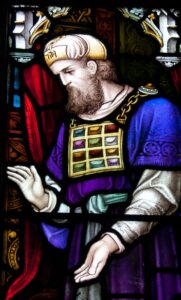
The earliest chapters of diamond history are shrouded in mystery, filled with ambiguities that continue to challenge historians and gemologists. For generations, readers of the Bible have encountered references to diamonds, notably in the Book of Exodus, which describes the breastplate of judgment featuring a row of stones including a diamond. However, scholars confirm that these references stem from erroneous translations of ancient terms.
The Hebrew word yahalom—derived from halam, meaning "to beat"—and the Greek adamas, meaning "indomitable" or "invincible," were frequently translated into English as "diamond." While these terms undoubtedly referred to extremely hard minerals, assuming they specifically designated the diamond is a modern projection. Ancient Greek literature presents a similar issue; writers like Plato used adamas, but there is zero proof it referred to diamonds. The term was likely used to describe gold, non-noble metals, or perhaps corundum.
Early gemological historians lacked access to translated Sanskrit texts, obscuring India’s profound historical role in the diamond narrative. While when diamonds entered human life remains unclear, where they entered is undisputed: India. An ancient Indian treatise, the Arthasastra, dating back to the 4th century BC, provides the earliest definitive insight into the diamond trade. By this era, diamonds were actively known, traded, and taxed in India, accompanied by established classification systems and diamond experts, implying a long-standing history of use.
Roman Diamonds
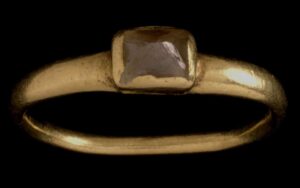
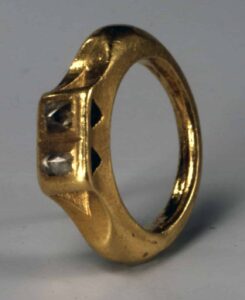
By the Roman era, diamonds were undeniably known and worn, prized as ring stones, with several surviving uncut examples preserved in the collection of The British Museum. The Roman scholar Pliny wrote extensively about diamonds in his Naturalis Historia, declaring them the most valuable of all human possessions. While Pliny did not mention any fashioning or cutting of the stones, he vividly detailed their incredible hardness and perfect cleavage:
"These stones are tested upon the anvil, and will resist the blow to such an extent, as to make the iron rebound and the very anvil split asunder," Pliny wrote. He noted that when a stone broke, it fractured into microscopic particles prized by engravers to cut the hardest known substances.
Despite these accurate observations, Pliny clearly confused certain minerals with diamonds. Experts suggest the Romans rarely accessed perfect crystal rough, as Indian suppliers reserved the finest specimens for native markets. For centuries, cultural and religious beliefs dictated that diamonds protected their owners from harm, but many believed this divine crystal would lose its powers if altered from its natural state. Consequently, cutting diamonds was viewed as a taboo, and early practices were restricted to removing unwanted mineral matter from freshly mined crystals.
The Introduction of Diamond Cutting
Following the decline of the Roman Empire, diamonds temporarily disappeared from European jewelry. India remained the sole source of diamonds until the 18th century, but the collapse of Roman trade routes severely disrupted Western supply chains. Furthermore, the spread of Christianity diminished the gem’s popularity in Europe by condemning the superstitious attributes associated with it.
Conversely, the diamond retained its prestige across the Indian and Islamic worlds, preserved in historical texts from those regions. The Ratnapariska by Buddha Bhatta, dating back to at least the 6th century AD, notes that flawed diamonds should not be used as gems, but rather ground down to create diamond powder for polishing other stones. By the 10th century, Islamic scholar Al-Biruni documented similar practices, noting that lapidary workers pulverized diamonds to polish other gems.
Reliable evidence of actual diamond cutting eventually emerged by the 13th century. Jewelry historian Jewelry historian Jack Ogden reported examining medieval Islamic jewelry dating back to the 1300s featuring simple table-cut diamonds, representing the oldest known cut diamonds in existence. This timeline aligns with the Indian text Agastimata, written shortly after the 13th century, which explicitly stated that diamonds could only be polished using other diamonds.
Europe
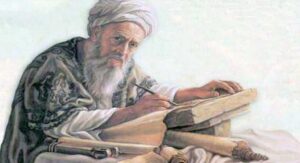
European diamond cutting likely originated in Venice shortly after 1330, coinciding with Venetian merchants reopening trade routes to the East. As Islamic merchants brought cutting and grinding techniques along with the rough stones, European craftsmen began experimenting. Because Indian and Islamic middlemen retained the finest crystals, European artisans were compelled to work with whatever rough materials they could acquire.
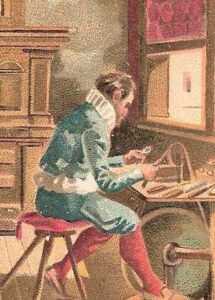
Technical limitations restricted early European cutters to superficial polishing of natural crystal shapes. However, the introduction of continuous rotary motion in tools during the 15th century revolutionized the craft, enabling artisans to grind facets into diamonds with unprecedented precision and creativity.
Transition
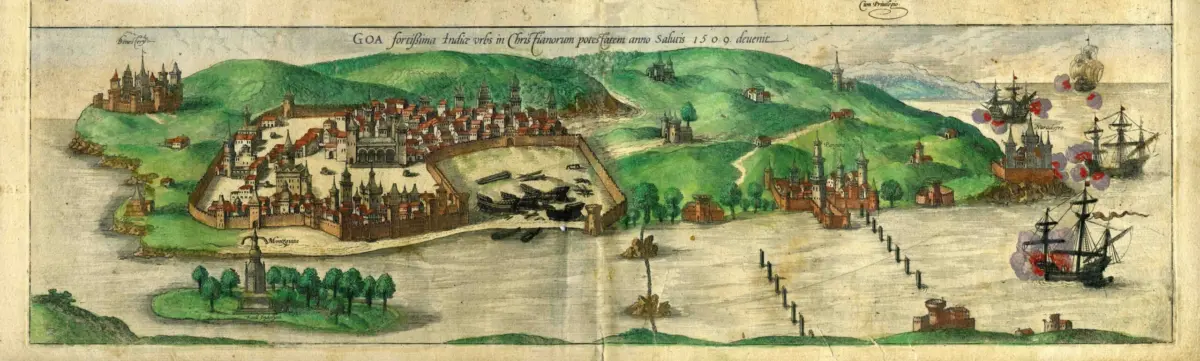
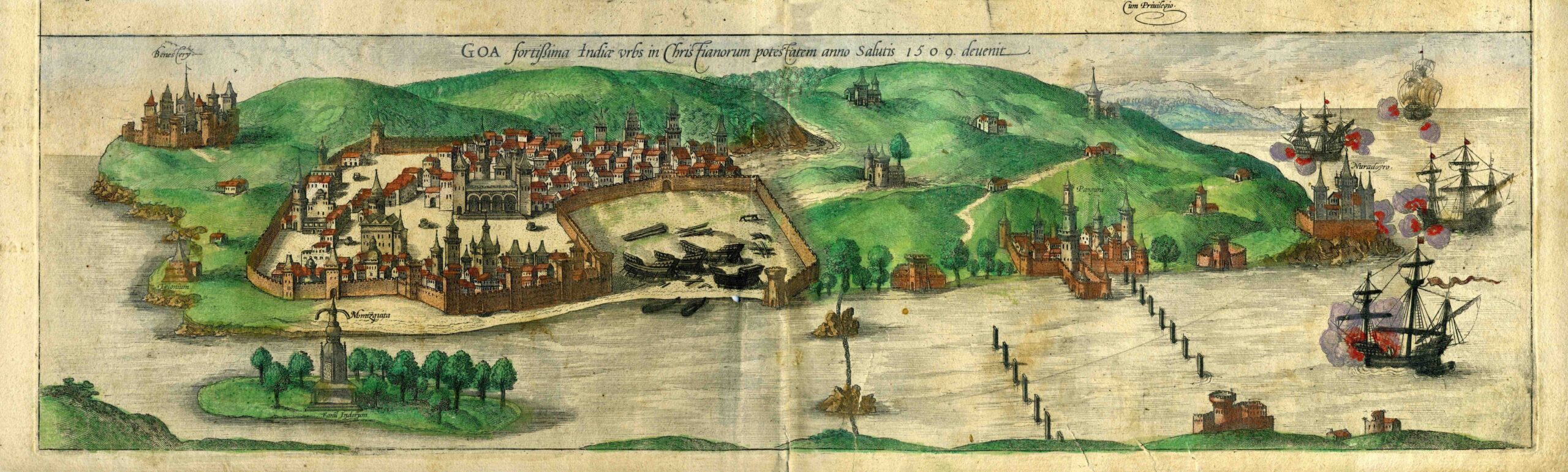
The Age of Discovery ushered in a steady influx of luxury goods into Europe as naval explorations expanded. Following the Portuguese conquest of Goa in 510, the city became the primary diamond port of India, significantly boosting Europe’s diamond supply. Although diamonds remained exceedingly rare, the shift in European economic power toward the North Sea in the late 15th century established Paris, Bruges, and Antwerp as major polishing centers.
These emerging northern cutting communities operated largely outside the rigid guild system, allowing Jewish artisans—displaced by religious extremism and the Inquisition in Spain, Portugal, and France—to actively participate in the trade. Within these communities, advanced cutting techniques flourished. Court documents from Augsburg detail a diamond weighing 11.50 carats before polishing and just 5 carats afterward, illustrating the dramatic weight loss associated with true faceting.
The 16th century witnessed the rise of genuine faceting techniques. The Rose cut emerged alongside early table cuts enhanced with additional crown and pavilion facets. Elongated rectangular stones, known as hogbacks, served as forerunners to the baguette cut, while master goldsmith Benvenuto Cellini documented the era’s sophisticated cutting processes in his 1568 treatises. Cellini described how cutters rubbed two diamonds together to achieve desired shapes—a process known as bruting—and used the resulting diamond powder mixed with oil to achieve a final polish on steel wheels.
Grinding
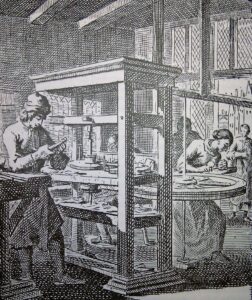
Mastering diamond cutting required a deep understanding of the mineral’s unique physical properties. Beyond its unmatched hardness, diamond possesses "directional hardness," meaning it is harder in certain crystallographic orientations than in others. Octahedral crystal faces, for instance, lie in planes of high relative hardness and are virtually impossible to polish directly. Consequently, cutters must introduce facets on planes differing by a few degrees from these hard crystallographic directions.
Cleavage
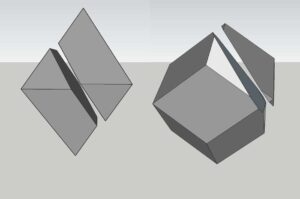
The second property shaping diamond cutting is perfect cleavage. While diamonds possess supreme hardness, their toughness is more nuanced, allowing smooth fractures to occur when force is applied along specific crystal planes. Although ancient artisans used broken diamond fragments for engraving, and mid-13th-century Islamic writer Ahmad ibn Yasuf al Tifaschi documented diamond cleavage, utilizing cleaving as a deliberate gem-shaping technique became prominent in post-medieval Europe and India.
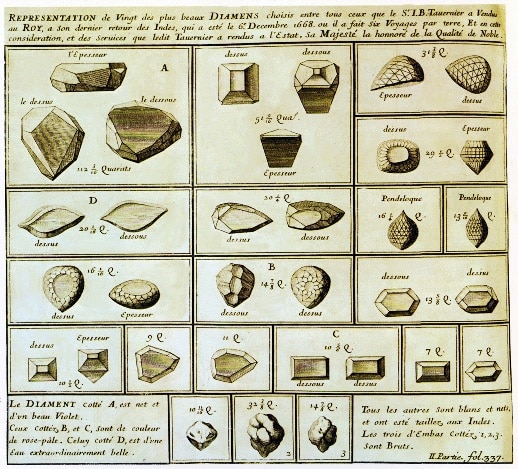
In 1665, French traveler Jean-Baptiste Tavernier observed Indian miners skillfully cleaving rough stones containing large flaws. The flat slivers produced by knocking the apexes off dodecahedral crystals formed the earliest rose-cut diamonds, which remained exceptionally popular for centuries.
Sawing
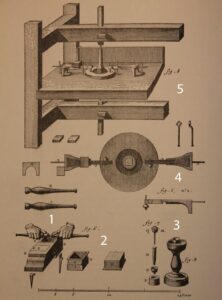
The final foundational technique added to the cutter’s repertoire was diamond sawing. Described by Johannes de Laet in his 1647 lapidary work, the method involved dressing a thin wire with diamond powder and oil to painstakingly saw across the stone. Although labor-intensive, this technique persisted alongside cleaving well into the 19th century.
Indian Diamond Cutting
Jean-Baptiste Tavernier’s extensive travel accounts in his Six Voyages provide invaluable insights into 17th-century Indian diamond processing. Tavernier described mills operated by teams of workers, utilizing traditional wheels anointed constantly with oil and diamond powder by young assistants. While European cutters occasionally struggled with stubborn diamonds featuring natural internal knots, Indian artisans routinely tackled such challenges, demonstrating extraordinary expertise that yielded the historic stones collectively known as the Mughal Cut.
Baroque Roses and Brilliants
During the late 16th century, the Rose cut evolved into a standardized form characterized by a flat bottom and a dome-shaped crown covered in triangular facets. As the Baroque era ushered in candle-lit gatherings, demand grew for stones capable of maximizing candlelight reflections, giving rise to early brilliants.
Unlike modern round brilliants, these early brilliant-cut diamonds were asymmetrical, inheriting their outlines directly from the natural rough. Dodecahedral rough yielded rounded outlines, while octahedral rough produced square shapes with rounded corners, anticipating the modern cushion cut. These early brilliants featured pavilion-based designs with triangular and diamond-shaped facets on both crown and pavilion. Famous examples of this era include the Wittelsbach and the Grand Sancy diamonds, though table, point, and rose cuts remained dominant until the 18th century.
Enter Brazil
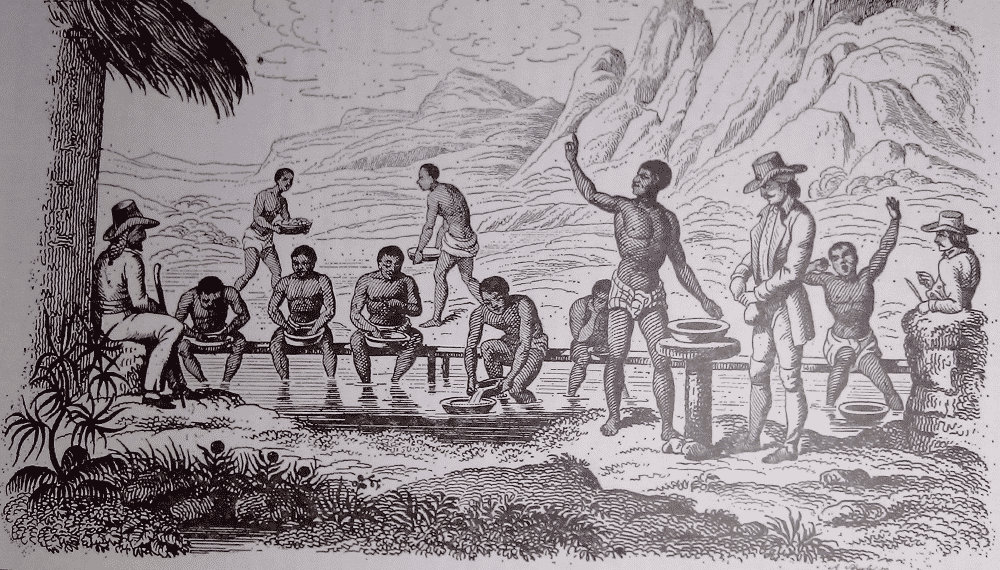
Just as Indian diamond mines approached exhaustion in the early 18th century, diamonds were discovered in alluvial deposits around Diamantina, Brazil, beginning around 1725. The steady production that followed revolutionized the global market, flooding Europe with rough diamonds and causing prices to drop to 30 percent of their previous levels.
This unprecedented availability transformed diamonds from exclusive treasures reserved for nobility into luxury items accessible to a broader prosperous class. As the cutting industry expanded, the brilliant cut steadily eclipsed older traditional styles, setting the stage for the rise of Old Mine Cut stones throughout the 18th and 19th centuries.

Eureka
The growth of a prosperous European and American middle class during the 19th century fueled surging demand for diamond jewelry. As Brazilian production waned by the 1860s, European cutting houses in London, Antwerp, and Amsterdam faced severe supply shortages.
The crisis was averted by the discovery of the Eureka diamond in South Africa around 1867. This historic find not only launched South Africa’s diamond industry but also rescued the struggling cutting houses of Belgium and the Netherlands.

Modernization
The turn of the 20th century marked the complete industrialization of diamond cutting. Henry D. Morse and Charles M. Field patented steam-driven bruting machines in the 1870s, paving the way for the first electric bruting machines in 1891 and enabling the commercial production of truly symmetrical round brilliants.
In 1900, a Belgian immigrant in the United States invented the motorized diamond saw, allowing artisans to precisely shape rough stones regardless of natural cleavage planes. Backed by a steady influx of South African rough, traditional craftsmanship evolved into a high-tech modern industry.
The round brilliant continued to be refined into the "ideal cut," while specialized innovations emerged, including the Asscher cut in 1902, the reintroduction of the baguette cut in 1912, and the princess cut in the 1960s. Although the devastating impact of the Holocaust on Jewish communities in Antwerp and Amsterdam permanently reshaped the European cutting industry, new global centers arose in Israel and India. Today, advanced technologies like virtual 3D computer modeling and laser sawing ensure maximum yield and precision, continuing a technological evolution that began millennia ago.