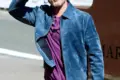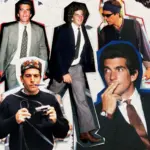





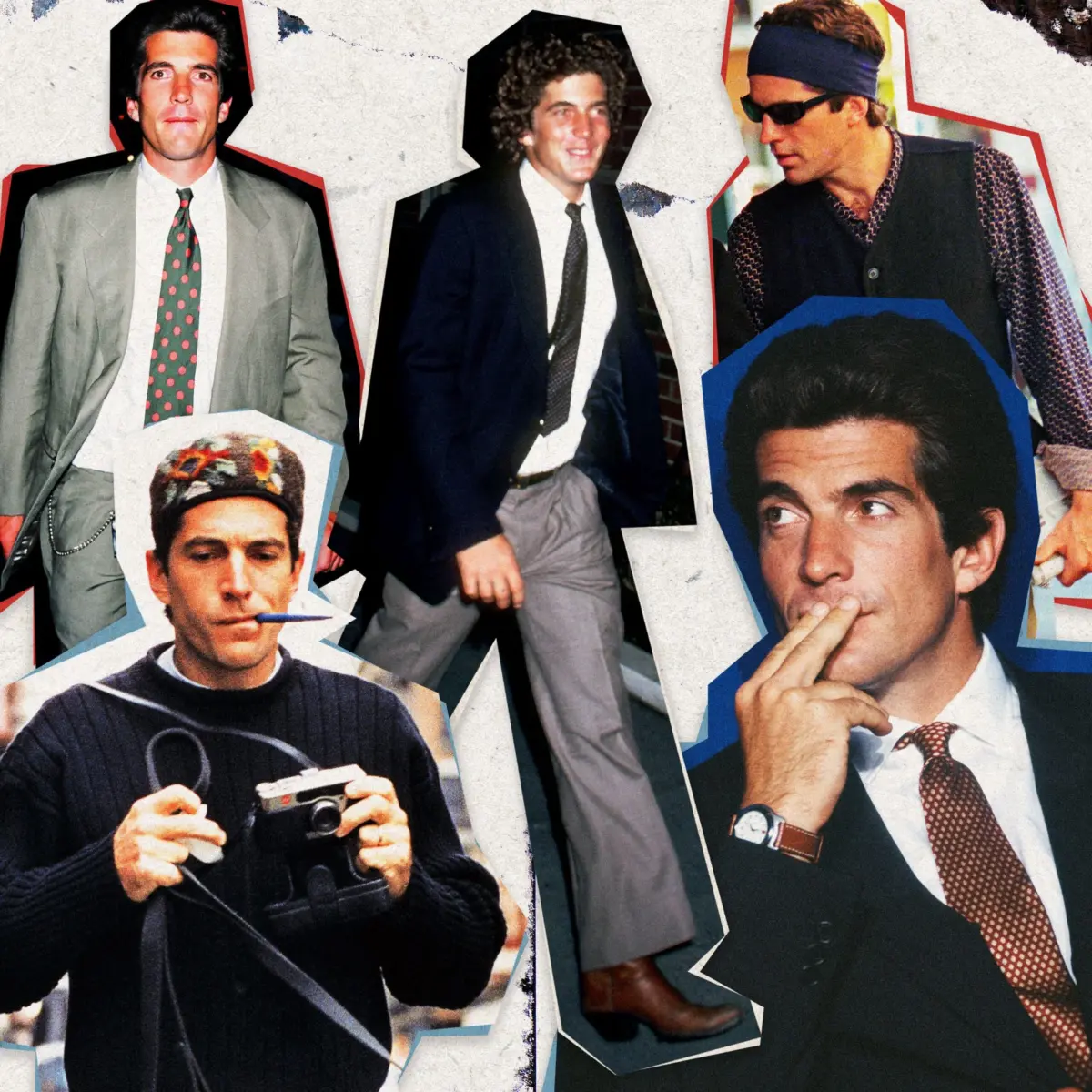
John F. Kennedy Jr. was far from the first person to ride a bicycle through city streets while clad in a sharp suit. Nor did the presidential scion and People magazine’s 1988 “Sexiest Man Alive” single-handedly invent the backward Kangol cap, the pinstriped suit, or the unconventional pairing of a tailored waistcoat with classic casual attire. Yet, long before the era of modern social media mood boards and deliberate street-style photography, Kennedy executed these sartorial choices with a level of effortless authenticity that few have ever matched. That innate sense of dress was a central reason why he became one of the most relentlessly photographed figures on the planet during the 1990s, and it explains why his visual aesthetic continues to serve as a cornerstone for contemporary menswear nearly three decades after his tragic and untimely death.
Attempting to replicate Kennedy’s wardrobe directly, however, presents a distinct challenge for modern dressers. No matter how meticulously one adheres to the exact garments he wore, literal attempts to recreate his image often risk looking like a runner-up in a Washington Square Park lookalike contest. The true magic of his wardrobe lay not in the individual items themselves, but in the compelling personal presence and underlying attitude of the man wearing them.
To anyone who crossed paths with him during his prime in 1990s Manhattan, Kennedy left an indelible impression. Descriptions of his presence almost universally highlight his distinct charisma, magnetism, and an understated charm. Contemporaries and observers frequently noted that, despite his overwhelming photographic presence, he appeared even more striking in person. Understanding the mechanics behind this undeniable style legacy requires looking past the surface aesthetics and examining the subtle choices that made his wardrobe work.
In researching his wardrobe for the book American Style, author Jeremy Freed spent over a year examining extensive photographic archives, reading biographical materials, and speaking directly with individuals who knew Kennedy personally. Immersing oneself in his world reveals clear patterns in how he constructed his daily look. While most people may never look quite as effortless rollerblading through lower Manhattan as Kennedy did, analyzing his approach yields a series of adaptable style lessons that go far beyond simple Kennedyesque imitation.
Mix genres
The foundation of Kennedy’s personal wardrobe rested firmly on four primary pillars: structured tailoring, traditional preppy basics, utilitarian workwear, and athletic sportswear. What elevated his aesthetic from standard high-society dressing was the highly idiosyncratic way he blended these distinct categories together. He regularly paired a backward baseball cap or Kangol hat with a formal suit, layered a cozy polo neck sweater under a rugged tweed blazer, or wore heavy-duty hiking boots beneath sharply tailored trousers.
Interestingly, while the combination of straight-leg jeans, a crisp button-up dress shirt, and a tailored blazer has become widely accepted as a shorthand representation of Kennedy’s signature style, photographic archives present almost no evidence of him actually wearing that specific uniform. In reality, Kennedy rarely wore denim at all. Some acquaintances and observers have speculated that his mother, Jacqueline Kennedy Onassis, viewed blue jeans as inherently shabby, while others noted that denim simply did not suit his highly active, on-the-go Manhattan lifestyle.
Instead, that particular blazer-and-denim combination was popularized by other major 1990s style figures, including designer Ralph Lauren and comedian Jerry Seinfeld. Nevertheless, the underlying concept behind the look remains fundamentally aligned with Kennedy’s overarching philosophy. Capturing his aesthetic is not about copying specific outfits piece by piece, but rather about mastering the precise balance of high-and-low contrasts that makes mixing contrasting menswear categories feel intentional and natural.
Add a wildcard accessory
A defining hallmark of Kennedy’s daily wardrobe was his thoughtful inclusion of unusual, slightly discordant accessories. Whether he was stepping out in a flat cap, sporting his trademark wallet chain, or wearing a sleek pair of Oakley Eye Jacket sunglasses, his outfits almost always featured an element that disrupted an otherwise predictable silhouette.
In many instances, these accessory choices were rooted in pure practical utility. Kennedy was notoriously prone to misplacing his keys and wallet, making a sturdy chain attached directly to his belt loops a functional necessity rather than a pure fashion statement. In other cases, his choices allowed him to inject personal interests and vibrant pops of color into his everyday attire. His collection featured colorful knit caps, fleece headbands worn during winter skiing trips, and an array of distinctive hats acquired during his international travels to destinations like Thailand and India.
For the modern wardrobe, the takeaway lies in choosing accessories that carry a genuine personal connection rather than simply chasing short-lived trends. The critical rule to maintaining this balance, as demonstrated by Kennedy’s own restraint, is moderation: limit yourself to a single standout, wildcard accessory per outfit to keep the look cohesive.
Try a scarf as outerwear
Neckwear played a major role in Kennedy’s practical approach to dressing, especially during the colder months in New York City. He was a dedicated scarf wearer, effortlessly integrating the accessory into outfits ranging from casual athletic joggers and sneakers to his finest dark navy suits.
Rather than letting a scarf hang loosely over his shoulders in a purely decorative fashion, Kennedy typically secured his scarfs using a formal overhand knot or a classic Parisian loop. These structured tying techniques immediately conferred a sense of neatness and intention to his silhouette, even when paired with informal clothing.
Furthermore, Kennedy frequently utilized a thick, heavy-knit scarf as a functional piece of outerwear in its own right. On chilly days, rather than reaching for a heavy winter coat or structured overcoat, he would wrap a substantial scarf over a casual sweatshirt, topping off the look with a knitted beanie. To successfully pull off this move, the key is to avoid choosing a scarf that matches the rest of the outfit too precisely; subtle differences in texture and tone create a far more dynamic visual effect.
Be a watch omnivore
An examination of Kennedy’s personal horological choices reveals a surprisingly diverse and open-minded approach to wristwatches. While lingering rumors persist regarding a long-lost Rolex Daytona gifted to him by his stepfather, Aristotle Onassis—a watch that, if ever recovered today, would command historical significance on par with Paul Newman’s legendary Daytona—documented evidence shows he favored an extraordinarily wide spectrum of timepieces.
Kennedy’s actual documented watch rotation included utilitarian pieces like a Victorinox Swiss Army field watch, a colorful Swatch chronograph, and a classic vintage Rolex Oyster Perpetual, alongside simple quartz models from brands like Timex. This democratic mix illustrates a broader truth about his relationship with fashion: he operated entirely unburdened by brand prestige, price tags, or luxury elitism. He derived just as much genuine utility and visual satisfaction from an accessible quartz watch as he did from a high-end mechanical timepiece.
This omnivorous approach reinforces the idea that true personal style is not tied to luxury price points. A well-chosen, functional watch worn with confidence carries far more character than a piece selected merely for its brand name or status symbol value.
Be interesting
As a member of one of America’s most prominent families who grew up on Manhattan’s Upper East Side, Kennedy naturally owned a wardrobe filled with traditional classic menswear, including structured blazers, crisp chinos, and tailored polo shirts. As an avid athlete and dedicated gym-goer, his closets were equally stocked with functional sportswear, heavy cotton sweatshirts, basic tees, and athletic sneakers. Simultaneously, his role as a prominent downtown figure and magazine publisher meant his wardrobe required high-end formal attire, including bespoke suits and black-tie tuxedos.
Beyond these foundational elements, however, Kennedy possessed a collection of graphic t-shirts celebrating local New York City institutions and historic events. His rotation included worn-in shirts from the historic Russian & Turkish Baths in the East Village, the prestigious New York Athletic Club, and commemorative apparel from cultural milestones like the 1984 NYC Fresh Festival—a landmark event in early hip-hop history.
What ultimately made Kennedy’s aesthetic so memorable and enduring was that his wardrobe served as an unforced, authentic expression of his actual life, background, and personal passions. His clothing reflected who he was, where he came from, and what he enjoyed doing. The ultimate lesson to draw from his lasting influence is that remarkable personal style is rarely about the clothes themselves; rather, it comes from wearing garments in a manner that accurately reflects your own individuality.