Few objects in the domestic landscape possess the peculiar psychological and spatial gravity of the mirror. As French philosopher Michel Foucault famously observed in a 1967 lecture, the mirror occupies a unique ontological status, creating a "placeless place" where an individual can see themselves where they are not. It opens an unreal, virtual space behind its flat plane while simultaneously exerting a physical counteraction on the room it inhabits. Unlike almost any other item in a home—which is typically looked at—the mirror actively hands the room back to its viewer, merging the observer with the observed.
This duality, bridging form and surface, has long captured the imaginations of designers and artists alike. For French designer Jean-Baptiste Fastrez, who has dedicated more than a decade of his creative practice to rethinking the mirror, it represents one of the rare typologies offering absolute freedom to explore the nebulous territory between functional design and pure sculpture.
"I like the paradox of an object that has such a strong physical presence, yet whose image is almost entirely made up of whatever surrounds it," Fastrez explains.
Two of his recent collections developed for Paris-based design house Moustache push this foundational paradox into bold new territory. Through the Zodiac and Sphera series, Fastrez interrogates the boundaries of material, ready-made iconography, and structural illusion, transforming everyday references into striking focal points for contemporary interiors.
The Sculptural Mirror as a Fake Ready-Made
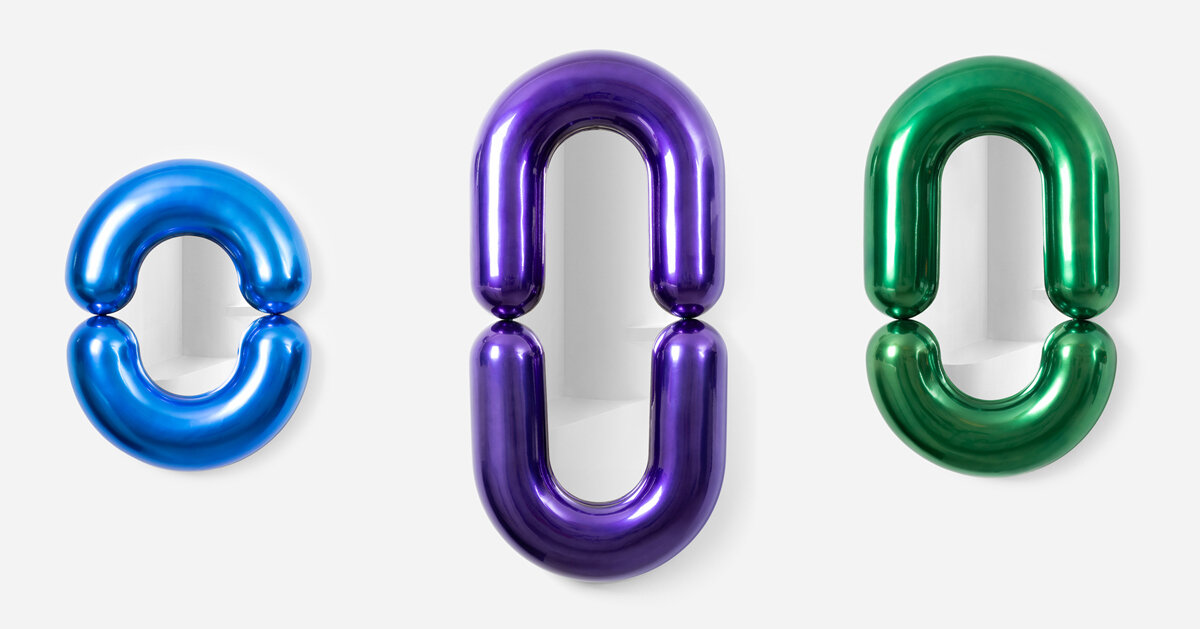
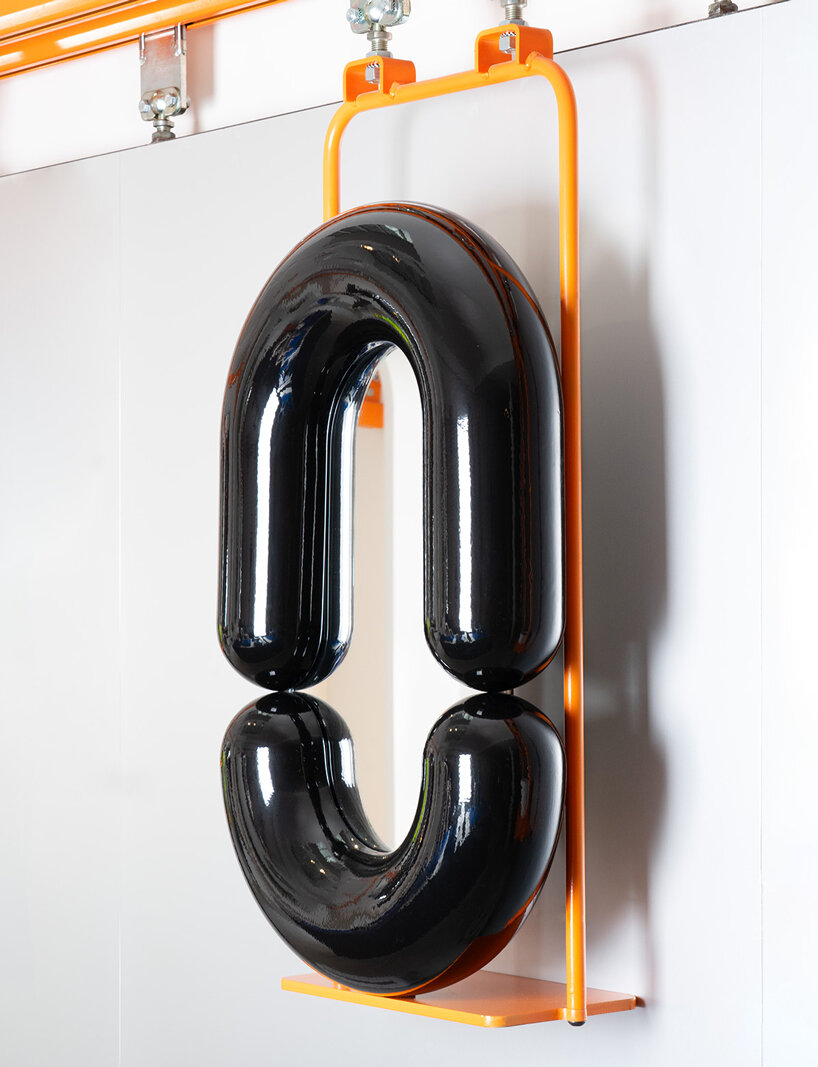
Both collections originate from a fascination with preexisting forms and industrial archetypes. The Zodiac mirror, as its name suggests, draws its distinctive silhouette from the inflatable boat of the same name. Yet, what the eye instantly reads as a soft, inflated rubber tube is, in reality, a meticulously crafted piece of high-gloss ceramic.
"With Zodiac, I was interested in the idea of the ready-made, or rather the fake ready-made," Fastrez notes, explaining his desire to fabricate objects that appear as though they have been cleverly repurposed from entirely different contexts.
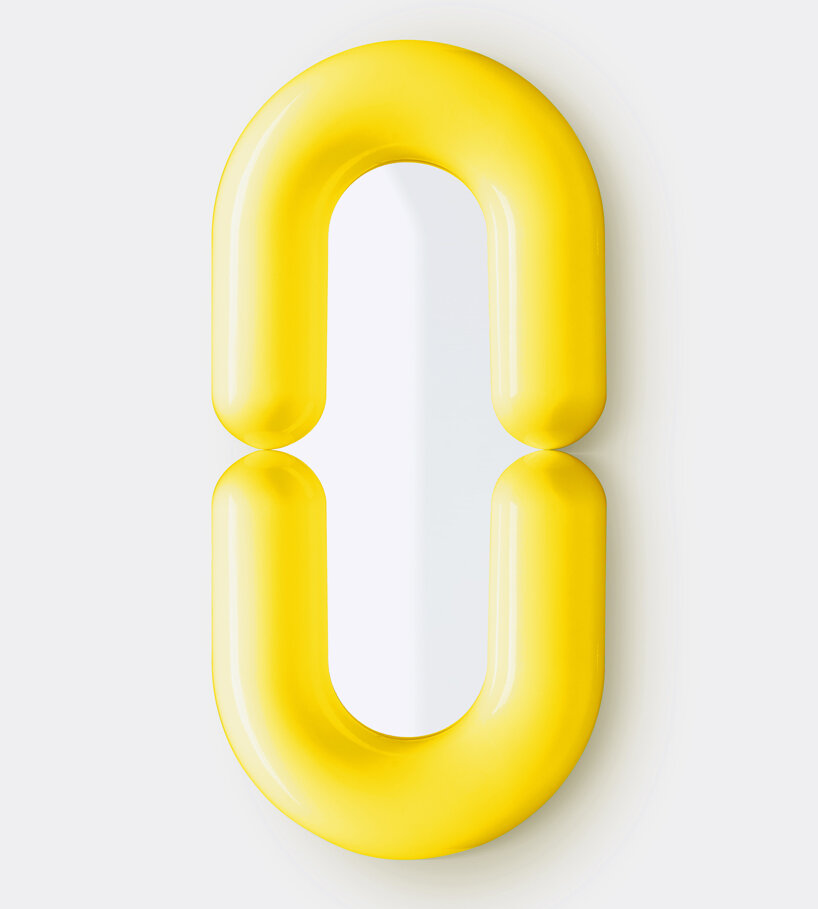
The conceptual narrative imagines a maritime rescue boat unexpectedly hoisted onto a domestic wall and permanently transmuted into a looking glass. For Fastrez, these conceptual collisions between disparate object categories generate powerful, open-ended narratives that retain an aura of mystery.
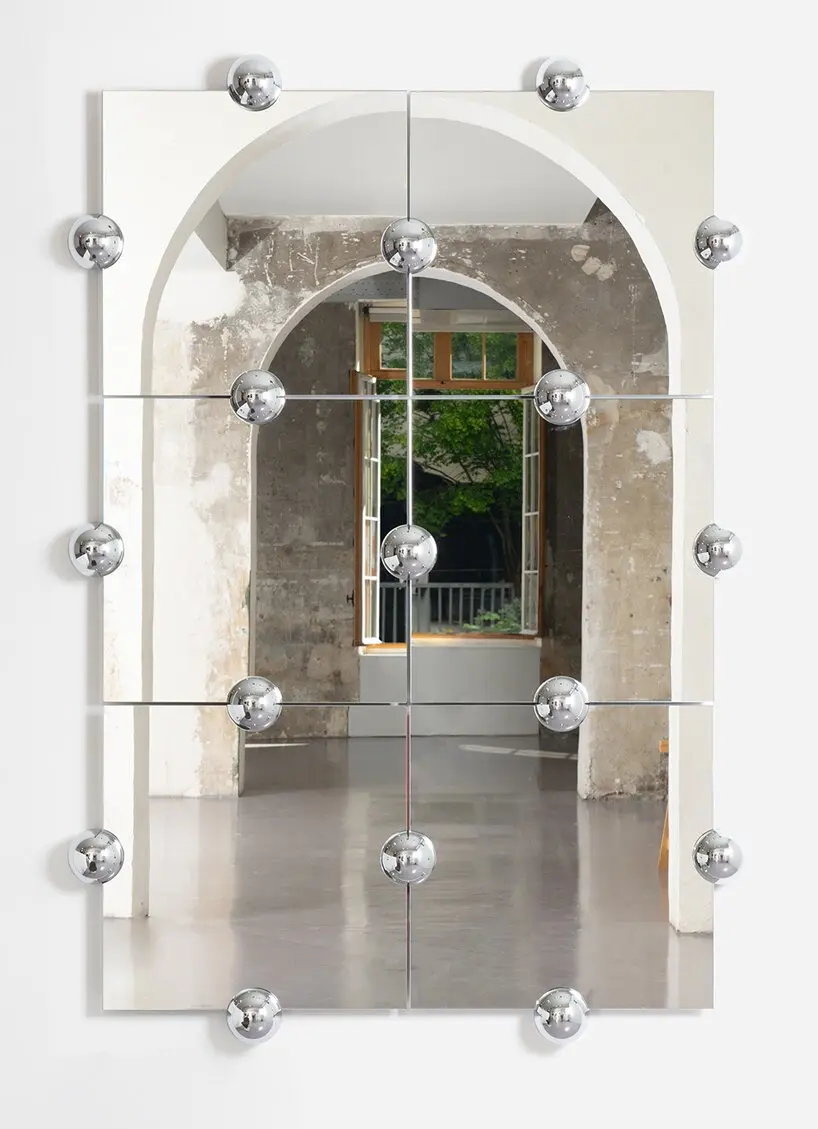
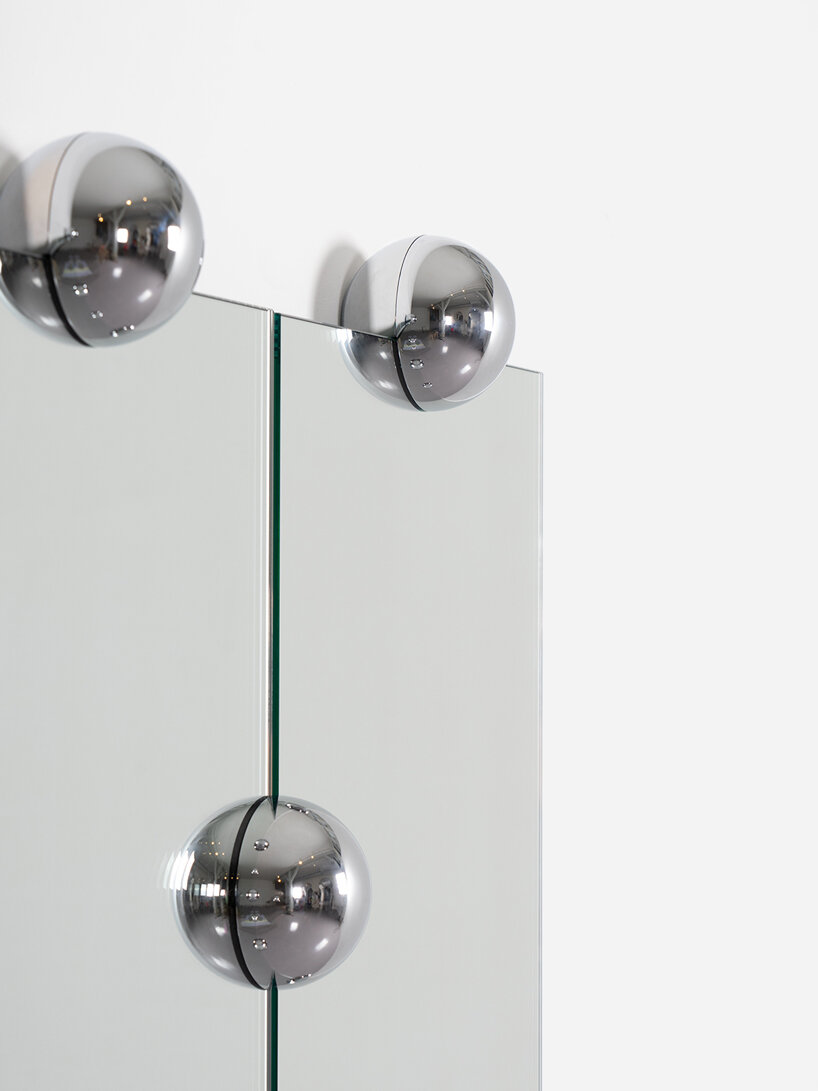
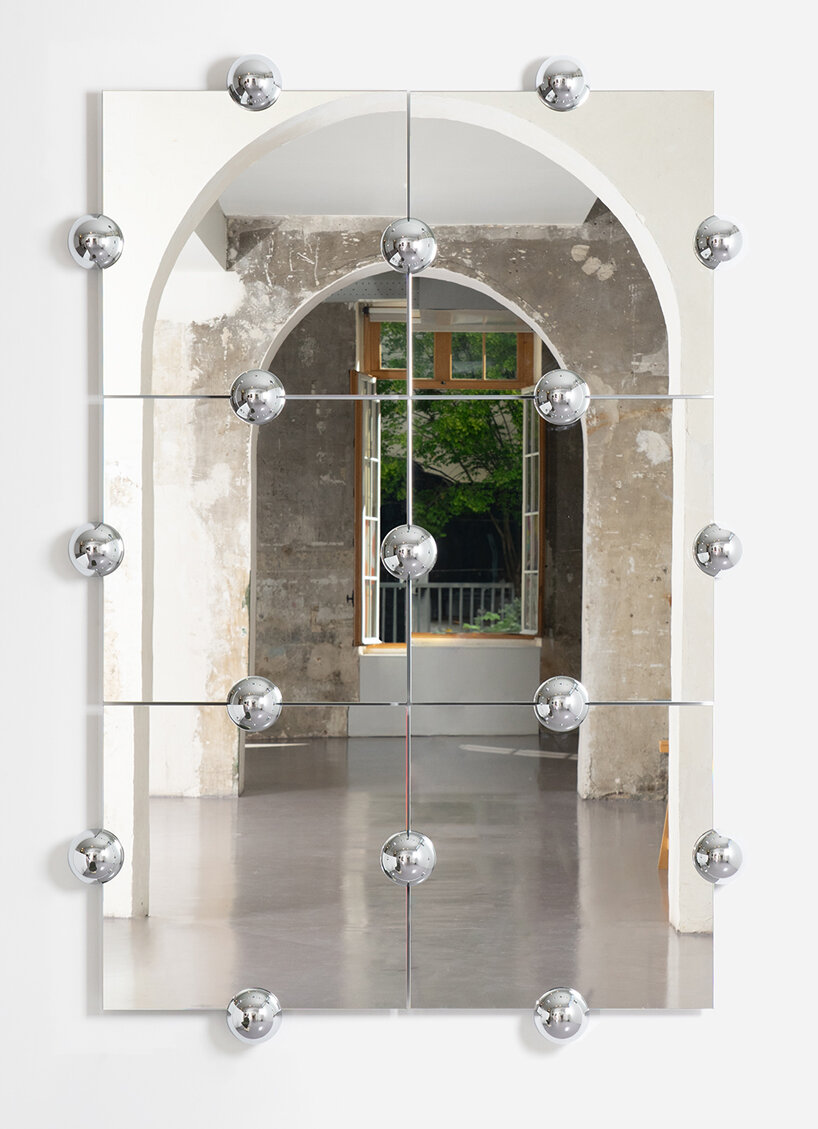
The genesis of Sphera, meanwhile, can be traced to a specific architectural pilgrimage. The idea struck Fastrez while touring the preserved Turin home of Italian architect and designer Carlo Mollino. Several walls within Mollino’s historic apartment are lined with multi-sectioned mirrors held together by modest, functional chrome hardware.
While initially struck by the elegance of the arrangement, Fastrez soon realized that the mounting system was far from an idiosyncratic invention. Throughout the twentieth century, such fixings were ubiquitous, appearing in sophisticated high-modernist interiors as well as ordinary, utilitarian settings like student dormitories and bathrooms.
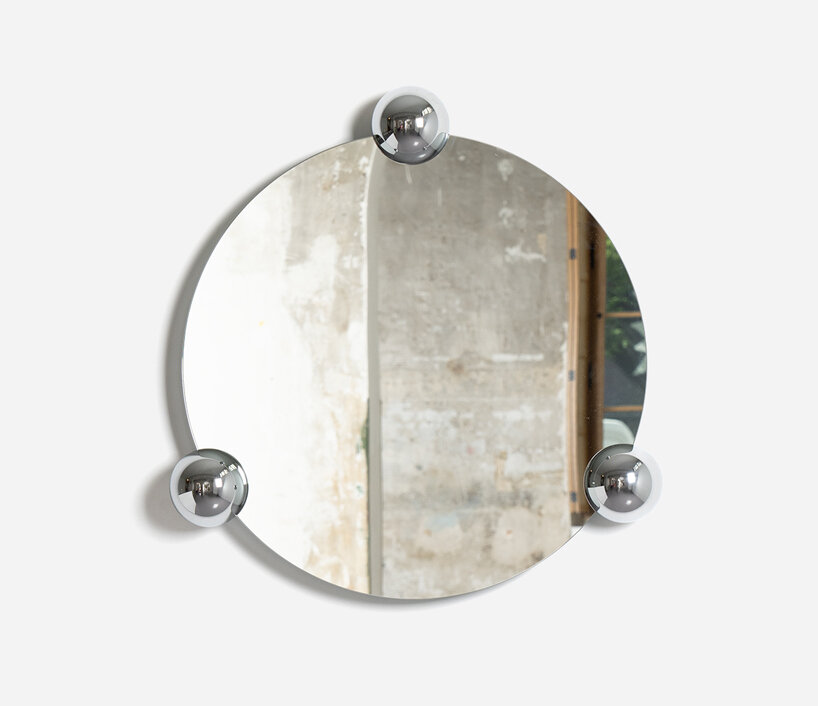
Rather than trying to invent a novel frame, Fastrez chose to alter the scale and geometry of this mundane architectural detail. He recognized the humble hardware as a minimal, highly versatile framework capable of supporting endless compositions. By dramatically increasing the dimensions of the fixing elements and refining their geometry into oversized, mirror-polished chrome spheres, he transformed an overlooked piece of installation hardware into a dominant sculptural feature.
Glass as Structure Rather Than Surface
The enduring appeal of the mirror for Fastrez lies paradoxically in how little it demands mechanically. Unlike a chair or a table, which must bear continuous weight and endure rigorous structural testing, a mirror requires almost nothing of its support system beyond remaining flat. Its functional mandate is reduced to its absolute minimum: as long as a surface is reflective, it functions.
This singular constraint affords the designer nearly total freedom in every other direction. Yet, rather than treating this lack of structural resistance as a blank slate, Fastrez uses Zodiac and Sphera to flip traditional construction logic on its head, treating the glass itself as a structural element rather than a passive coating.
In the Zodiac series, the ceramic frame forms only a semi-circular arc, assembled from two molded components. Where the physical ceramic terminates, the mirror’s reflection takes over, visually completing the form. What the viewer perceives as a pair of inflated tubes floating one above the other is, in truth, a single physical tube coupled with its optical reflection.
"The reflection becomes an essential part of the object’s construction," Fastrez points out.
The Sphera collection relies on the glass with equal literalness. Without the rigid plane of a sheet mirror, the oversized chrome clamping system would have nothing to secure, and vice versa. Visually, the entire piece dissolves into pure chrome and ambient reflections, faithfully capturing its surroundings in the flat glass while distorting them across the bulbous, spherical fasteners.
Ornament as Function in Its Own Right
By elevating ordinary hardware and maritime iconography into high-end design objects, Fastrez wades directly into historical debates surrounding ornament and utility.
"I’m very interested in the idea of taking something as ordinary as a piece of hardware and reworking it until it becomes the strongest aesthetic feature of a project," Fastrez says.
For the French designer, decoration should never feel like a superficial afterthought pasted onto a finished form. Instead, true ornament should emerge organically from the structural and operational logic of the object itself.
This philosophy challenges traditional modernist dogmas that view decoration with suspicion. Fastrez argues that our cultural definition of functionalism is frequently too narrow. While a mirror’s primary purpose is ostensibly to reflect an image, that technical definition ignores its broader spatial and emotional contributions to an interior. Mirrors dictate the perception of volume, introduce light, establish mood, and anchor a room within a specific historical style or narrative.
By framing decoration as a valid, primary function in its own right, Fastrez reframes his creations. According to this perspective, both Zodiac and Sphera are deeply functionalist objects whose forms directly follow their ornamental purpose. Whether through the interplay of a ceramic frame and its reflection or the monumental amplification of industrial fasteners, these mirrors prove that the boundary between structure and decoration can be productively collapsed.
The Zodiac and Sphera collections stand as a testament to Jean-Baptiste Fastrez’s decade-long exploration of reflection, transforming simple everyday materials into captivating spectacles that challenge how we look, and how we are looked at, within our built environments.