




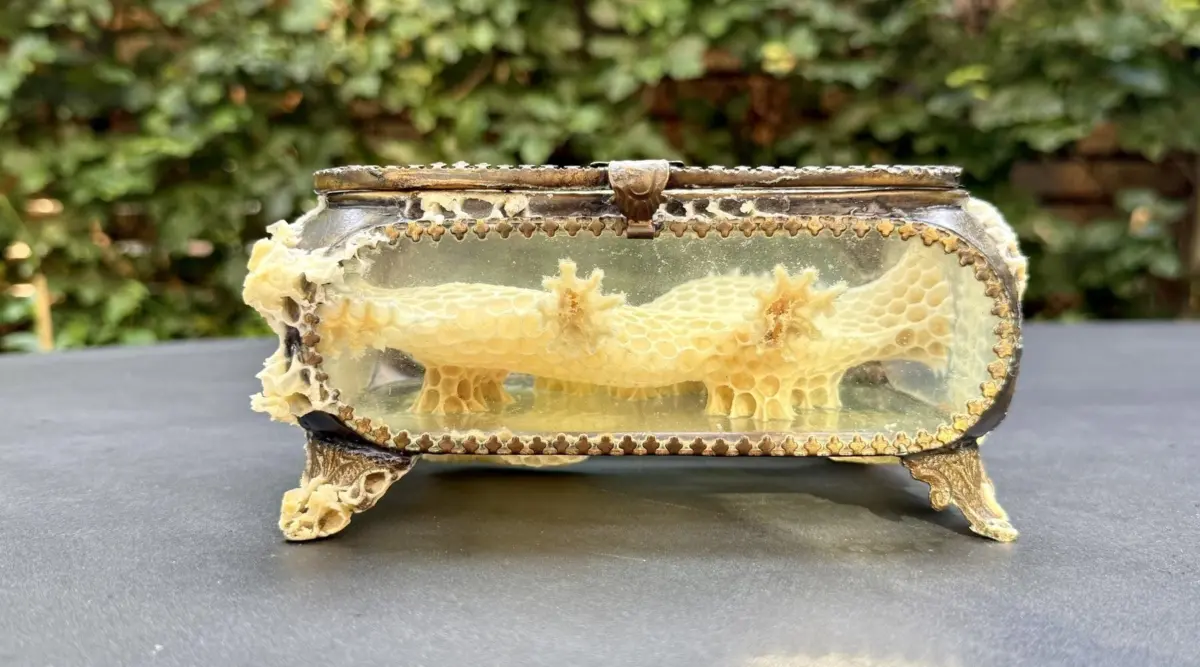
In the quiet, deliberate world of contemporary craft, few artists share authorship quite like Canadian multimedia artist Ava Roth. For over a decade, Roth has looked beyond traditional human-centric mediums to co-create striking sculptural works with one of the planet’s most vital and industrious collaborators: the honeybee. Through projects like her celebrated "Kintsu-Bee" series, Roth challenges conventional definitions of artistry, inviting nature not merely as a subject to be painted or photographed, but as an active, independent partner in the creative process.
Ava Roth and the Art of Kintsu-Bee
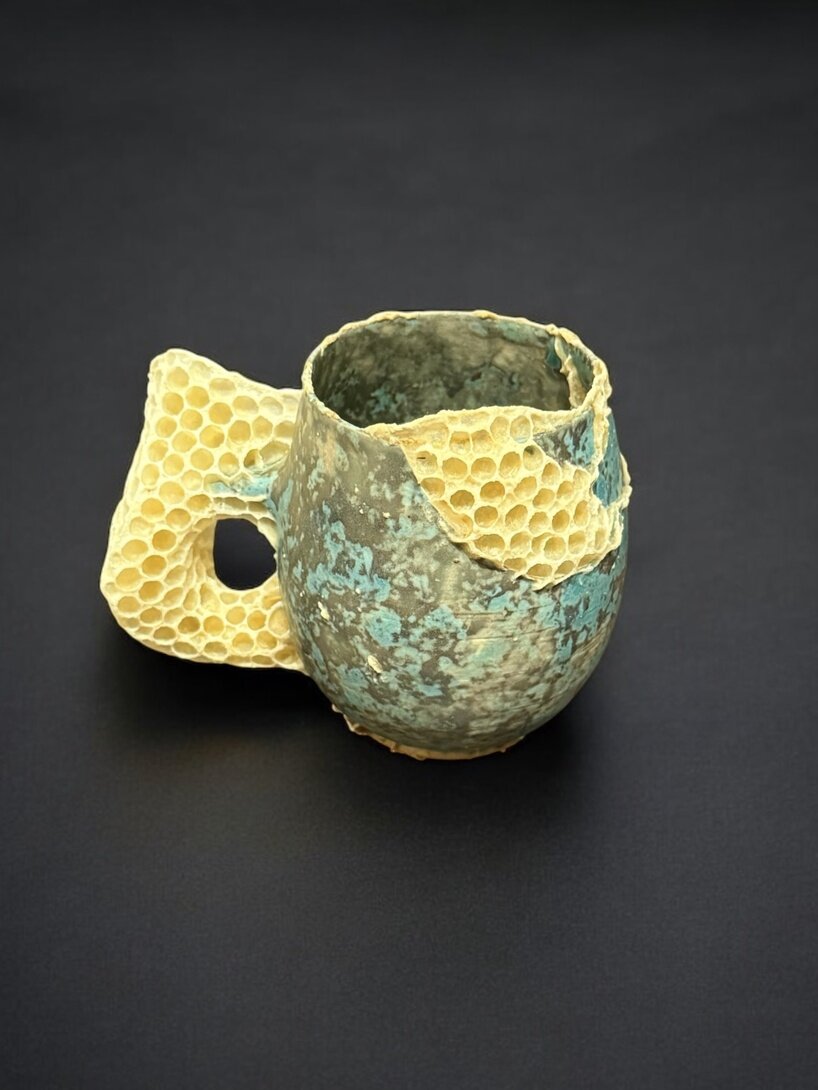
At the heart of Roth’s practice is an ongoing interspecies dialogue that bridges the gap between human craftsmanship and more-than-human intelligence. One of her most compelling ongoing endeavors, the "Kintsu-Bee" series, directly references kintsugi, the traditional Japanese art of repairing broken ceramics with lacquer dusted or mixed with powdered gold, silver, or platinum. Rather than discarding shattered dishware or hiding its flaws, kintsugi highlights the breakage, turning a history of damage into a luminous, valuable new seam.
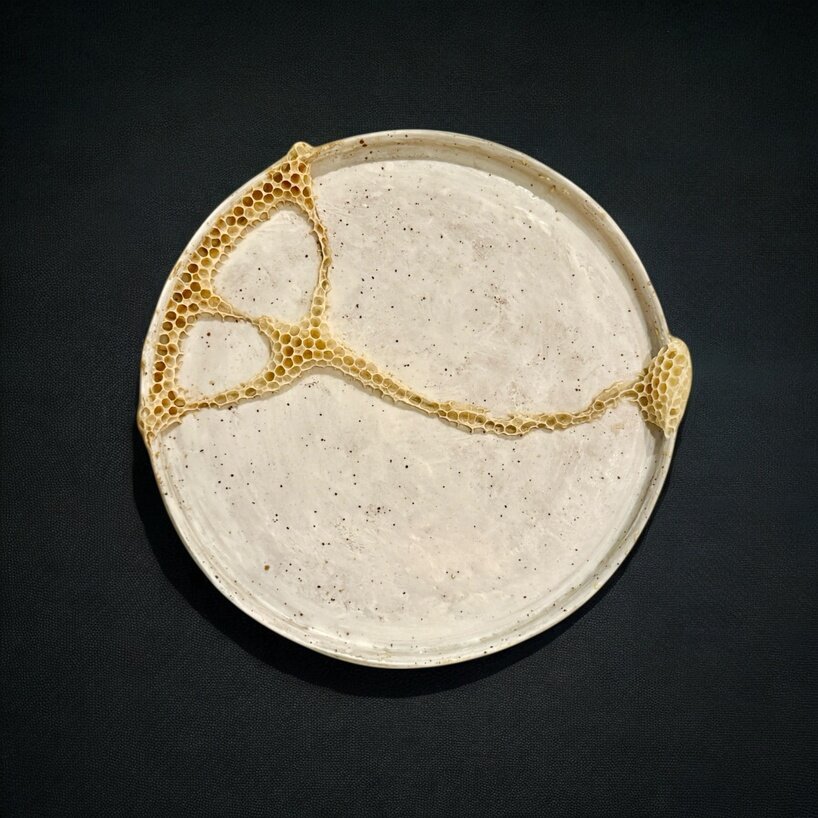
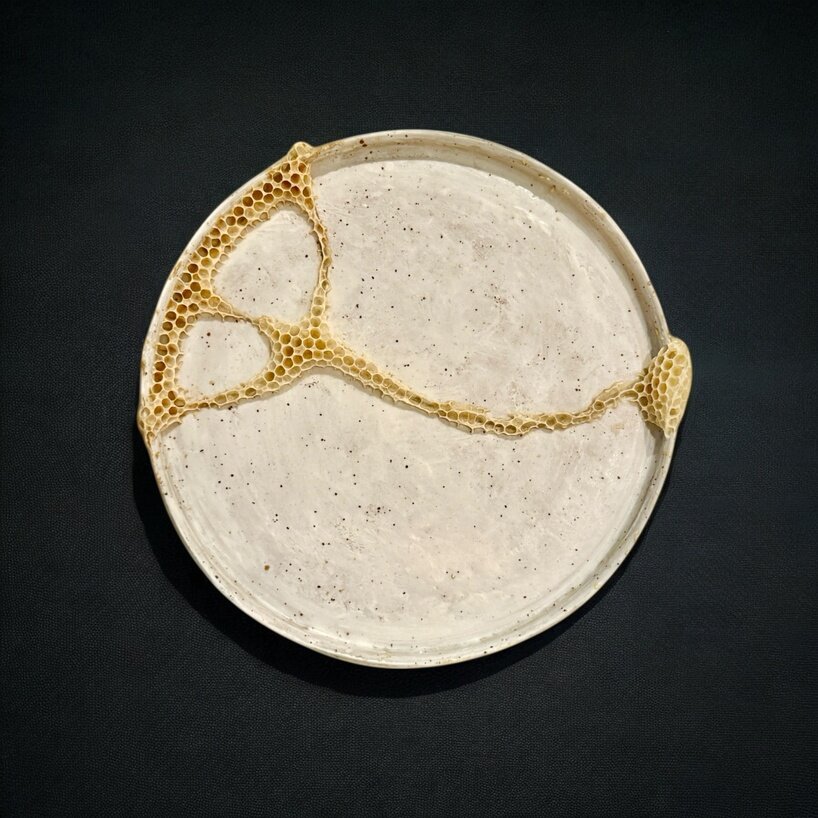
Roth adopts this philosophical framework and translates it into the biological realm. Instead of using precious metals, she places broken ceramics—often crafted in collaboration with ceramicist Satoshi Yoshikawa—directly into a living beehive. As the honeybees build their intricate, golden honeycombs, they naturally secrete wax and weave structural elements that physically bridge and heal the cracked pieces.
Yet, Roth’s ambition extends far beyond ceramic vessels. Over the years, her experimental impulse has led her to introduce frames, textiles, embroidery hoops, beads, and even salvaged driftwood into apiary environments. Recognized by the prestigious Homo Faber and exhibited internationally across Canada and beyond, her work serves as a profound meditation on sustainability, material resilience, and the beauty of shared labor.
Reflecting on her working dynamic with the colony, Roth shares in conversation with designboom: "I am committed to sharing the labor equally, meaning that in each piece I try to give as much of my own time and effort as I am hoping the bees will offer."
Busy Bees and Interspecies Art
The intersection of art and apiculture has long captivated creative thinkers. Nearly two and a half centuries ago, American poet Emily Dickinson observed the quiet, monumental power of the insect world in her 1779 verse To Make a Prairie: "To make a prairie it takes a clover and one bee, / One clover, and a bee, / And revery."
Bees occupy an irreplaceable role in global ecosystems as keystone species, driving the pollination cycles essential to biodiversity and food production. Beyond their ecological utility, their geometric mastery—the flawless hexagonal cells of the honeycomb—and their complex collective intelligence have continually inspired contemporary creators to examine humanity’s relationship with the natural world.
Roth’s practice positions itself within a broader lineage of artists exploring interspecies collaboration and ecological interconnectedness. Notable examples include Pierre Huyghe’s 2012 installation Untilled (Liegender Frauenakt), housed in the collections of the Museum of Modern Art in New York, which features an active beehive resting atop a reclining human nude sculpture to comment on collective animal cognition. Similarly, Alexandra Daisy Ginsberg’s Pollinator Pathmaker project employs algorithms to generate specialized, pollinator-optimized gardens, encouraging urban ecological restoration. These works underscore a growing cultural shift toward acknowledging non-human agency within art, architecture, and environmental design.
Roth and Beeswax
For Roth, this exploration began with traditional material investigation. Long before she introduced objects directly into hives, her primary medium was encaustic painting—an ancient technique involving melted beeswax mixed with resin and pigments, allowing artists to build luminous, textured surfaces comparable to oil painting.
"I was working with encaustic as my primary media," Roth recalls, noting that her early compositions frequently integrated organic elements like golden ginkgo leaves, delicate embroidery floss, horsehair, and photographic prints of expansive bodies of water.
"Being immersed in wax naturally led to a curiosity about bees," she explains. "And the more I learned about bees, the more that knowledge began to inform my work, which in turn led me to take a beekeeping course. During this period of learning, I found myself incorporating pieces of burr comb into my work and building encaustic paintings inside hive frames."
Arriving at a Collaboration with the Bees
That foundational curiosity eventually blossomed into rigorous practical training. Roth apprenticed with Master Beekeeper Mylee Nordin, whose technical oversight and mentorship provided the artist with the confidence required to maintain a backyard apiary. With those foundational beekeeping skills secured, the transition from working with raw beeswax to placing mixed-media frameworks directly inside active hives felt entirely natural.
Crucially, Roth emphasizes that this trajectory was never a calculated conceptual strategy from the outset. Instead, it unfolded organically through playful experimentation driven by a profound respect for her insect collaborators.
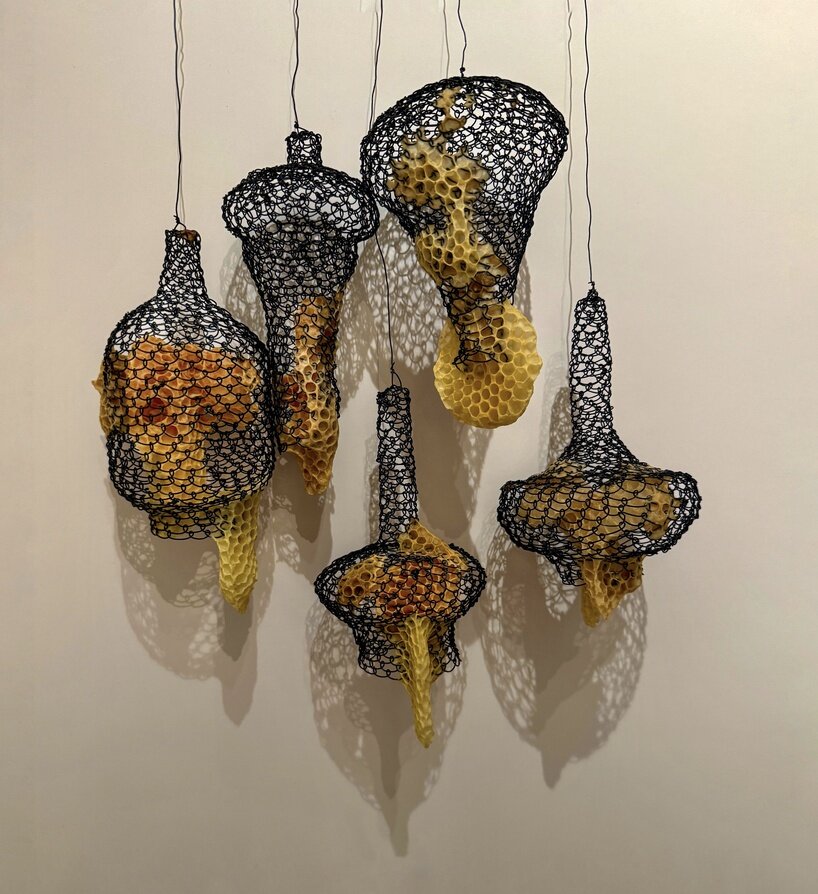
As a multimedia artist, Roth initiates each piece by meticulously arranging embroidery, paintings, photographs, or structural wire before it ever enters the apiary. She carefully engineers each piece with spatial foresight, anticipating where the bees might deposit their honeycomb or how they might alter the composition.
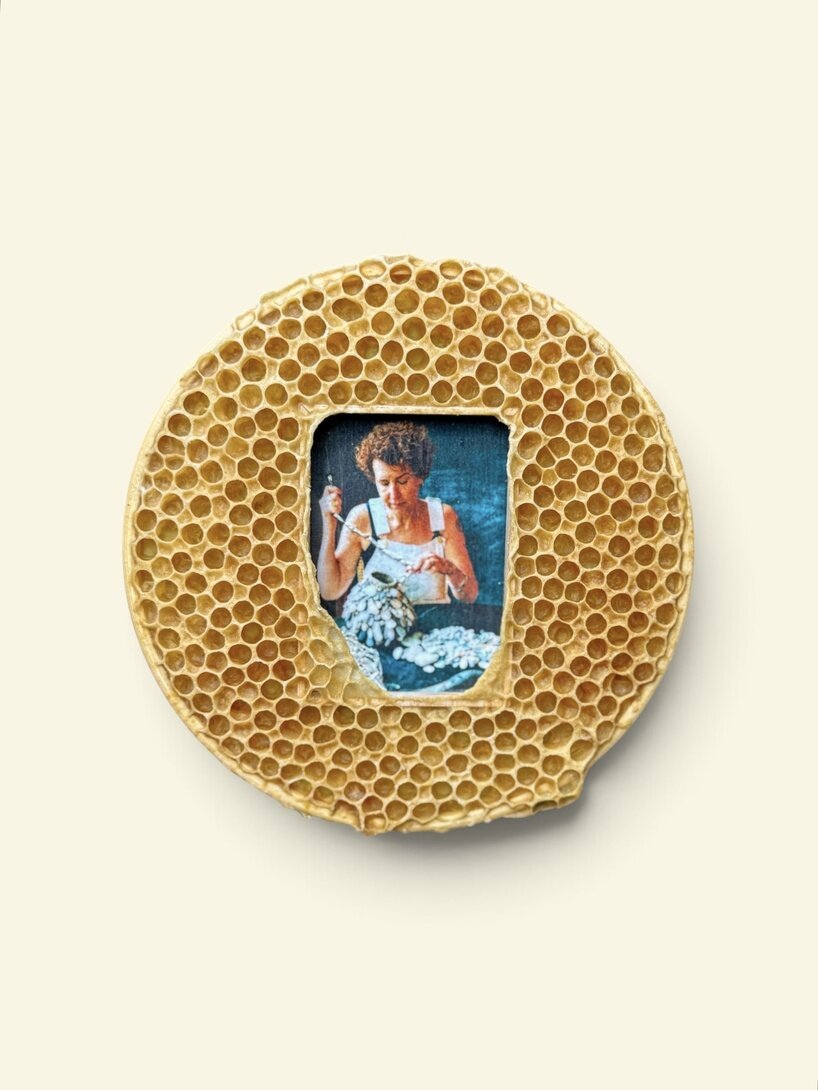
"Control is also something I try hard to share equally," Roth explains regarding her collaborative ethos. "Importantly, I don’t force the bees to engage with the art in any way. In other words, whether or not the bees build their comb on any given piece, let alone how much and in what shapes, is left entirely to them."
More-Than-Human Creativity Abounds
Once Roth introduces a prepared structure into the hive, the completion of the artwork is entirely up to the colony. While honeybee architecture is governed by evolutionary logic and geometry, the results never fail to astonish the artist.
"Most of the pieces surprise [me] in some way, which is one of the great delights of this project," Roth notes. She highlights two distinct projects that defied her expectations. The first was a two-dimensional beaded piece over which the bees constructed a massive, undulating armature of comb—a structure far more complex and voluminous than anything she had encountered in her decade of working with hives. In another instance, involving a small piece of driftwood and knitted wire, the colony spontaneously traced and mimicked the linear pattern of the wire with their wax, creating a breathtaking synthesis of industrial texture and biological form.
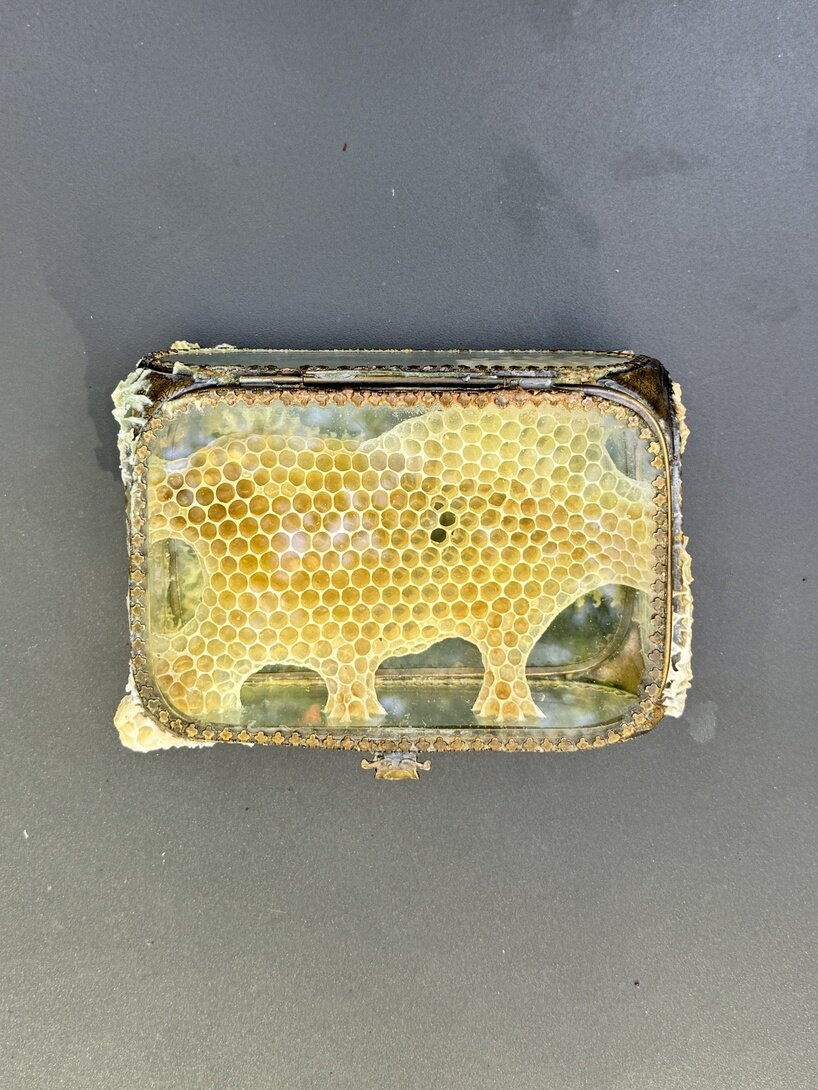
Inherent in Roth’s work is a delicate tension between human intention and wild natural forces. As honeycombs swell, bond, and reshape human artifacts, the work highlights an intelligence that is simultaneously analogous to our own and fundamentally beyond human comprehension. Rather than attempting to dominate or decode that intelligence, Roth creates the necessary physical and conceptual space for it to manifest.
By relinquishing absolute control, sharing authorship, and honoring the labor of her bee collaborators, Roth offers an alternative paradigm for artistic creation—one anchored in patience, reciprocity, and a deep reverence for the natural systems that sustain life on Earth.