






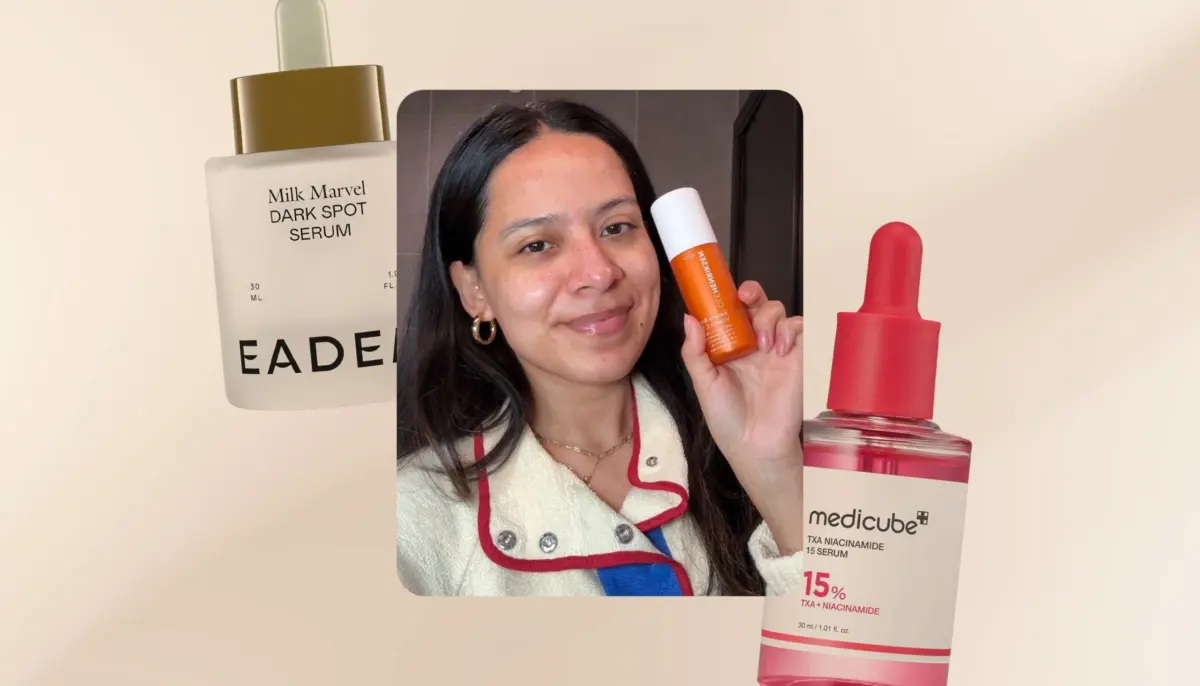
Dealing with dark spots can feel like a frustrating game of patience. Whether they stem from a stubborn breakout, hormonal fluctuations, or years of soaking up the sun without adequate protection, areas of extra skin pigment are an extremely common concern. While these marks—frequently categorized as age spots, sun spots, or melasma—often fade gradually on their own, a strategic skincare routine can significantly speed up the process and help even out overall skin tone.
According to top dermatologists, understanding the root causes of hyperpigmentation and utilizing the right topical ingredients are the first steps toward achieving a clearer, more luminous complexion.
What Causes Dark Spots?
At its core, a dark spot is simply an area of extra pigment in the skin, explains Dr. Castilla. These marks can manifest in various forms, including age spots caused by cumulative sun exposure, and melasma, which is frequently triggered by internal hormonal changes such as pregnancy or menopause.
Fortunately, modern skincare science offers solutions. Products like dark-spot correctors can accelerate skin resurfacing and minimize unwanted pigment. Ingredients such as prescription hydroquinone, retinol, and other proven brighteners work to break down existing discoloration, according to Dr. Rachel Nazarian, a board-certified dermatologist in New York City.
What Ingredients Should You Look for in a Dark-Spot Corrector?
Effective dark-spot correctors function by breaking down existing hyperpigmentation while simultaneously preventing new dark spots from forming. They achieve this largely by inhibiting the transfer of melanin to skin cells, notes Dr. Dendy Engelman, another board-certified dermatologist practicing in New York City. However, achieving these results depends heavily on the specific active ingredients included in the formulation.
Leading skin experts consistently point to several key ingredients when treating discoloration: alpha hydroxy acids (AHAs) like lactic, glycolic, and malic acid; retinol; vitamin C; and niacinamide. Additionally, Dr. Engelman recommends kojic acid—a compound derived from fermented rice—specifically for addressing newer dark spots and lingering acne scars.
Different acids serve distinct purposes in a skincare regimen. According to Dr. Ellen Marmur, a board-certified dermatologist and founder of MMSkincare, AHAs such as glycolic and lactic acid help speed up cellular turnover and fade surface-level pigmentation. Meanwhile, beta-hydroxy acids (BHAs) like salicylic acid prove especially helpful for tackling acne-related dark spots. Dr. Marmur notes that both categories should be used in moderation to avoid irritating sensitive skin. For those with particularly sensitive skin types, poly-hydroxy acids (PHAs) offer a gentler alternative. PHAs also exfoliate and slough off dead skin cells, but their smaller molecular structure allows for slower, less irritating penetration.
Retinol, a derivative of vitamin A, is another powerhouse ingredient. Dr. Engelman explains that retinol helps fade hyperpigmentation marks by stimulating cell turnover. Regular use not only diminishes dark spots over time but also delivers broad benefits for the overall appearance, health, and function of the skin. Because retinol can occasionally cause dryness and irritation, the secret to success lies in building up tolerance slowly. Dermatologists suggest starting with a weekly application, gradually moving to twice a week, and eventually working up to every other day or daily use as the skin adapts.
Vitamin C operates through a dual mechanism. Dr. Brooke Jeffy, a board-certified dermatologist in New York City, notes that vitamin C works to reduce melanin production while simultaneously serving as an antioxidant. By neutralizing free radicals triggered by sun exposure or skin trauma, vitamin C helps stop new pigmentation at the source, making it a staple in high-end dark-spot correctors.
Beyond these common actives, other ingredients have proven effective for lightening stubborn areas. Dr. Hope Mitchell, a board-certified dermatologist and founder of Mitchell Dermatology, highlights tranexamic acid, cysteamine, azelaic acid, soy, and arbutin as reliable choices. These components actively inhibit melanin production and accelerate skin cell turnover.
While hydroquinone can also be highly effective for lightening dark spots, dermatologists advise proceeding with considerable caution. Dr. Engelman warns that the ingredient is not safe for individuals with deeper skin tones and can, in some instances, actually exacerbate hyperpigmentation in darker skin.
How to Incorporate Dark-Spot Correctors Into Your Routine
Integrating corrective products into a daily regimen requires careful timing to maximize efficacy and prevent irritation. Dermatologists generally recommend applying dark-spot correctors containing vitamin C, exfoliating acids, azelaic acid, ferulic acid, and alpha arbutin during your morning routine. Retinol, on the other hand, is best reserved for the evening, as it can heighten the skin’s sensitivity to sunlight.
Experts also advise against combining potent actives indiscriminately. Dr. Castilla cautions that using products like retinol and vitamin C serum simultaneously is likely to trigger unnecessary skin irritation. Across all treatments, consistency remains paramount, and daily sunscreen application stands out as the single most critical product for protecting skin from further hyperpigmentation, according to Dr. Mitchell.
What Fades Dark Spots the Fastest and How Long Does It Take?
For most individuals using consistent, targeted treatments, noticeble fading takes anywhere from eight to 12 weeks, according to Dr. Marmur. Deeper or older hyperpigmentation can require several months of dedicated care, and everyday sun exposure can significantly stall progress, emphasizing why daily SPF use remains essential.
When patients look for the absolute fastest results, dermatologists frequently turn to a combination approach. Dr. Rambhia notes that specialists often pair prescription-strength pigment inhibitors—such as hydroquinone, retinoids, tranexamic acid, or cysteamine—with diligent sunscreen habits and, where appropriate, in-office procedures like chemical peels or laser therapy. Regardless of the chosen treatment path, experts agree that daily broad-spectrum sunscreen is nonnegotiable. Without consistent sun protection, dark spots can persist, worsen, or recur, undermining the time and effort invested in treatment.
Understanding Different Types of Dark Spots
Not all dark spots are created equal. Dr. Jeffy points out that various distinct types of discoloration can appear on the skin. Sun spots, scientifically known as lentigines, are frequently referred to as age spots. Other forms of discoloration stem from post-inflammatory hyperpigmentation, while conditions like melasma, freckles, and seborrheic keratoses represent separate diagnostic categories. While they all fall under the broad umbrella of dark spots, their underlying causes and behaviors vary.
Treating the Face Versus the Body
Addressing hyperpigmentation on the face opens up a wide array of options, ranging from laser treatments, microdermabrasion, and chemical peels to over-the-counter dark-spot correctors. Correctors often prove the most accessible choice from both a convenience and financial standpoint, allowing for daily use without requiring a doctor’s visit or prescription.
For dark spots located on the body, dermatologists suggest turning to retinol-based body lotions and creams. Checking ingredient labels for brightening vitamin C and anti-inflammatory niacinamide can also yield strong results. Regular exfoliation to shed dead skin cells is vital, alongside the ongoing application of sunscreen to both the face and body to stop existing spots from darkening further.
What to Avoid Mixing With Dark-Spot Correctors
One of the primary concerns among dermatologists is the tendency for patients to layer too many active and potentially irritating ingredients at once. Dr. Kseniya Kobets, director of cosmetic dermatology at Montefiore Einstein Advanced Care, explains that because a typical dark-spot corrector already contains an exfoliating acid or a vitamin A derivative, adding separate retinoids, acid toners, physical scrubs, or at-home peels to the mix can easily overwhelm the skin barrier.
Dr. Kobets emphasizes that experiencing more redness and peeling does not translate to better results. In fact, with conditions like melasma or post-inflammatory hyperpigmentation, the resulting inflammation can actually stimulate the skin to create even more pigment. Instead of aggressive layering, she advises pairing dark-spot correctors with deeply hydrating ingredients like hyaluronic acid and rich moisturizers designed to soothe and calm the skin.
Evaluating Treatments and Maintaining Consistency
To build effective corrective regimens, skincare brands and medical professionals evaluate ingredients backed by rigorous dermatological science. Over weeks and months of testing across diverse skin types—including mature, acne-prone, dry, and sensitive complexions—experts continually assess product performance based on texture, scent, absorption, and overall skin comfort. By closely monitoring sun spots, discoloration, and acne scars through weeks of consistent use, professionals ensure that chosen treatments deliver reliable, lasting improvements for everyday skincare routines.