




Unless your weekend hobbies involve navigating fast-moving rivers or deep wilderness tracks, you might not yet be familiar with Astral Designs. The brand, which has quietly operated for over two decades, only recently expanded its catalog to include a dedicated line of technical trail shoes alongside its growing apparel offerings. Yet, the company’s origins are rooted in a radical manufacturing philosophy that predates much of the sustainable outdoor gear movement we see today.
When founder Philip Curry launched the company more twenty years ago, his initial mission was straightforward yet ambitious: to produce an entirely PVC-free and phthalate-free life jacket. At a time when the watersports industry heavily relied on petrochemical-derived materials that were notoriously difficult to recycle and harsh on ecosystems, Astral chose a different path. By 2008, the brand had successfully eliminated neoprene from its manufacturing processes entirely. Over a decade later, by 2021, Astral integrated the rigorous bluesign system across its entire global supply chain, systematically reducing the climate and environmental impacts associated with every step of its product creation.
This overarching philosophy eventually propelled Astral into the footwear market, driven by a stark realization: existing water shoes and traditional trail footwear were fundamentally antithetical to the company’s core ethos. Outdoor enthusiasts venture into nature to appreciate unblemished environments, yet the gear they wear is frequently manufactured from harmful petrochemicals that leave a lasting ecological footprint. This realization sparked the creation of high-traction paddle shoes. In Curry’s mind, designing these shoes required the exact same rigorous, uncompromising materials rethink that he had previously applied to life jackets.
That evolutionary process eventually led to the development of the Nosobo, recognized as the outdoor market’s first performance-oriented shoe featuring a replaceable midsole—the structural component that typically degrades long before the rubber outsole gives out. While the concept of a replaceable midsole was not entirely unprecedented in the broader footwear landscape—notably appearing on the market with the debut of the Nike Kobe 8 in 2012—Astral’s Nosobo marked a pioneering milestone by introducing the innovation specifically to the outdoor sector.
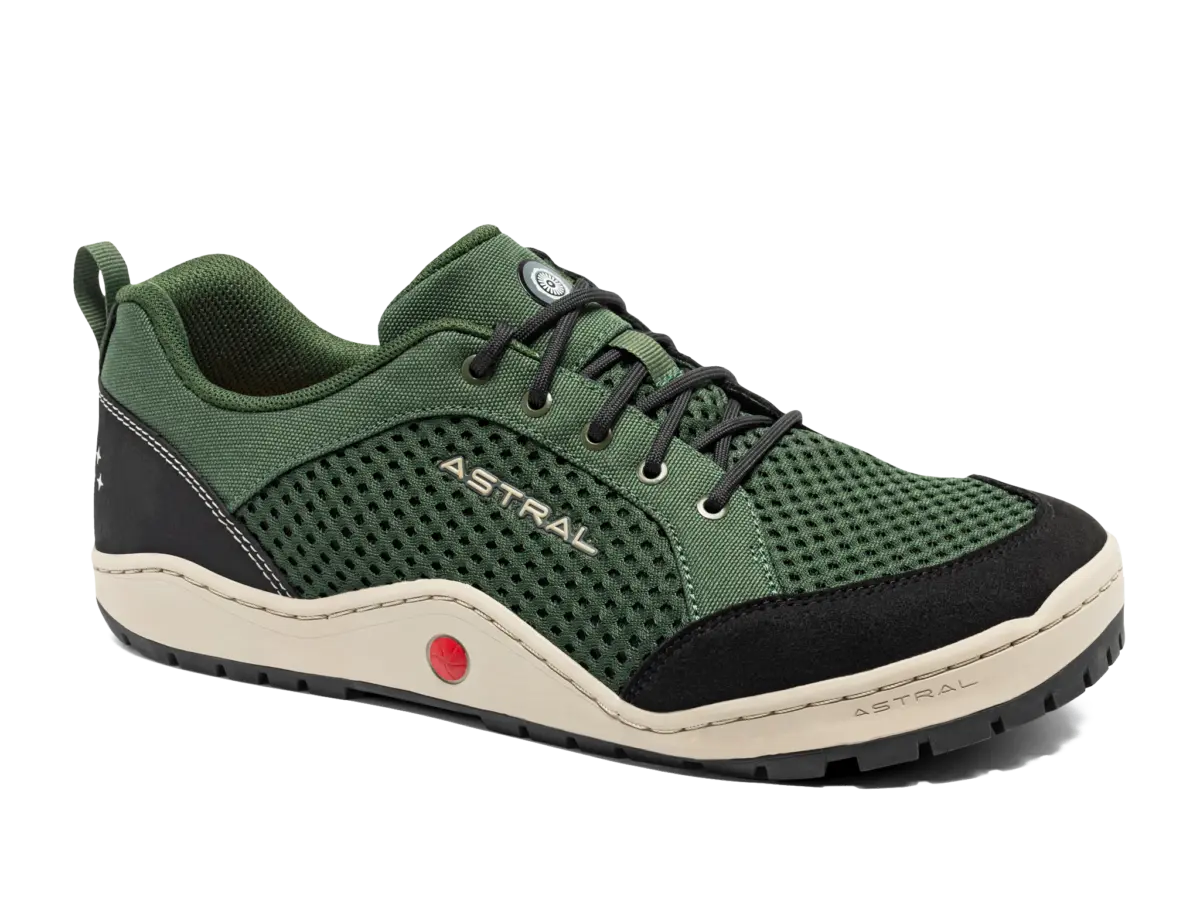
Continuing this trajectory of sustainable design, Astral’s latest footwear development, the Techyak, follows suit with several forward-thinking updates. Most notably, the shoe features a specialized knit upper constructed entirely from 100 percent recycled PET (polyethylene terephthalate). Furthermore, the Techyak is manufactured entirely without the use of glue. Traditional adhesives are not only ecologically problematic during production, but as Curry points out, water is notoriously brutal on chemical bonding agents, making glue lines a frequent point of structural failure in outdoor environments.

To bring this vision to life, Curry partnered with legendary footwear designer Tuan Le. A Vietnamese refugee whose remarkable career in the sneaker industry is the stuff of legend, Le first achieved mainstream industry renown with the creation of the Reebok Stomper, an iconic aerobics shoe notably worn by actress Sigourney Weaver in the science fiction classic Aliens. Beyond his early breakthrough with Reebok, Le’s extensive resume includes inventing the Mizuno Wave Rider running shoe and designing performance footwear for NBA superstars Stephon Marbury and Vince Carter under the short-lived, disruptive brand And1. Since the early 2000s, Le has lent his design expertise to a massive roster of global brands, ranging from UGG and Bogs to Jack & Jones.
Le’s lifelong obsession with footwear began in childhood, an era when he was so enamored with shoes that he reportedly slept with a pair of Nike Cortez sneakers instead of a traditional stuffed animal and even named his pet gerbil Nike. Decades later, that deep-seated passion translated into high-stakes industry moments, such as when NBA legend Kevin Garnett famously walked away from a lucrative Nike endorsement contract specifically to wear the And1 basketball shoes designed by Le.
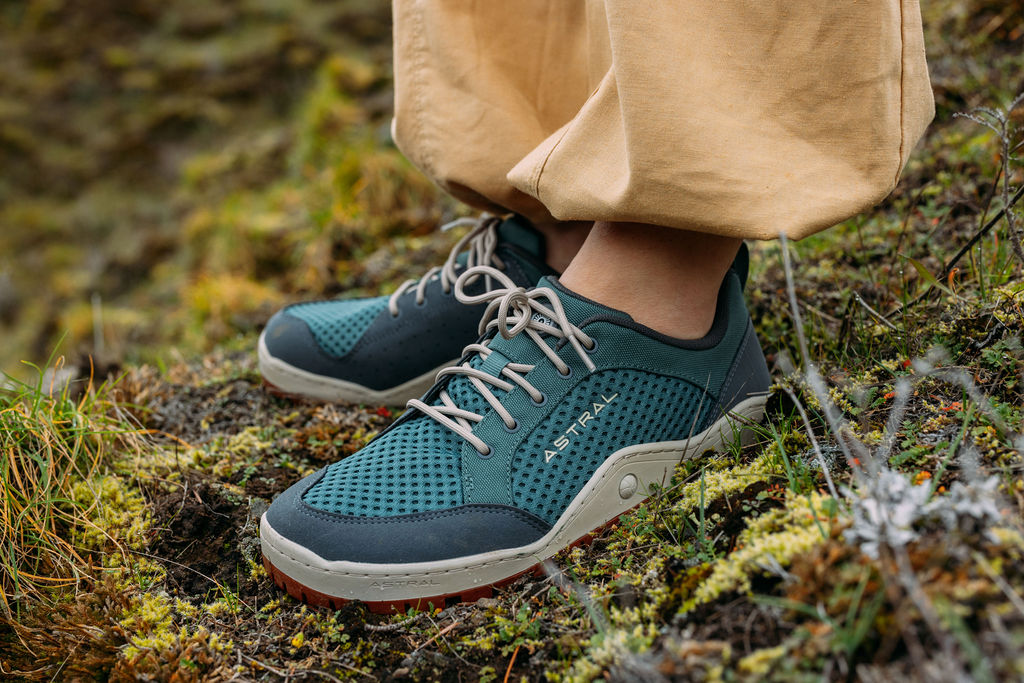
When approaching the design of the Techyak for Astral, Le notes that he initially riffed off a classic skate shoe silhouette, but quickly pushed himself into entirely new creative territory. As Astral deepens its corporate focus on zero-drop footwear designs that place the human foot in a more natural, athletic position, Le had to rethink foundational shapes. The Techyak features a distinctly wider and more rounded toe box, a deliberate choice addressing his critique that conventional footwear frequently restricts natural, anatomical foot movement.
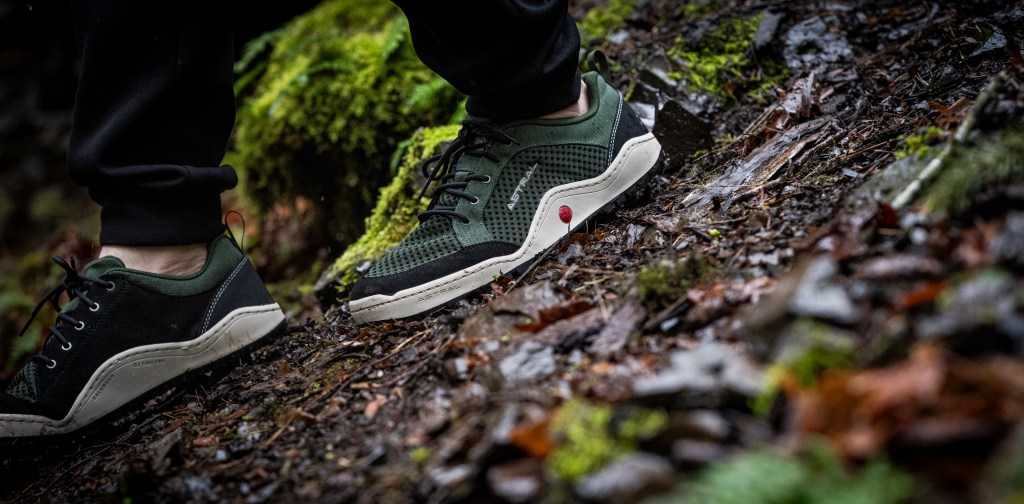
As an avid runner himself, Le points out that a typical running shoe built on a standard EVA midsole begins breaking down structurally from the very first day of wear, despite being expected to serve as the primary backbone of the shoe. In developing the Techyak, Le and Curry sought to engineer a substantially stronger spine that offered robust support without introducing unnecessary weight or clunkiness, maintaining a profile thin enough to keep the shoe svelte and lightweight.
Creating performance footwear for athletes inevitably requires a deep understanding of anatomical terminology and biomechanics. Le explains that any functional athletic shoe must incorporate a precise visual flex point—the exact hinge where the toes naturally bend, whether the wearer consciously notices it or not. From that baseline, a designer must integrate balanced arch support mapped directly to where the foot requires it most, creating what Le describes as a cohesive narrative of support and motion.
Drawing parallels between his extensive career across various global markets and his current work with Astral, Le reflects on the universal nature of footwear design. He notes that he has navigated this exact creative process countless times, translating technical concepts into languages ranging from Danish to Japanese. According to Le, designing performance shoes is fundamentally akin to composing music. While the core vocabulary remains identical—encompassing terms like traction, cushioning, and flexibility because human biomechanical needs are universal—it is the specific tune and stylistic interpretation that allows for creative expression.
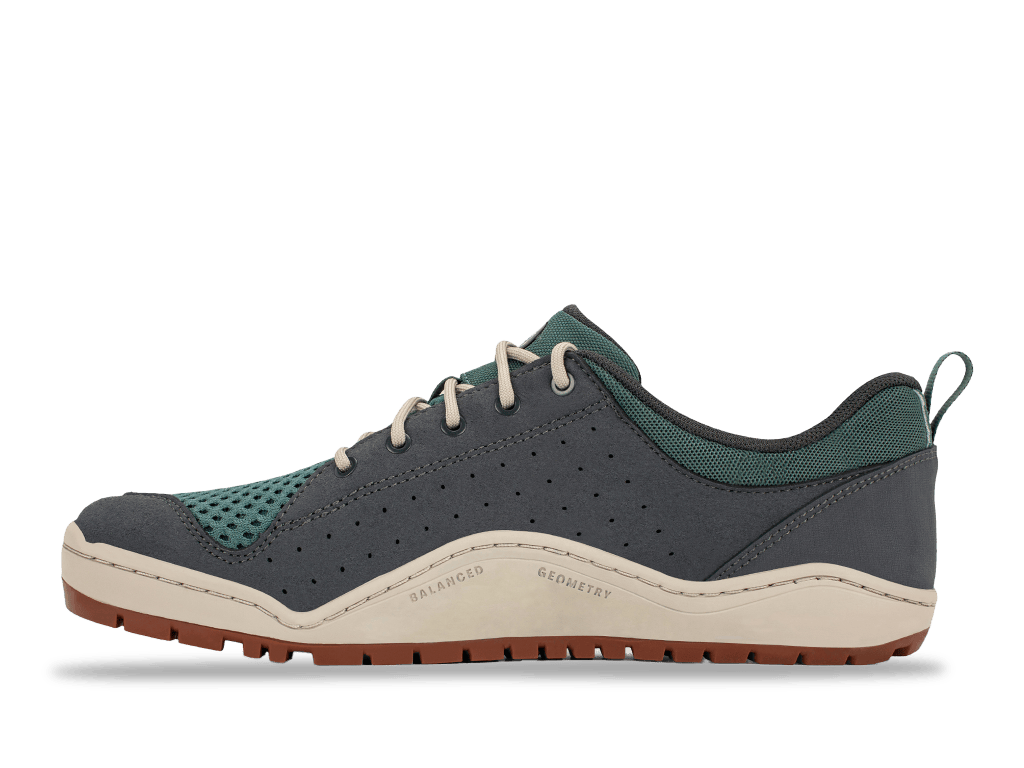
Curry expands on the aesthetic dimension of the footwear through the lens of color theory and environmental immersion. The design process at Astral consistently begins with the perspective of a person situated directly in the middle of a natural body of water, ensuring that a distinct water-inspired hue is always represented in the product line. From that aquatic starting point, the philosophy naturally extends outward to encompass soil, earth tones, and surrounding plant life. The resulting colorways are deliberately organic, drawing their primary inspiration directly from natural flora.
Even the minor visual details of the shoe underwent thoughtful iteration. The original red dot featured on earlier Astral footwear models was conceived by Le as an homage to the brand’s iconography and the visual relationship connecting a rock, the sea, and the moon. However, as the brand reached new demographics where the striking red accent occasionally felt too unconventional for everyday consumers, Le revisited the visual identity. The small signature icon is evolving into a lotus flower, a change that Le embraces with a characteristically philosophical mindset. For a veteran designer who has shaped the industry for decades, the process remains rooted in joy and collaboration, noting how rewarding it is to sketch an idea, watch the manufacturing facility bring it to physical reality, and continually evaluate what a design truly needs.