





The era of the "clean girl" has officially been declared over. In the years following its decline, the cultural landscape of fashion and beauty has witnessed the steady, undeniable ascent of her antithesis: the messy girl. While this shift originally found its visual footing in the grunge-infused, party-forward subcultures of 2024—typified by Charli XCX’s Brat era, greasy smoky eyes, and aggressively teased hair—the philosophy has since evolved. Today, the messy girl trend is no longer confined to beauty cabinets and makeup tutorials. Instead, it has been reinterpreted on the runway through styling, proving that elevating an everyday outfit often requires just one deliberate, beautifully calculated imperfection.
For seasons, the fashion industry lived under the heavy, polished thumb of "quiet luxury" and all things sleek, uniform, and meticulously coordinated. But the pendulum has swung aggressively in the opposite direction. From a styling perspective, observers initially drew direct visual lines between messy beauty trends and similarly undone clothing choices. Lately, however, the industry has embraced a deeper, more conceptual approach to dishevelment. It relies on the idea that an outfit becomes infinitely more compelling when something is just a little bit off.
By now, many fashion enthusiasts are well-versed in the "wrong shoe theory," a styling heuristic suggesting that the introduction of an unexpected or seemingly mismatched shoe makes an outfit just right. By creating deliberate contrast and visual tension between the garment and the footwear, the wearer achieves a sense of effortless, cooler-than-thou illusion. Recently, designers have begun applying this exact rhetorical framework to entire wardrobes, looking far beyond footwear to find fresh ways to throw outfits slightly off-balance.
This appetite for imperfection reached a watershed moment back in February during Prada’s Fall/Winter 2026 presentation. Miuccia Prada and Raf Simons orchestrated a masterclass in human-ness and chaotic layering. Across the runway, models were sent out wearing looks piled so heavily that layers had to be systematically removed throughout the show. In total, 15 base looks were subjected to this process, with one layer coming off per exit, resulting in four turns per model and a staggering 60 total exits.
For every appearance, shirts were hastily buttoned, dresses emerged crinkled from being crammed underneath heavy outerwear, and colors clashed in ways that defied traditional rules of harmonization. Yet, somehow, it all worked. The presentation resonated deeply with consumers, serving as the ultimate celebration of the messy, unpredictable reality of getting dressed in the real world. The commercial success and retail availability of that specific collection ultimately propelled Prada to the top spot on the Lyst index for the third quarter, signaling a massive consumer appetite for imperfect dressing formulas.
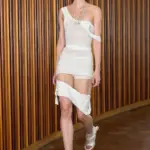
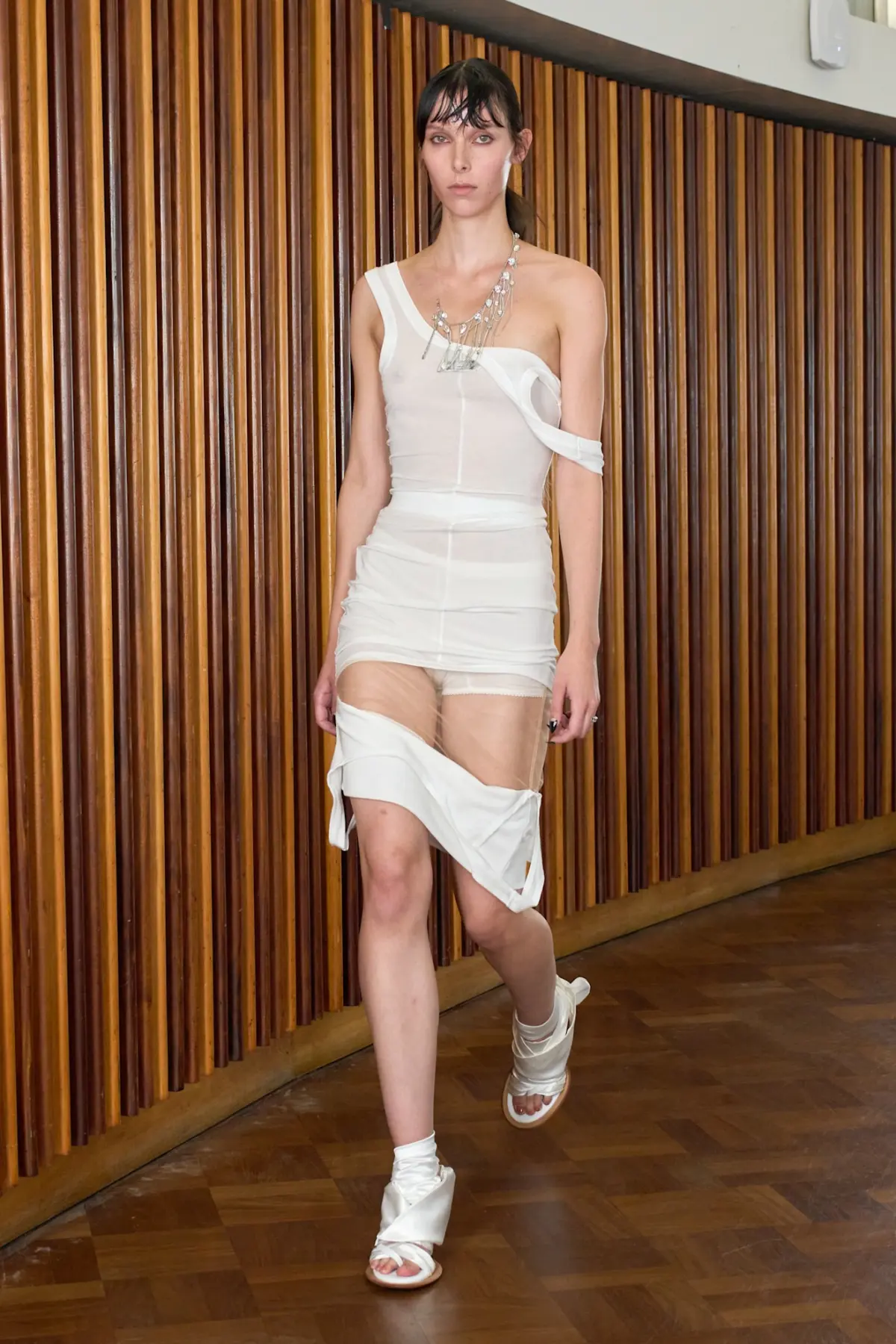
Fast forward to the Spring/Summer 2027 shows held this past September and October, and the industry saw designers micro-dosing this off-beat philosophy across global fashion capitals. At houses like Tory Burch, Altuzarra, KNWLS, and 6397, traditional styling rules were intentionally subverted. Dresses and tops frequently featured straps slipping off the shoulder, casually revealing contrasting bras, extra hidden layers, or bare skin beneath.
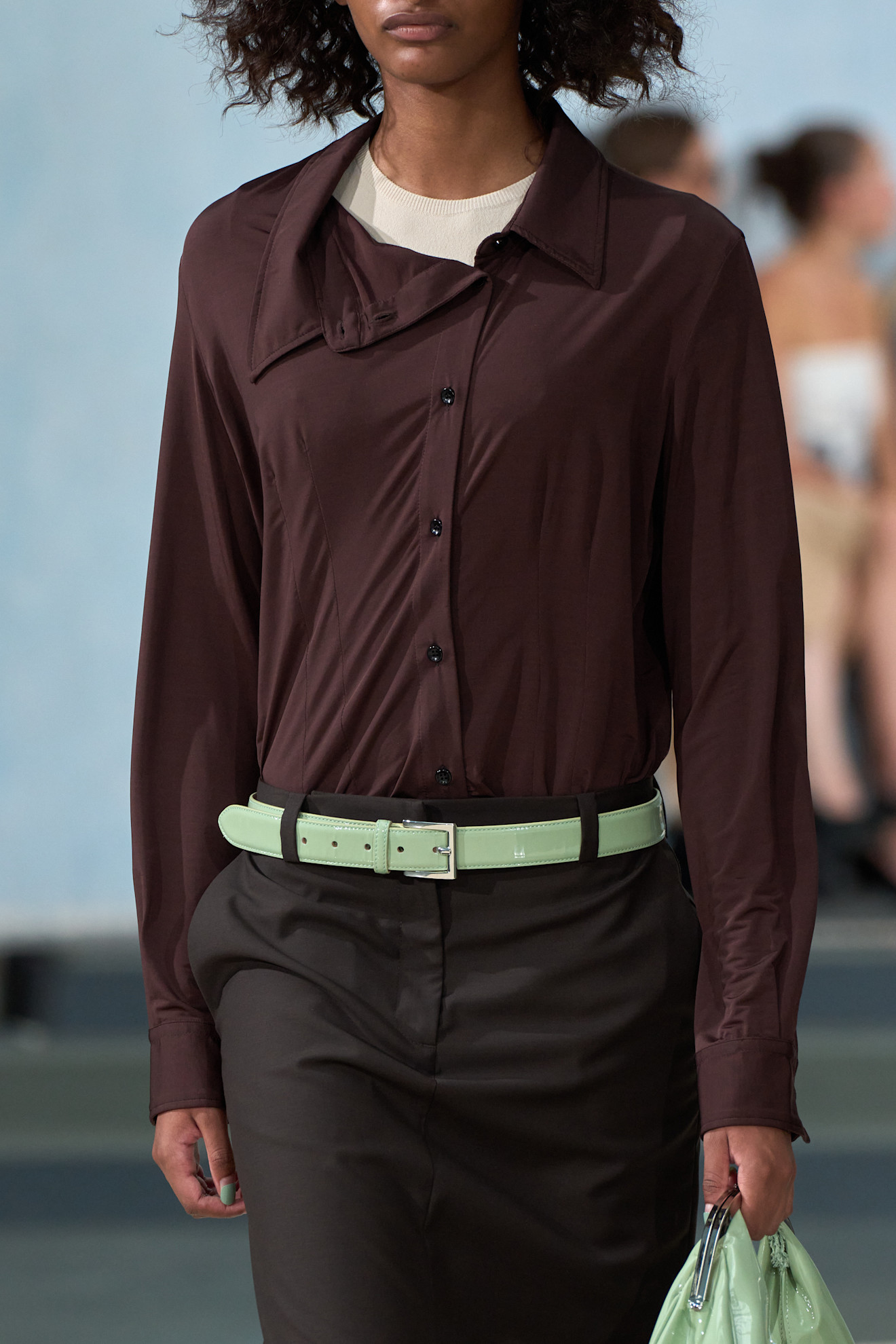
Meanwhile, in Paris, designers such as Julie Kegels and Loewe sent models down the runway wearing twisted collars. These garments were either buttoned asymmetrically or aggressively twisted and tucked directly into the waistbands of skirts, defying clean symmetry. At Miu Miu, patterns violently clashed while disparate textured fabrics vied for attention. In one standout look, utilitarian swimsuit bottoms were layered over a crushed silk skirt, while a coated knit jersey resembling a paper bag was piled on top of a crisp cotton poplin button-down shirt.
Across the board, the overarching styling trick remained consistent: keeping at least one element just slightly off added crucial intrigue and depth to silhouettes that might otherwise have read as standard or overly simple. Tibi presented a layered dress featuring a deliberate option to drop a single strap, exposing a built-in slip underneath. KNWLS offered a deceptively simple white tank top that gained edge simply through how it interacted with the body and surrounding layers. At Altuzarra, mismatched buttons on a tailored jacket carelessly gaped open, revealing more of the delicate cotton eyelet blouse styled underneath.
Through these collections, designers made it overtly clear that the modern definition of looking cool no longer relies on immaculate precision. For Spring/Summer 2027, the key to true style is simply looking a little bit messier.