






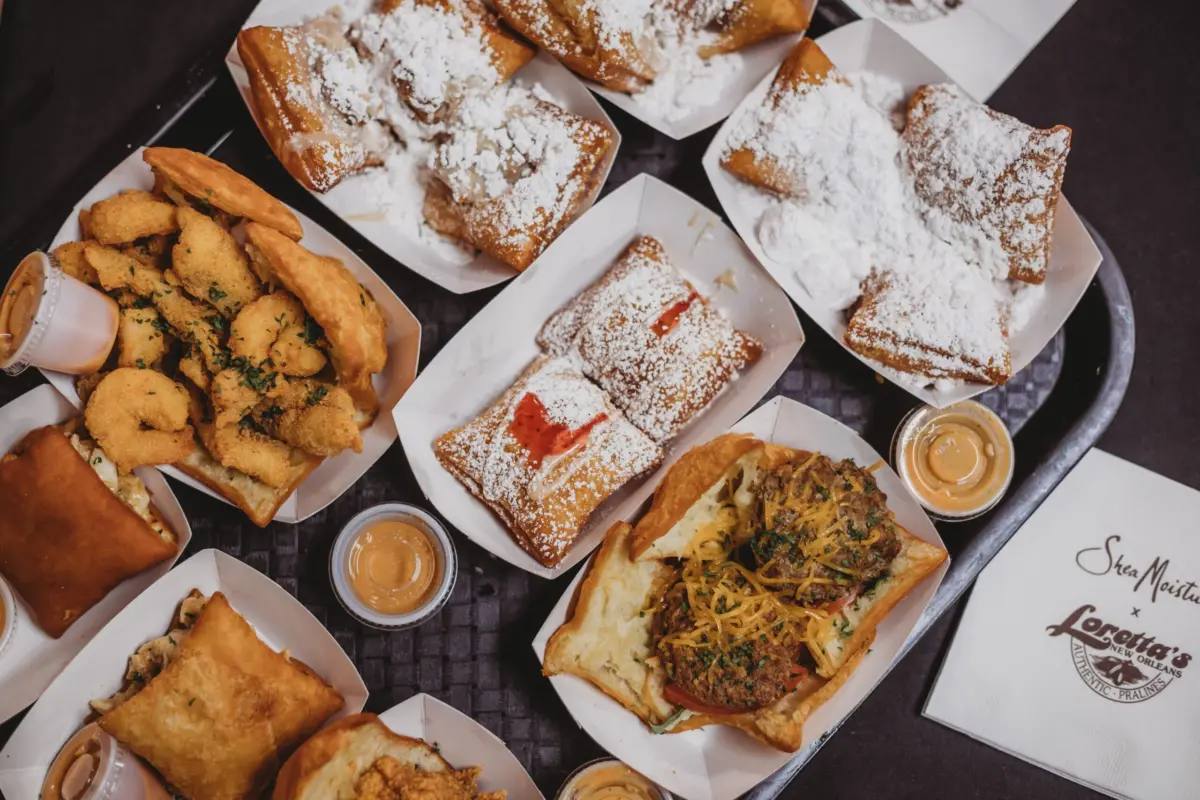
Looking for the best beignets in New Orleans? Pronounced ben-YAY, the term likely comes from the Old French buigne, or "lump" to you and me—a nod to the way that the dough expands in the hot oil. The simplicity of the ingredients—butter, eggs, milk, sugar, flour, and salt—means that many cultures have some kind of variant of a beignet. Here in New Orleans, as with most things, we have our own way: Louisiana-style beignets eschew, or, if you will, es-choux the original French choux pastry method, and are made from leavened dough. Yeast puffs them up into hand-sized rectangles, keeping them crispy and airy. They are best eaten as hot and freshly-made as possible. Most vendors dust them with generous mounds of powdered sugar, so be sure to wear dark clothing for the full experience.
In one of my favorite television quotes from the animated show King of the Hill, the gang’s capers take them to New Orleans when truculent conspiracist Dale Gribble chirps up: "How ’bout I come with? I’ve always wanted to eat fried dough in the most corrupt city on Earth." As a long-time New Orleans transplant, I know better than to stir up local politics. So I am wary about diving into the thorny issue of ranking one of the city’s most recognizable delicacies. Beignets are serious business here—in league with the Boston Cream, it is one of two official State Donuts. Look, prestige takes many forms, OK?
If you know beignets, you will likely know Cafe du Monde, still operating since its humble beginnings as a coffee stand in 1862. A block from the Mississippi River in the historic French Quarter, its menu has barely changed in well over a century. By 1870, they had a rival: Morning Call Coffee Stand, which is also still going strong. In the intervening years, more cafes and innovative new restaurants mean that you now have more than two choices, and excitingly, much more than one type of beignet. I personally recommend them as breakfast with a café au lait—or a brandy milk punch, if that is how you choose to live your life—or as a mid-afternoon sweet treat. To beat the lines at the best beignet spots in town, many visitors head to Café du Monde, which is open until 12:00 am on weekends, late into the night.
Purists may rail against new-fangled variations, as the border between beignet and fritter can sometimes be blurred, but the simplicity of the base makes this creation ideal for chefs to experiment with. Glazed, savory, and stuffed versions can be found around the city, and whether you skew classic or innovative, there is a spot to suit your tastes. For locals and visitors alike, these are, in no particular order, some of the very best beignets in New Orleans, for when fried dough is the only thing that will hit the spot.
The cultural footprint of the beignet extends far beyond the borders of Louisiana, yet its spiritual home remains firmly anchored in the historic streets of New Orleans. The transformation from a traditional French pastry into a distinct Louisiana culinary staple mirrors the broader history of the region—a melting pot of French, Spanish, African, and Caribbean influences that continually reinterprets the familiar into something entirely unique. When the Acadians and early French settlers arrived in Louisiana, they brought their culinary traditions with them, but local ingredients and atmospheric conditions forced adaptations. The shift from choux pastry to a yeast-leavened dough represents one of those brilliant culinary evolutions born out of resourcefulness and local preference.
The resulting treat is deceptively simple yet technically demanding to execute at scale. Achieving the ideal texture—crisp and golden brown on the outside while maintaining an airy, hollow, pillow-soft interior—requires precise control over oil temperature and proofing times. Too cool, and the dough absorbs too much oil, turning heavy and greasy. Too hot, and the exterior burns before the yeast can fully expand the interior structure. This delicate balance is part of what elevates the humble beignet from mere street food to a revered gastronomic icon.
While the debate over who serves the absolute best beignet can easily ignite friendly arguments across neighborhood bars and family dinner tables, the shared appreciation for the ritual remains universal. Generations of families have gathered around marble-topped tables draped in green-and-white checkered tablecloths, nursing cups of chicory-laced café au lait while watching clouds of powdered sugar drift onto their clothes. It is a messy, joyful experience that resists modernization, even as the city around these historic institutions continues to grow and change.
At the same time, the contemporary culinary scene in New Orleans refuses to stand still. While heritage brands like Café du Monde and Morning Call anchor the tradition in the nineteenth century, a new wave of pastry chefs and restaurateurs are breathing fresh life into the category. These modern interpreters are asking how far the classic beignet can be pushed without losing its essential identity. Some kitchen innovators are introducing fillings ranging from rich chocolate ganache and seasonal fruit compotes to savory creations infused with crawfish, crab, or local cheeses, effectively blurring the lines between appetizer, entree, and dessert.
Purists may argue that once you start stuffing or glazing a beignet, you cross the threshold into fritter territory, but culinary boundaries in New Orleans have always been meant to be pushed. The city’s food culture thrives on hybridization and bold experimentation, and the willingness of local chefs to tinker with a sacred cow speaks to the vitality of the local dining scene. Whether one prefers the unadulterated classic dusted in a literal mountain of confectioner’s sugar or an avant-garde savory version served alongside a modern cocktail, the beignet remains a versatile canvas for culinary expression.
Ultimately, seeking out the best beignet in New Orleans is less about finding a definitive winner and more about partaking in a living tradition. It is about standing in line on a humid morning or wandering into a brightly lit cafe after midnight, feeling the unmistakable crunch of the fried crust give way to steam and sweetness. It is an acknowledgment of the city’s complex history, its enduring resilience, and its unwavering commitment to finding joy in simple pleasures. For anyone visiting the Crescent City, taking that first bite—and inevitably inhaling a cloud of powdered sugar—is practically a rite of passage, ensuring that the legacy of the humble New Orleans beignet will endure for generations to come.