





When Marie-Caroline Locquet looks at a piece of jewelry, she does not see a traditional symbol of wealth, power, or social standing. Instead, she sees a conceptual provocation, a tool for social disruption, and an intimate exploration of human fragility. Her radical approach to contemporary adornment has earned her a well-deserved finalist position for the prestigious Young Artist Award, an accolade supported by Karen and Michael Rotenberg. Presented every two years, the prize celebrates promise, innovation, and distinct individuality in the work of emerging jewelry artists aged 35 or younger, championing groundbreaking creations that will shape the future of the field.
Locquet’s journey into the world of contemporary art began during her foundational studies in France, where she encountered works that fundamentally challenged her perceptions of what jewelry could be. Rather than adhering to conventional standards of beauty, luxury, or status, these radical pieces struck her as strange, uneasy, and even dangerous. She points to creators like Bernhard Schobinger and Dorothea Pruhl—artists who deliberately subvert traditional understandings of adornment—as pivotal influences that altered her artistic trajectory.
Drawn to the medium out of deep curiosity and a cascade of pressing questions, Locquet began investigating the paradoxes of her craft. She wanted to understand why an artist would choose to make, and a wearer choose to put on, objects that feel disturbing at first glance. This inquiry into the conceptual boundaries of the "unwearable" quickly became the central pillar of her ongoing research.

Growing up in the north of France, Locquet developed an early awareness of the social pressures surrounding self-presentation and how adornment is often used as a mechanism for social camouflage. Consequently, her entry into the field was driven by conceptual curiosity rather than a mere aesthetic affinity. In her hands, jewelry ceases to be a passive showcase object and instead becomes a confrontational entity designed to disrupt public spaces. Her works eschew traditional notions of seduction and passive representation, leaning instead into themes of disturbance, violence, vulnerability, confinement, and domination. By pushing materials to their absolute limits, she exposes their raw nature through forms that evoke both deep desire and mortality.
Each piece she creates—whether functioning as a defensive weapon or a restrictive device—offers a singular wearing experience that probes our shared vulnerabilities. These creations continuously maintain a tense dialogue with their observers, walking a tightrope between social discomfort and the temptation of an embrace.
Being named a finalist for the Young Artist Award serves as a powerful validation of the path Locquet has forged over several years of rigorous practice. For the artist, this recognition provides the institutional confidence needed to continue pursuing a radical direction, pushing her work further and challenging both the wearer and the viewer to confront difficult truths.
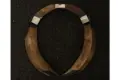
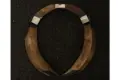
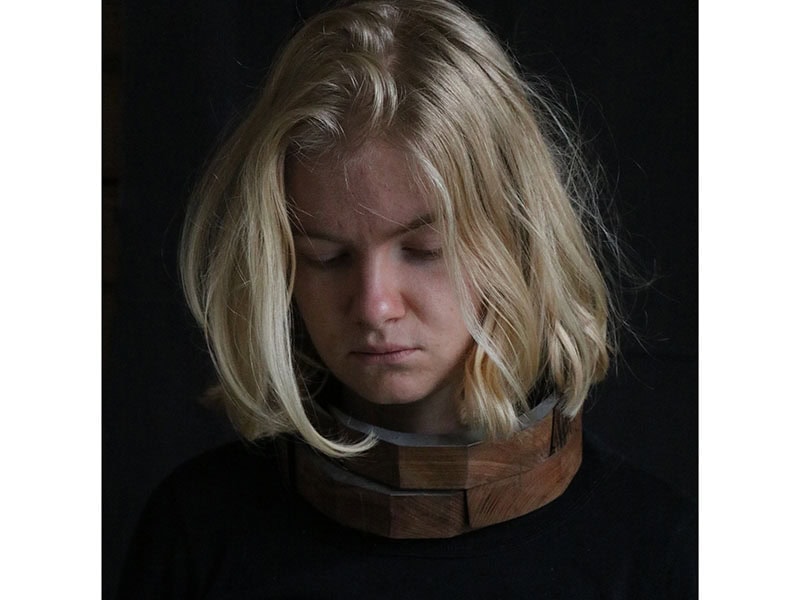
Over time, her investigations into confinement, physical violence, and bodily vulnerability naturally led her to examine historic and cultural precedents of control. Her research has drawn from traditional objects such as the collier d’appartenance—a historical collar utilized in submissive relationships—as well as the "slave collar," rooted in 19th-century Norman and Auvergnat traditions where collars were gifted to women at marriage as tokens of possession. She has similarly explored animal labor instruments, such as the heavy working collar of a horse.
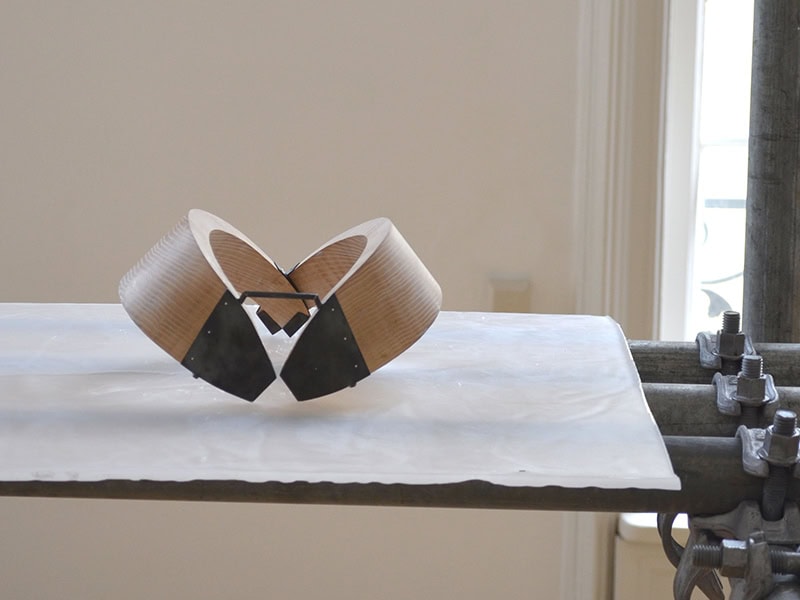
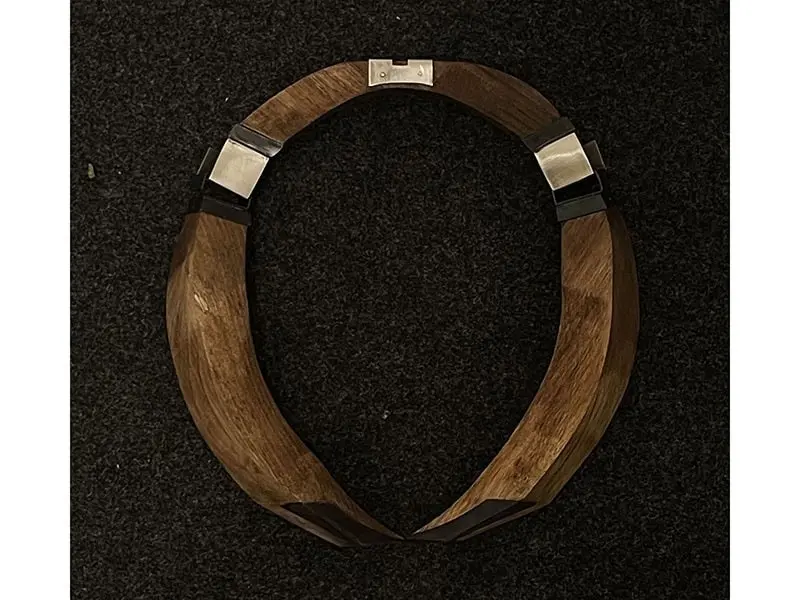
Among the standout pieces featured in her application is a neckpiece titled Hands, a work that encapsulates multiple layers of her artistic philosophy. The piece highlights her obsessive fascination with complex mechanical systems, kinetic movements, specialized clasps, and the ambiguous borderland where jewelry transitions into sculpture. When handled, the object unfolds to occupy space like a sophisticated machine before eventually closing around the wearer’s neck in a gesture reminiscent of strangulation. Described by the artist as her most complex and intimate creation, Hands speaks directly to themes of confinement and visceral violence.
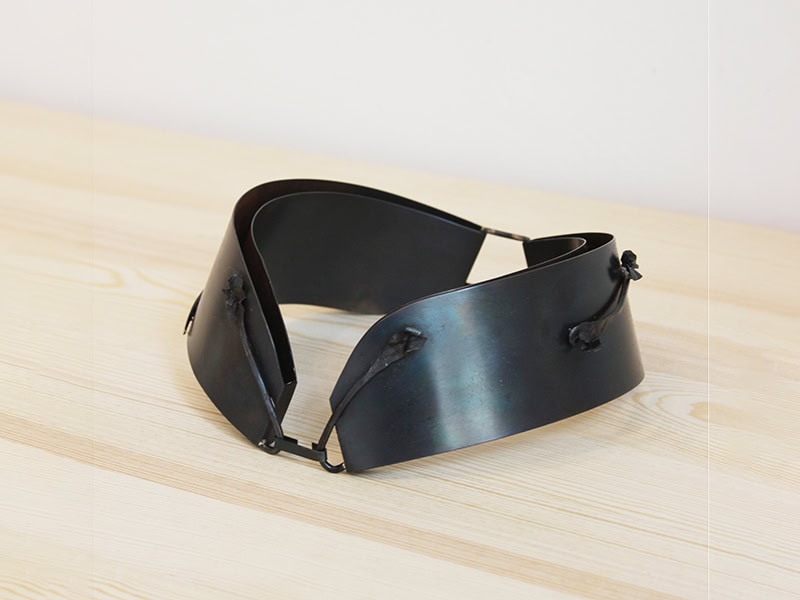
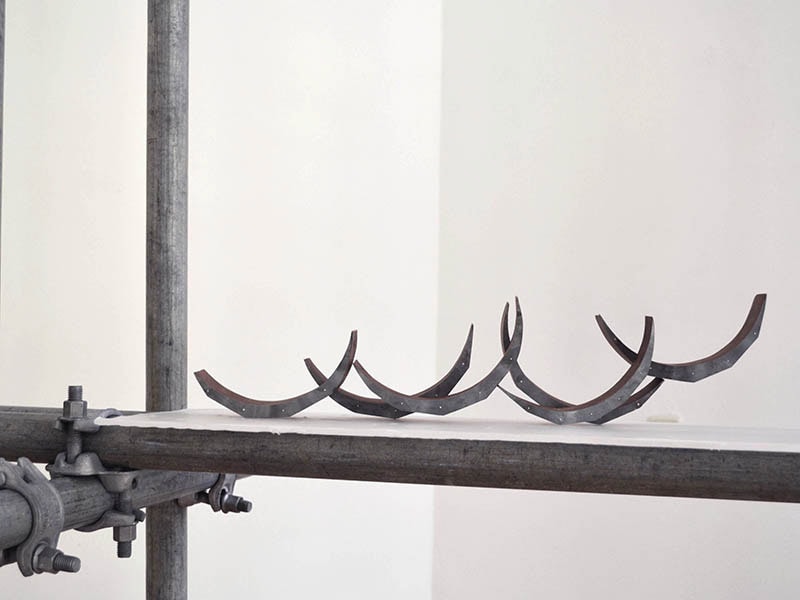
Another notable work, Panicroom Vector I, created in 2025 using iron, elm wood, silver, and rubber, acts as a literal entry point for audiences trying to access the deeper layers of her conceptual world. Exhibited widely, including at A-Galerii in Tallinn, Estonia, her pieces are consistently designed to provoke dialogue and reflection.
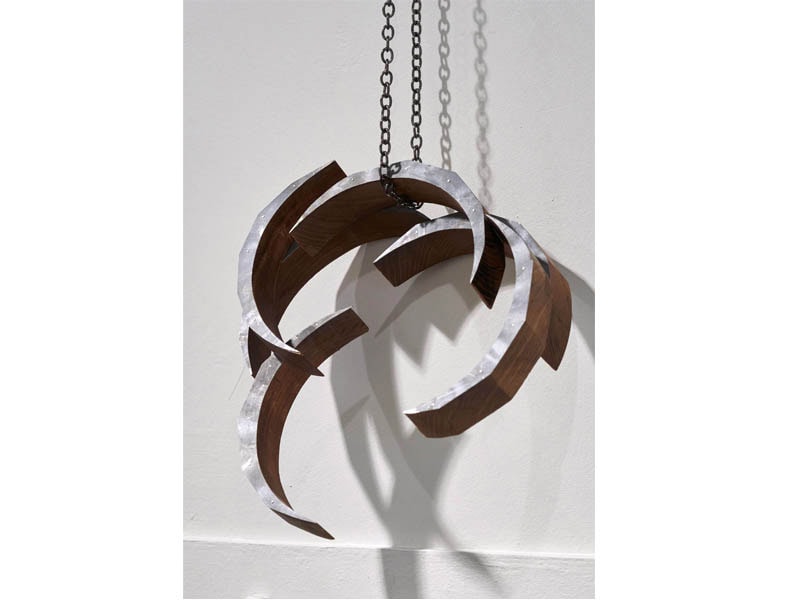
Locquet finds excitement not just in the creation of isolated objects, but in the holistic approach the field affords—moving fluidly from material research to the architectural spaces that house and resonate with her art. More broadly, she remains fascinated by how body ornamentation shapes the visual image of society. Everything people wear, she argues, draws upon the hidden references, boundaries, and values of contemporary culture. This belief inspired her to launch a broad iconographic research project and collection centered on the tension between the wearable and the unwearable, titled "Unwearable—adornment is impure, makeup is obscene, disguise is an abomination." Through this ongoing study, she examines how personal adornment, when bound to the flesh, reveals profound truths about social structures while constantly shifting between the private sphere and the public eye.
Reflecting on the broader state of the discipline, Locquet recalls the title of an exhibition she curated with colleagues and friends during Munich Jewelry Week in 2018: Jewelry Is Still a Risky Business, a nod to a foundational work by Paul Derrez. To this day, she firmly believes that contemporary jewelry must retain its element of risk.
She admits to harboring occasional frustrations regarding how the medium is perceived. During her time studying at a French fine art school, she frequently encountered the lingering prejudice that jewelry was somehow "lesser," superficial, or overly niche compared to other fine art disciplines. Yet, she views this perceived marginalization as an inherent strength of the medium, one that opens up fresh avenues of perspective and critical thought. At the same time, she acknowledges the ongoing challenge of bridging the gap between the insular contemporary jewelry community and wider audiences.
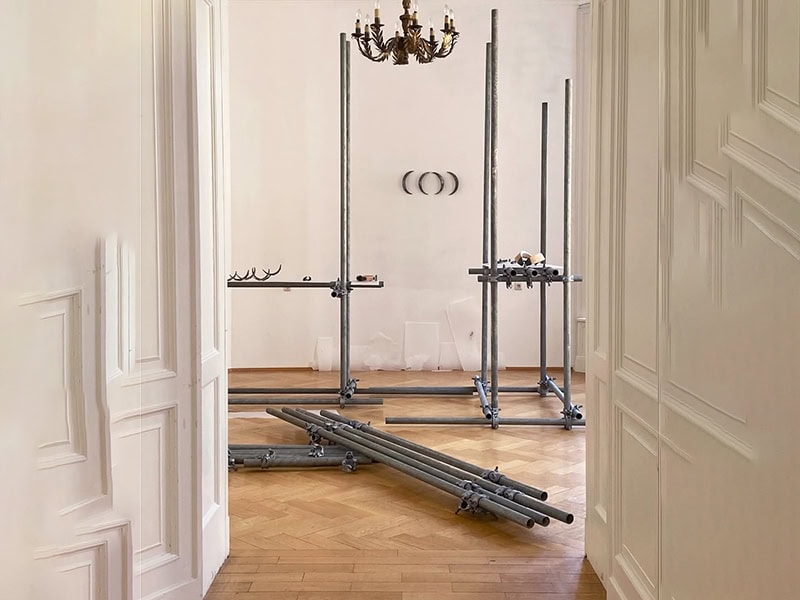
Looking ahead to the next five years, Locquet hopes to build upon the momentum generated since her graduation. Recently, she has begun expanding her practice to integrate her objects directly with architectural space, a spatial dialogue she plans to showcase in upcoming exhibitions. Alongside her studio practice, she maintains an active interest in artistic residencies, collaborative projects with fellow creators, and eventually moving into research and teaching. For Locquet, academia and mentorship represent ideal environments to continually reinvent and push forward the collective understanding of body ornamentation.
As she continues to test the limits of how we extend, deform, shape, and question the definition of jewelry, Locquet places her trust in the creative process and expresses profound gratitude to everyone who has supported her artistic journey thus far.