




For anyone outside the paddling community, Astral Designs might still be flying under the radar. Known primarily within watersports circles, the company has steadily expanded its footprint into technical trail shoes and functional outdoor apparel over recent years. Yet, for more than two decades, the brand has operated on a foundational principle that is as radical as it is uncompromising: to manufacture high-performance gear that minimizes environmental harm from inception to disposal.
The company’s journey began with a clear mission to produce an entirely PVC-free and phthalate-free life jacket—a bold departure from industry standards at the time. By 2008, Astral had completely eliminated neoprene from its manufacturing processes. More recently, by 2021, the company integrated the rigorous bluesign system across its entire supply chain to systematically reduce climate impacts at every stage of production.
This sustainability-first philosophy eventually compelled Astral to venture into footwear. Founder Philip Curry recognized a profound contradiction in the outdoor industry: enthusiasts would venture out into pristine natural environments while wearing gear built from petrochemicals that ultimately harmed those very ecosystems. This realization sparked the creation of high-traction paddle shoes, which required a complete rethinking of materials similar to the philosophy Curry had originally brought to life jackets.
That trajectory led to the development of the Nosobo, recognized as the outdoor market’s first performance shoe featuring a replaceable midsole—the component that typically degrades long before the outsole. While replaceable midsoles were not entirely unprecedented in the broader footwear industry, with Nike introducing a similar innovation via the Kobe 8 in 2012, Astral’s Nosobo marked a pioneering milestone for the outdoor sector.

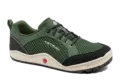
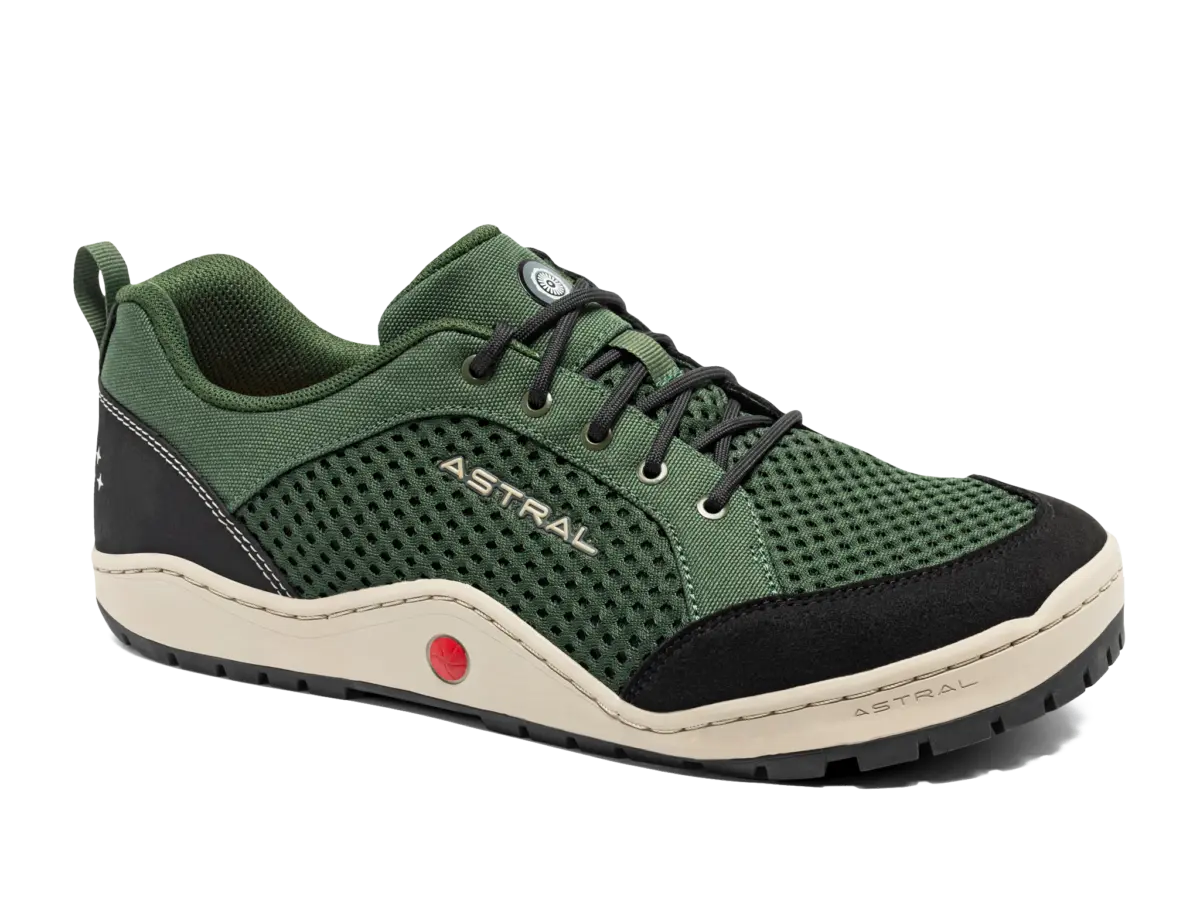
Building upon that heritage, the modern Techyak represents the next evolution of Astral’s footwear philosophy. The shoe features a knit upper constructed entirely from 100% recycled PET. Crucially, the Techyak is manufactured without the use of traditional glues. Curry points out that standard bonding agents are environmentally problematic and ill-suited for rugged outdoor use, noting that water is inherently destructive to adhesives, making them the primary failure point in conventional footwear.
To bring this vision to life, Curry partnered with legendary footwear designer Tuan Le. A Vietnamese refugee, Le carved out a legendary career in the shoe design world by breaking barriers with iconic silhouettes. Among his early breakthroughs was the Reebok Stomper, an aerobics shoe famously worn by actress Sigourney Weaver in the science fiction classic Aliens. Le also invented the Mizuno Wave Rider running shoe and designed performance footwear for NBA stars Stephon Marbury and Vince Carter during the era of the short-lived brand And1. Since the early 2000s, his prolific design portfolio has spanned collaborations with a diverse array of global brands, including UGG, Bogs, and Jack & Jones.
When approached to design the Techyak, Le drew inspiration from classic skate shoe aesthetics while pushing into uncharted territory to align with Astral’s emphasis on zero-drop geometry. This design approach positions the foot in a more natural, athletic posture. According to Le, traditional footwear often restricts natural movement, whereas the Techyak was engineered with a broader, more rounded toe box to allow the toes to open up and function as intended during active movement.
As an avid runner himself, Le observed that conventional running shoes built with standard EVA midsoles often begin degrading from the very first day of use, despite serving as the structural backbone of the shoe. Together, Le and Curry sought to give the Techyak a much stronger spine, providing substantial support without adding unnecessary weight or bulk. The goal was to maintain a profile thin enough to keep the shoe svelte, lightweight, and agile.
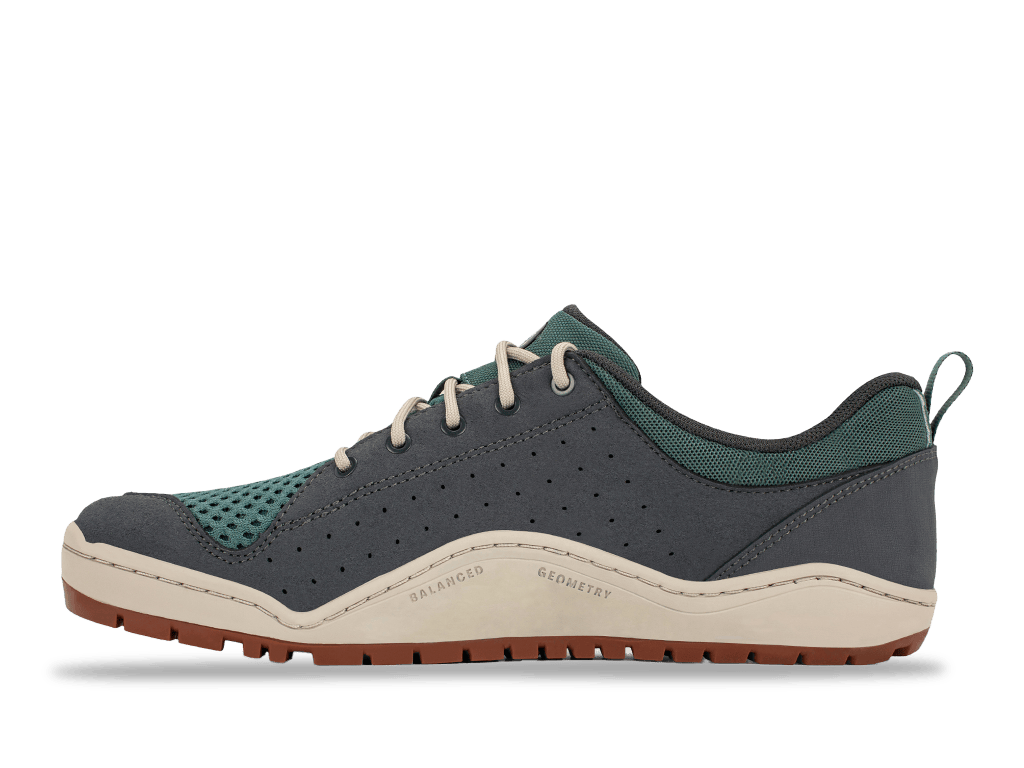
Designing athletic footwear requires a precise understanding of anatomical mechanics. Le emphasizes that any functional shoe must incorporate a distinct visual flex point corresponding to the natural hinge of the toes, whether the wearer consciously notices it or not. Beyond that, the shoe requires architecture that places arch support precisely where the foot demands it, creating a cohesive design narrative rooted in biomechanical reality.
Reflecting on his extensive career across global markets, Le notes that the fundamental vocabulary of footwear design remains remarkably consistent regardless of culture or language. Whether translating design concepts into Danish or Japanese, the core requirements—traction, cushioning, and flexibility—stay the same because human anatomy does not change. From Le’s perspective, the design process is akin to composing music within different genres; while the fundamental elements are constant, the resulting tune is where the creative artistry lies.
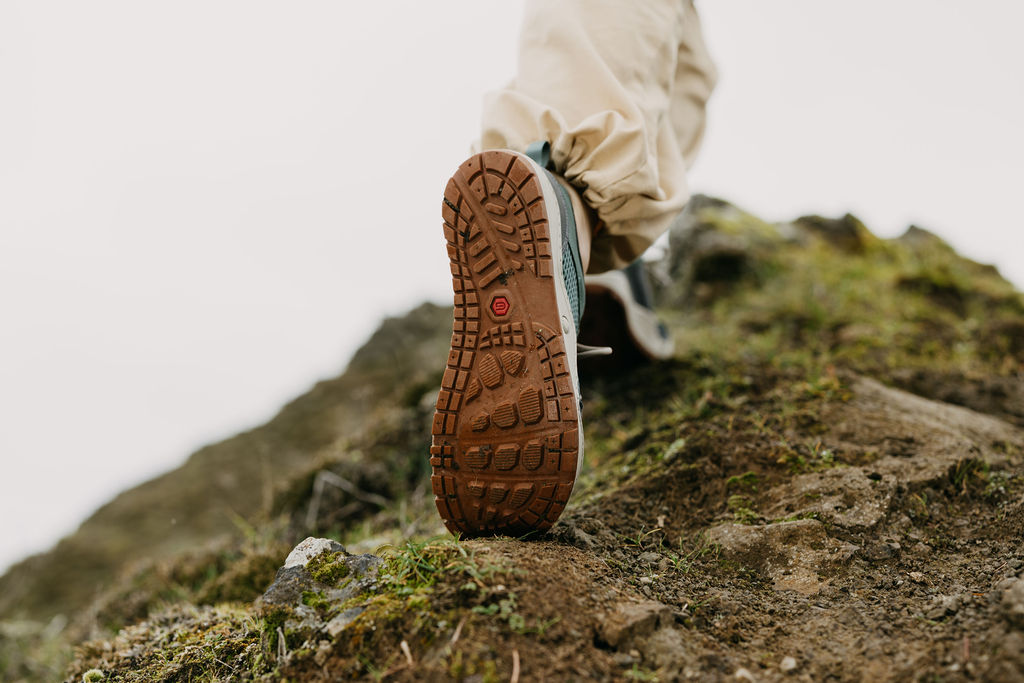
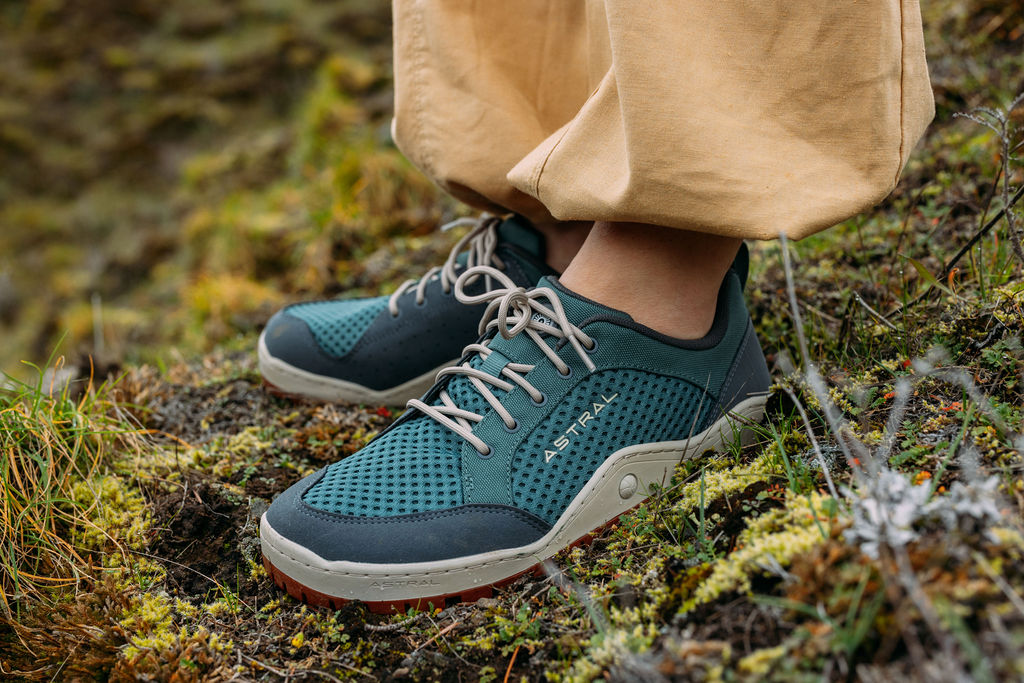
Color selection represents another deliberate visual component of Astral’s design philosophy. Curry explains that the brand approaches color through the perspective of someone standing in the middle of a body of water, ensuring that a water-inspired hue is always represented in the lineup. From that initial vantage point, the aesthetic philosophy expands outward to encompass soil, earth, and plant life, resulting in organic colorways drawn directly from flora.
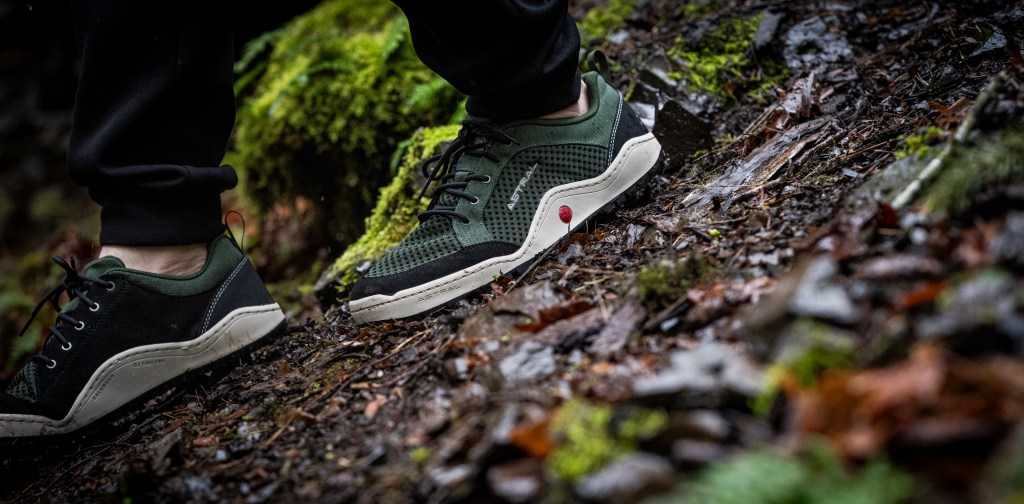
The aesthetic details of the shoe have also undergone thoughtful refinement. The original design featured a signature red dot on the sole, drawing inspiration from Astral iconography and the interplay between rocks, the sea, and the moon. However, because the red accent proved overly striking for certain regional markets, Le revised the visual details. The subtle icon is evolving into a lotus flower, a change that Le embraces with characteristic philosophical ease, viewing the iterative design process as a fluid collaboration between imagination and manufacturing reality where he simply enjoys seeing his concepts brought to life.