





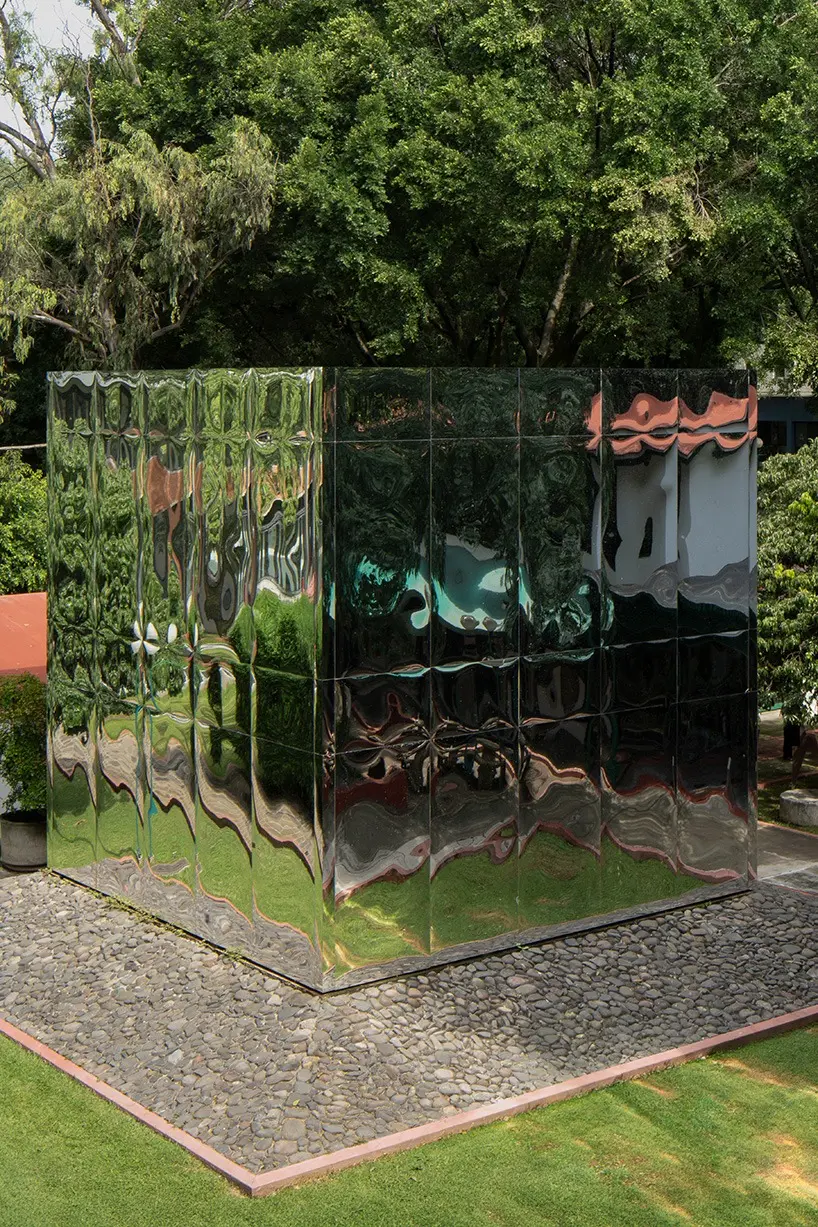
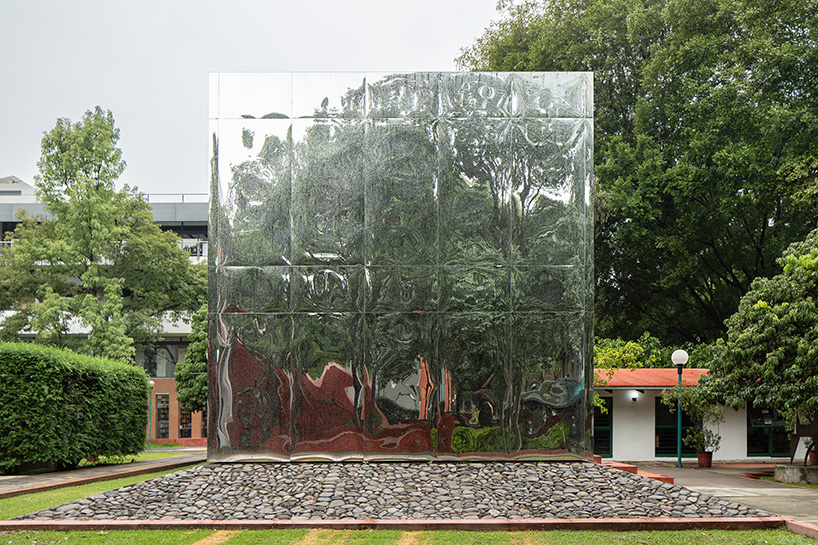
Designed by the creative minds at architecture practice errre taller, Sfumato has emerged as a striking temporary reflective pavilion that reinterprets the Cubo MEM, a prominent sculptural landmark situated within the ITESO architecture complex in Guadalajara, Mexico. The project recently captured attention as the winning proposal for the inaugural Pabellón MEM competition, an initiative that invites designers to rethink and engage with existing campus infrastructure. Rather than introducing an entirely foreign mass to the site, Sfumato investigates a compelling architectural paradox: how an existing physical structure can be made visually imperceptible while maintaining its exact physical footprint and spatial presence.
The intervention builds upon the rich tradition of temporary installations that alter human perception of space, landscape, and built environment. By engaging directly with the Cubo MEM, errre taller has created a project that blurs the boundaries between solid architecture and the ephemeral qualities of light, reflection, and sky. The competition win highlights the studio’s capacity to merge conceptual rigor with precise material execution, transforming a familiar campus landmark into an active instrument for environmental observation.
CONCEALED STEEL FRAMING FORMS MONOLITHIC SKYWARD PAVILION
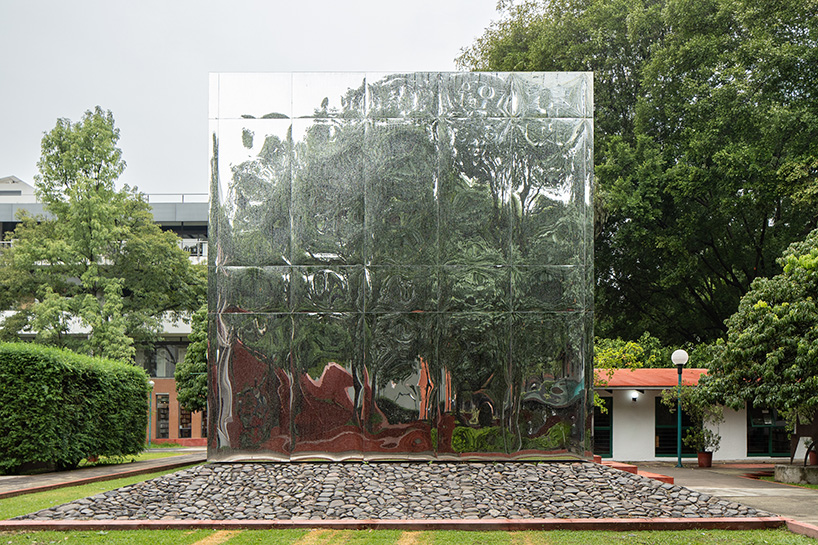
To achieve the desired optical effect, the design team at errre taller wrapped the 6.40 by 6.40-meter cube in a seamless, highly reflective envelope. This exterior skin is composed of 3-millimeter mirror-finish acrylic panels, a material choice that balances weight, reflectivity, and durability for a temporary installation. To maximize material efficiency and preserve absolute surface continuity across the geometric volume, standard 1.22 by 2.44-meter acrylic sheets were carefully combined with precisely measured 76-centimeter cut sections. This thoughtful detailing prevents awkward joints or visual interruptions that might otherwise shatter the illusion of a continuous mirrored surface.
The construction methodology relies on careful layering to ensure structural stability without compromising the exterior aesthetic. The mirror-finish panels are attached using high-performance double-sided tape and structural silicone directly to a light-gauge metal stud-and-track framing system. This intermediate framing layer is, in turn, supported by an interior wooden sub-structure that is firmly fixed to the original PTR steel frame of the underlying Cubo MEM structure. This robust engineering approach ensures that the pavilion can withstand environmental forces while keeping all heavy structural elements entirely concealed behind the pristine mirrored skin.
To preserve the uninterrupted illusion of a massive, monolithic volume floating within the landscape, spatial intrusion was kept to an absolute minimum. A single access portal is positioned discreetly on the less prominent west face of the cube, inviting visitors to step inside without immediately disrupting the exterior’s reflective continuity. Once inside, the pavilion transitions from an exterior optical illusion into an intimate, introspective interior. It functions as an open-air chamber dedicated entirely to skyward observation, framing the overhead atmosphere as a dynamic, shifting canvas.
Within this sheltered yet open environment, shifting solar angles actively track the passage of time. As the sun moves across the sky in Guadalajara, changing internal shadow patterns trace the hours, turning the static architectural geometry into a living sundial. Through this clever interplay of light, shadow, and reflection, Sfumato explores the profound paradox of architectural presence through disappearance, inviting both students and visitors to reconsider how built structures interact with, reflect, and ultimately dissolve into their natural and built surroundings.