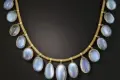






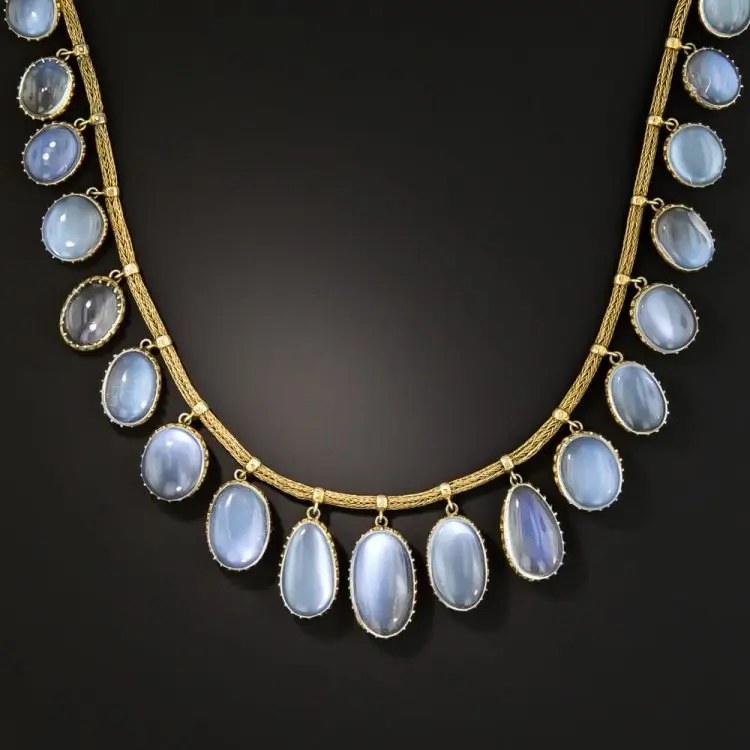
The fascinating world of gemstone optics encompasses numerous rare and captivating visual phenomena, yet few possess the ethereal allure of adularescence. Often referred to simply as the "moonstone effect," this mesmerizing optical display has captured the imaginations of gemologists, fine jewelry collectors, and historians for centuries. Best exemplified by antique pieces such as the exquisite Victorian moonstone fringe necklaces that occasionally surface in high-end collections, adularescence remains one of the most distinctive and enchanting characteristics found within the natural mineral kingdom.
At its core, adularescence is an optical phenomenon specifically associated with feldspar, most commonly orthoclase. When these specific feldspar minerals are skillfully shaped and polished into a smooth, rounded cabochon cut rather than faceted, they undergo a remarkable visual transformation. As the stone is turned and manipulated under a light source, it exhibits a floating, billowy bluish or white light that appears to emanate from deep within the interior of the gem itself. This internal luminescence creates the illusion of moonlight trapped beneath the surface of the stone, moving fluidly across the surface as the angle of observation shifts.
While the term
"moonstone effect" is widely embraced in the jewelry trade and by admirers of fine gems, mineralogists and geological scientists categorize and refer to this specific phenomenon as schiller. This terminology places adularescence within a broader scientific context of optical effects caused by light scattering within mineral structures. Understanding how and why this phenomenon occurs requires a closer look at the unique internal composition of feldspar minerals like orthoclase, which develop microscopic structural layers during their formation deep within the Earth.
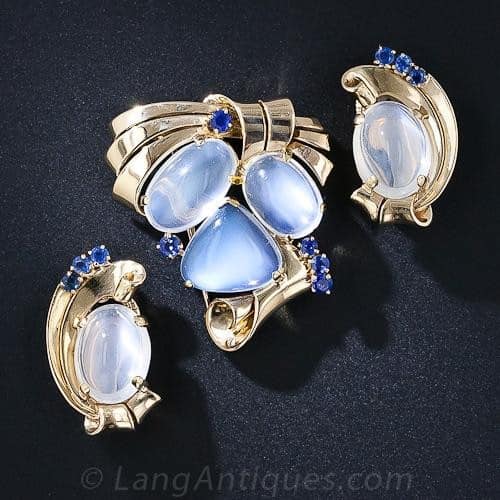
The structural mechanics behind adularescence involve the intergrowth of different feldspar species, specifically microscopic lamellae of albite and orthoclase. As light penetrates the stone, it encounters these alternating layers of differing refractive indices. Instead of passing straight through or reflecting purely from the surface, the light is scattered in multiple directions. This phenomenon, known scientifically as light scattering or interference, is what produces the characteristic billowy glow that seems to billow across the cabochon. The size and spacing of these microscopic layers dictate the exact color and intensity of the adularescent sheen, which most commonly presents in a soft, ethereal blue or a bright, silvery white.
Throughout history, this captivating optical display has made moonstone a perennial favorite in fine jewelry design, spanning various eras and artistic movements. During the Victorian era, jewelers frequently utilized moonstones in intricate statement pieces, such as elaborate fringe necklaces, where multiple cabochons-cut stones were suspended to catch the light from every possible angle. These antique creations highlight the timeless appeal of adularescence, demonstrating how master artisans have long sought to showcase the unique floating light of orthoclase feldspar in wearable works of art.
In contemporary gemology and antique jewelry valuation, the quality of the adularescence remains a primary factor in determining a stone’s desirability and aesthetic value. Gemologists evaluate stones based on the intensity, centering, and color of the floating light effect, as well as the overall transparency and clarity of the host feldspar. Stones that display a vibrant, deep blue adularescence against a clear or nearly transparent background are particularly prized by collectors. As these historical and natural specimens continue to be studied and admired, adularescence stands as a testament to the complex and beautiful interplay between light and mineral structure in the natural world.