



Fragments of mirrored glass split, catch the ambient light of a historic room, and then come together as a completely new whole. Within the storied, heritage-filled rooms of Toronto’s Spadina Museum—an iconic 1866 Victorian mansion steeped in local history—interdisciplinary artist Ry Van Der Hout has created a striking series of sculptures designed to catch the light and open fresh, contemplative ways of seeing and hearing complex family lore.
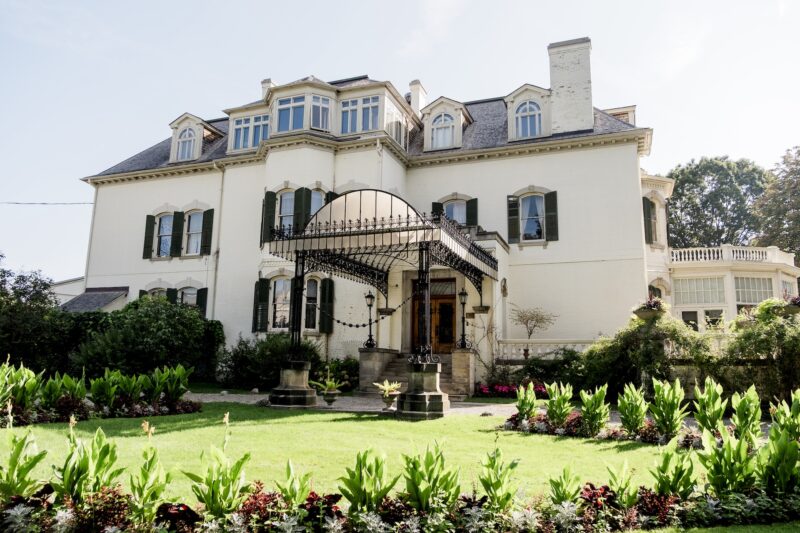
The exhibition, titled In Broken Light, is a deeply site-specific presentation of brand-new work by Van Der Hout. It officially opened to the public at the historic museum on August 26 and is scheduled to run through October 18, inviting visitors to experience the historic landmark through an entirely contemporary, reflective lens.
At the very heart of the exhibition lies a poignant conceptual framework regarding history, identity, and healing. According to curator Adrien Sun Hall, the overarching thesis of the project challenges traditional perceptions of damage and repair.
"At the heart of In Broken Light is the understanding that shattering isn’t the end of a story—it’s the beginning of a new narrative," curator Adrien Sun Hall explains. "Ry Van Der Hout begins their sculptural practice with acts of intentional breaking, shattering glass and mirrors only to painstakingly solder them back together using traditional Tiffany stained-glass techniques. These intricately mended surfaces become metaphors for queer becoming and personal transformation. The fractures become apertures through which overlooked histories emerge, transforming the sculptures into contemporary reliquaries for lives remembered and forgotten."
Spanning across the mansion’s expansive four stories, five distinct sculptural interventions have been carefully staged to converse with the building’s architecture. The works incorporate a diverse medium of photography, traditional stained glass, and highly reflective mirrors. In developing these installations, Van Der Hout engaged in extensive research, drawing inspiration from detailed conversations with spiritual leaders, family descendants, historians, museum guides, and professional conservators. The former resident families who once inhabited the estate supplied ample inspiration for the project, with their personal histories—ranging from tales of forbidden love to accounts of tragic, fatal illness—proving to be often stranger than fiction.
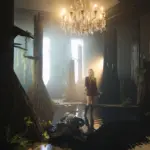
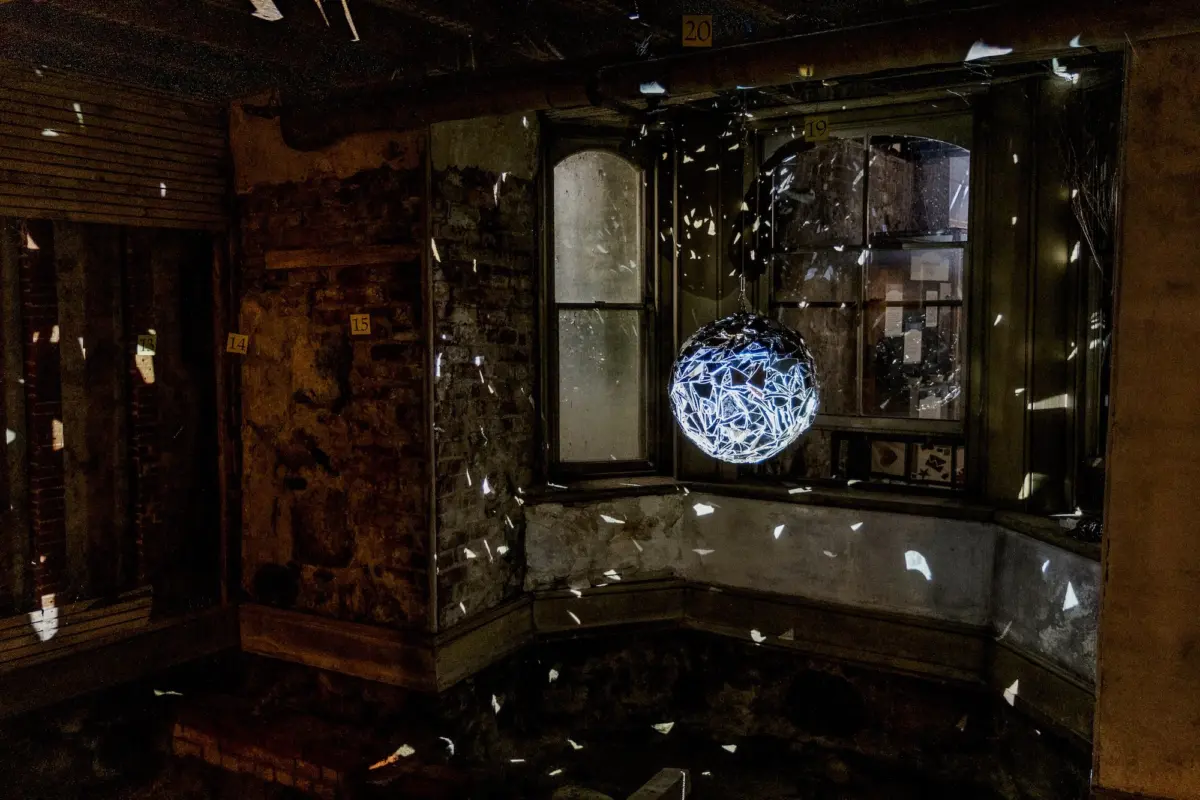
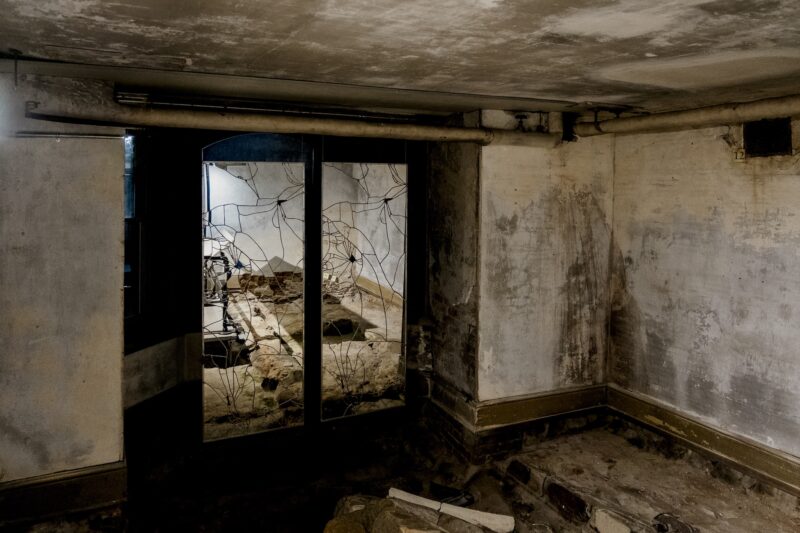
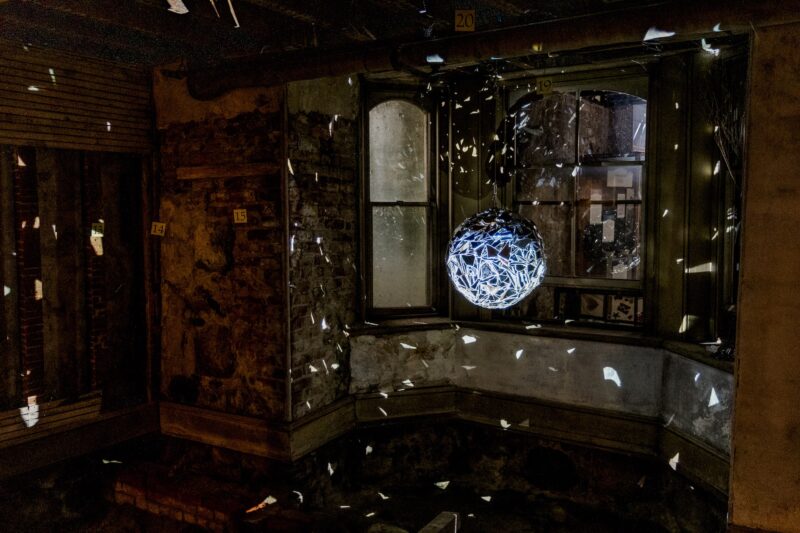
The exhibition leverages the unique architectural geography of the Spadina Museum, engaging visitors as they move from the depths of the lower level up to the unrestored quarters of the upper floors. In the basement, which features a preserved archaeological dig site, a fractured disco ball spins slowly to an atmospheric, NASA-produced audio track. As it turns, the installation casts a mesmerizing mosaic of light across rugged stone walls and through infilled, historical windows, instantly shifting the atmosphere from a preserved Victorian basement into an immersive, cosmic space.
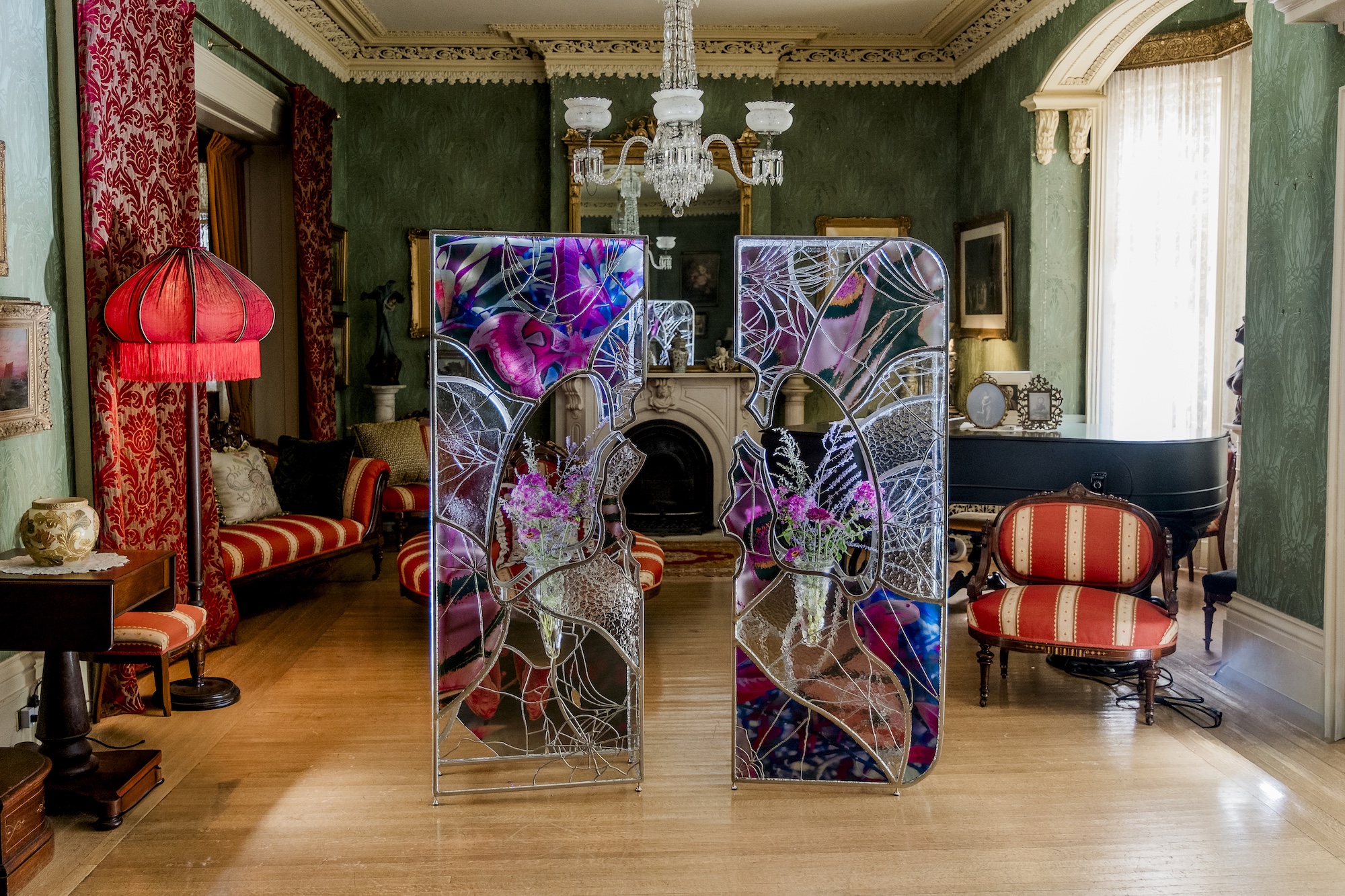
Moving upward through the home, visitors encounter a stained-glass sculpture intricately printed with photographs of Tiber, a historical interpreter currently working at the museum. This particular piece has been systematically shattered and reassembled by the artist. Interestingly, the foundational material for the piece came from a reclaimed antique dressing-table mirror holder that Van Der Hout discovered serendipitously in a dumpster located right outside their studio.
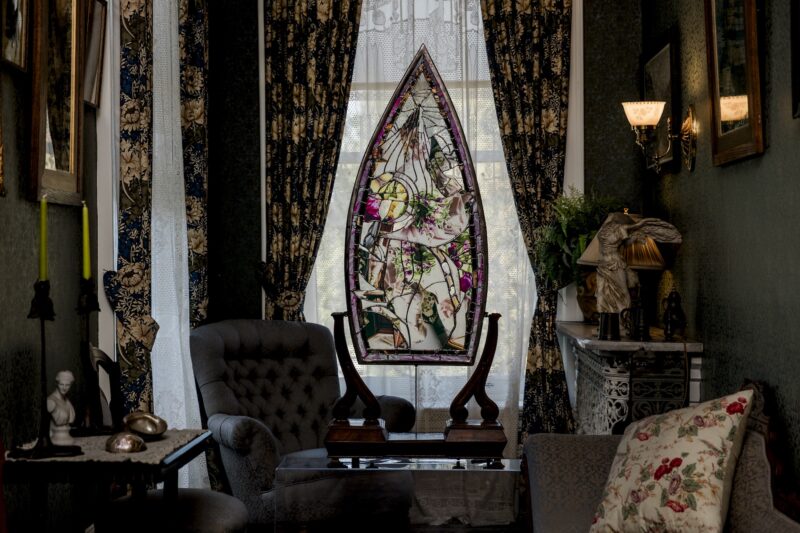
Reflecting on the uncanny discovery of the material, Van Der Hout notes the profound sense of connection the object provided during the creative process. "It felt like I got pulled into this story of an object guiding you to tell you that you are in the right place," the artist shares.
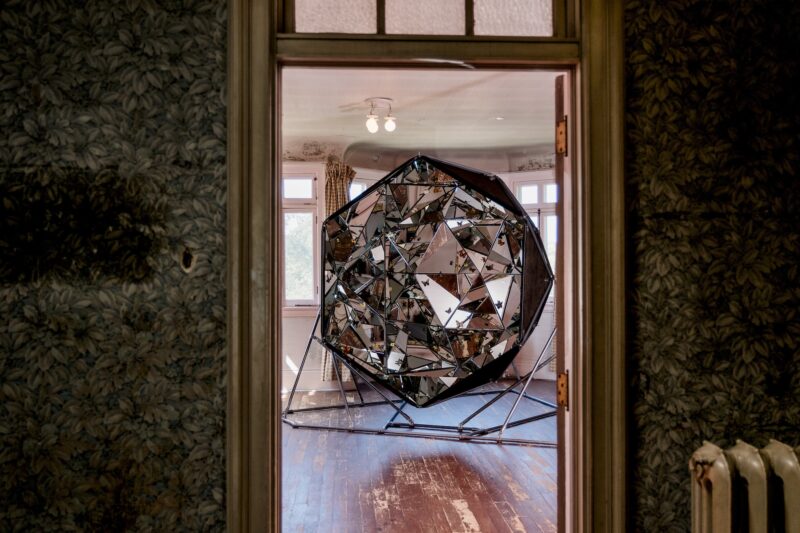
Perhaps the most monumental work in the entire exhibition is titled Open Wing Death. Installed on the unrestored third floor of the Spadina Museum, the piece takes the form of a 12-foot-high ovoid geodesic dome. The room itself carries a heavy historical weight; originally added to the mansion in 1913 as a sunlit, therapeutic sanctuary designed for a resident suffering from tuberculosis, the space later transitioned into quarters for the household’s domestic staff. Van Der Hout’s massive geodesic installation serves as a direct dedication to these domestic workers whose labor kept the estate running.
Approaching the installation offers an immediate, psychological encounter with the artwork. Before a visitor can even peer directly inside the structure, they catch stray, unexpected glimpses of themselves mirrored in the multifaceted facets at various, shifting angles. For a fleeting split second, viewers confront an uncanny sensation, appearing to themselves as a total stranger—seen as though through someone else’s eyes—before personal recognition slowly sets in and re-establishes their own reflection.
Through these meticulous interventions, In Broken Light successfully bridges the gap between the rigid domestic history of a 19th-century Toronto mansion and the fluid, evolving narratives of contemporary queer identity and personal memory.
In Broken Light remains on view at the Spadina Museum in Toronto until October 18.